Líquen Teso
Collective show
Galatea
Curated by Tomás Toledo
February 20th, 2024 – March 16th, 2024
The Sensible Thinks
A symbiotic association between fungi and algae; a crust over bark. Stretched, tense, stiffened, rigid; the top of a hill; hard. Líquen teso speaks of intervention and nature, of the poles and territories through which these works circulate. Camila Leite, Fabiana Preti, Gabriela Melzer, Mariana Rodrigues, and Marina Weffort bring different worlds whose forms do not always have names. Amid such heterogeneous resources, the search for abstraction is common—within that layer where what is felt, what is thought, and what is seen become separated. Among the many paths that meet there, some surrender to the flow and create organic, open trajectories; others tighten the rope, tracing the route.
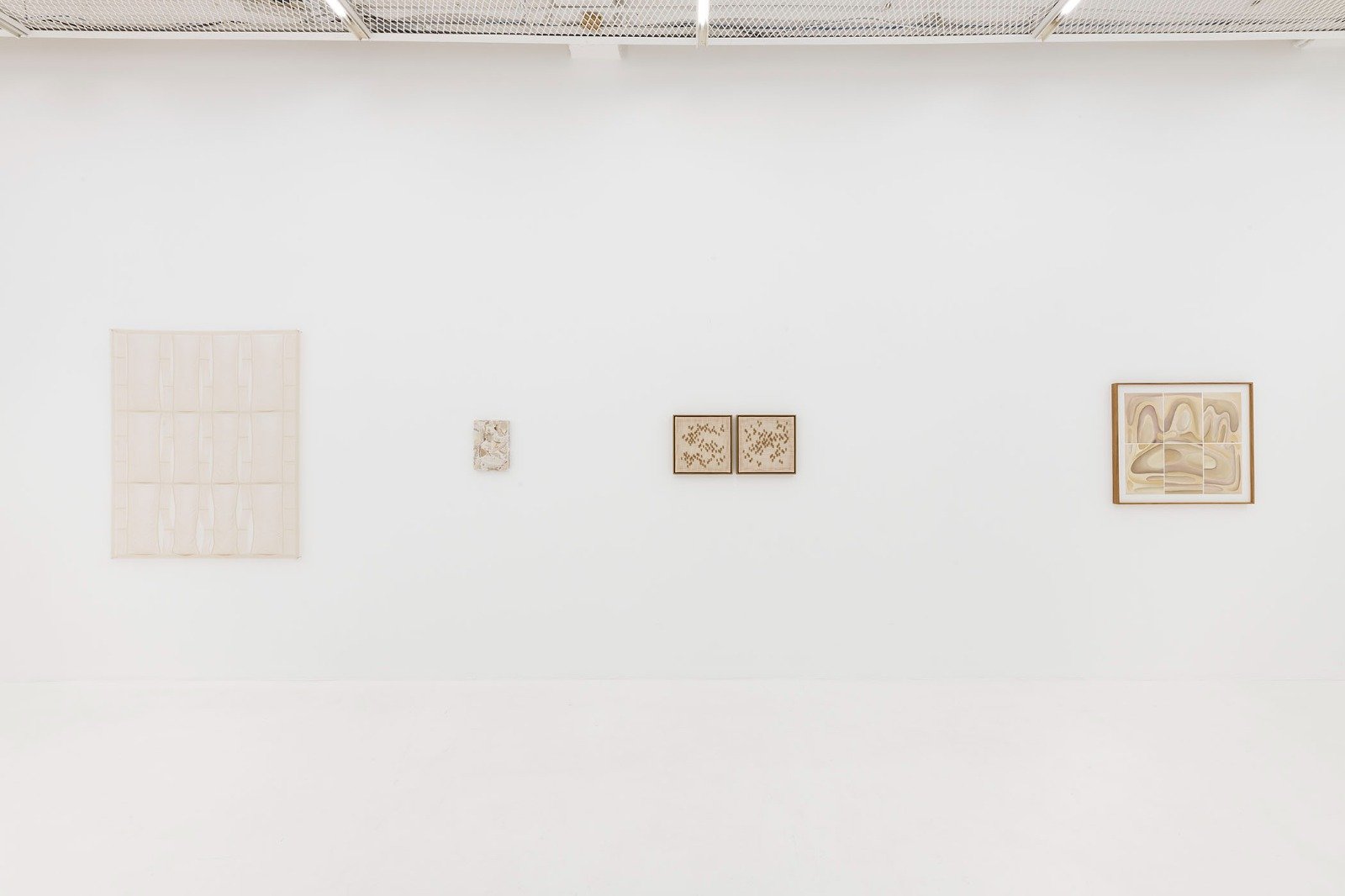
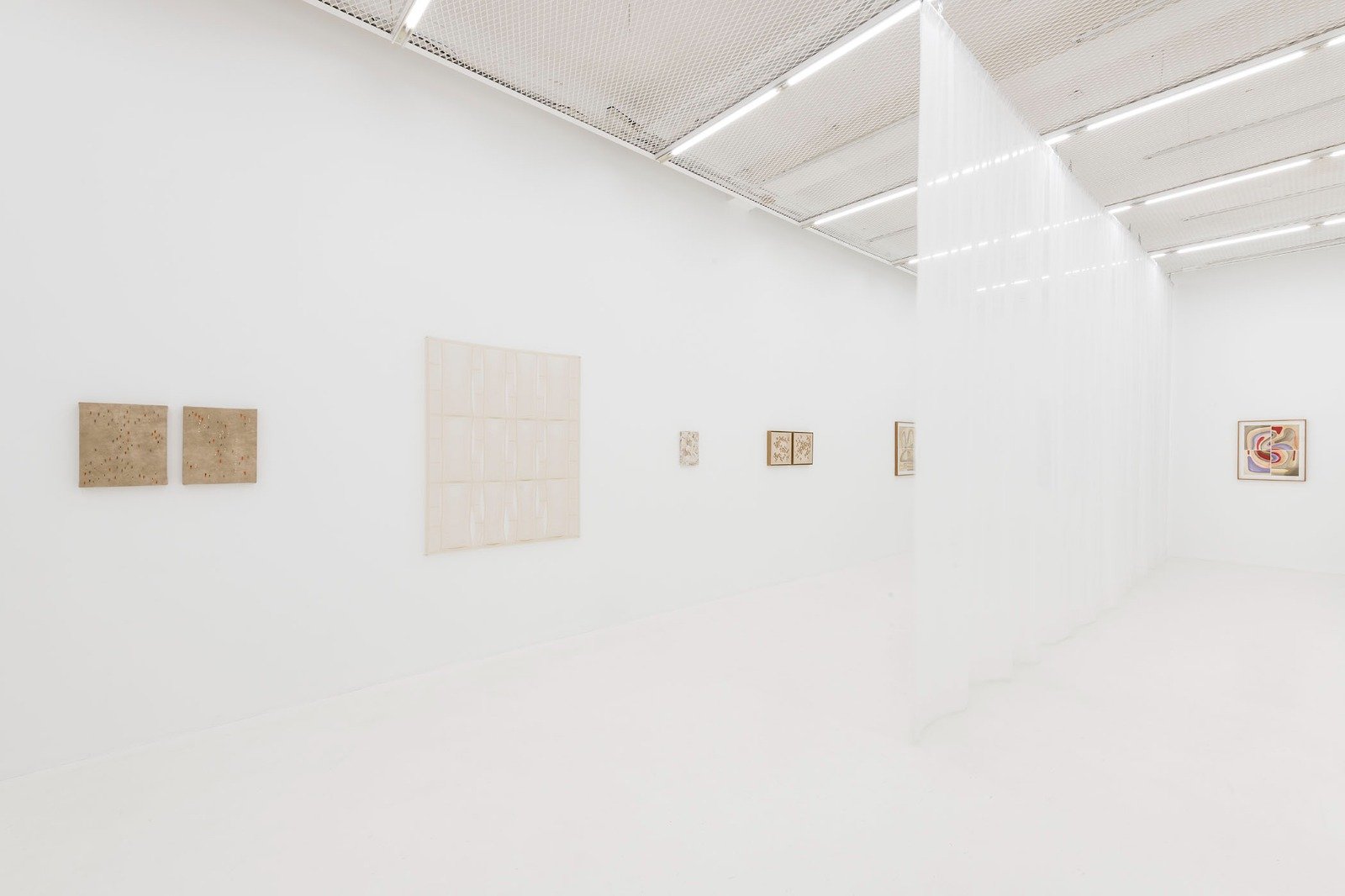
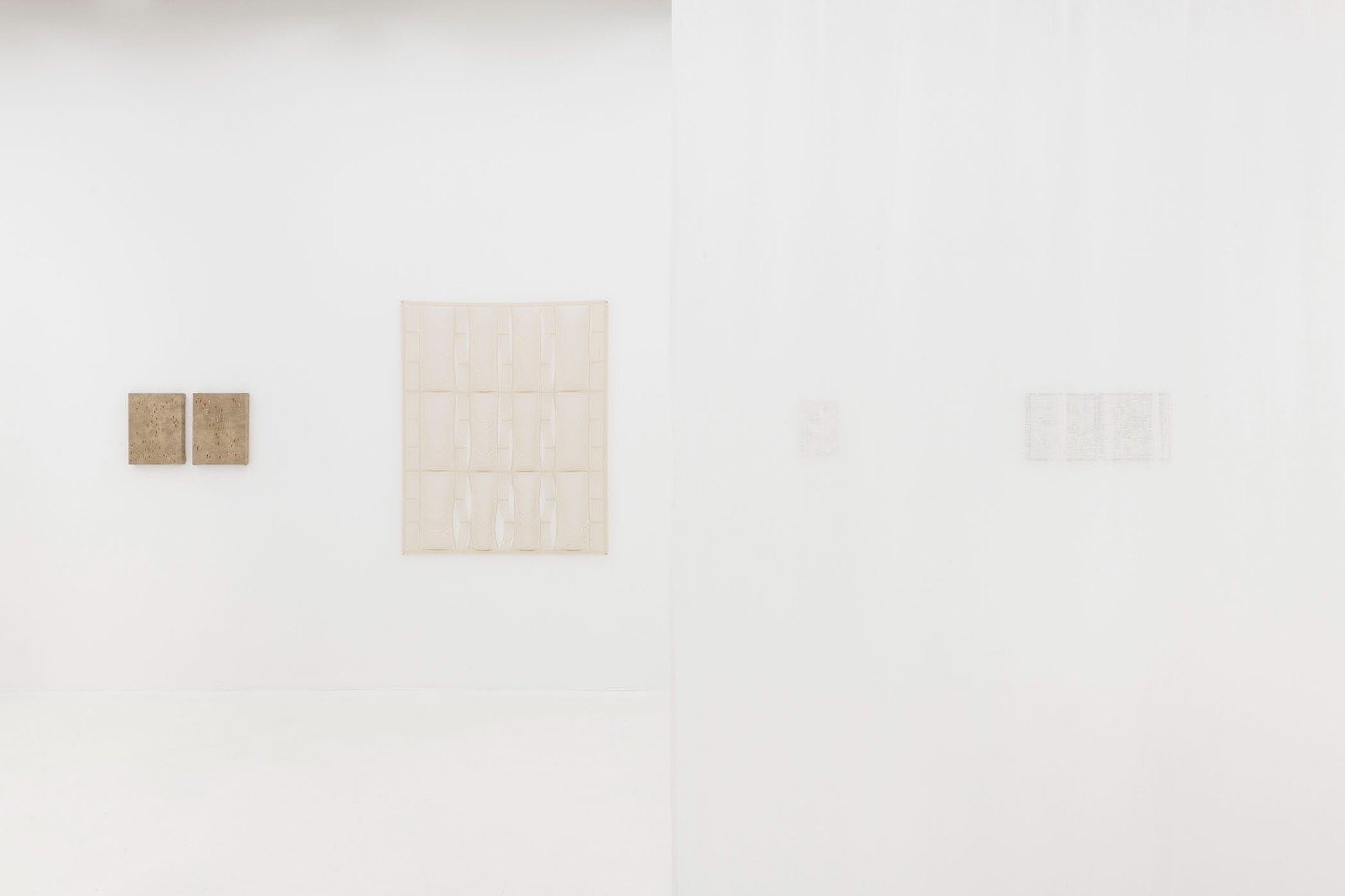
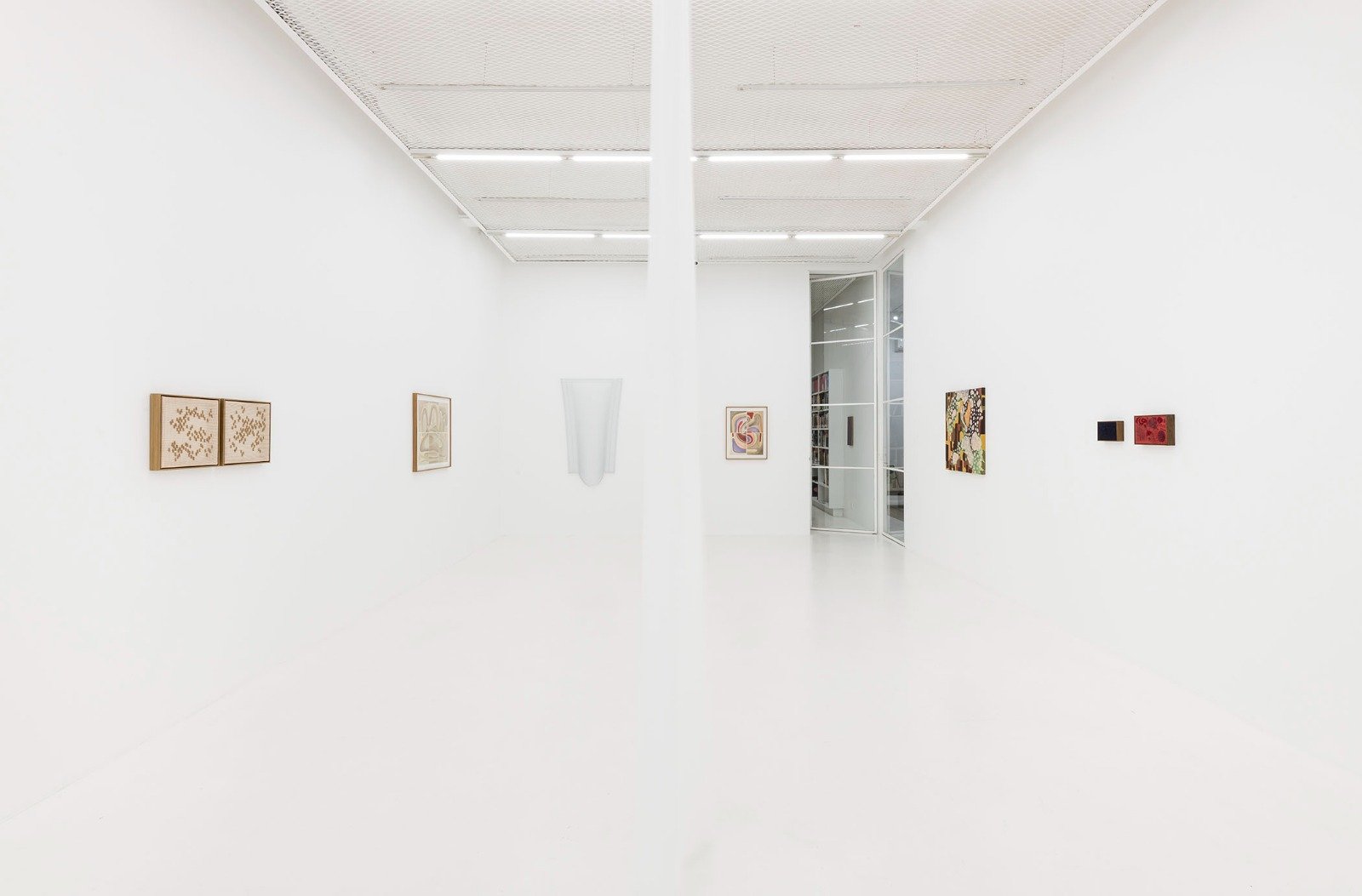
We are not interested in reiterating the rigid dualism that separates the sensible from the formal. As has been said before, we also believe that the sensible thinks. Thus, we organized these works to encourage dialogue, in a play of correspondences among color, texture, order, and rhythm. Suddenly, Weffort’s refinement and synthesis speak with the opulence and expansion of Melzer’s forms. Preti’s blanket stitch and leather call out to the profusion of Leite’s lines and fabrics. Cool colors become warm, and Rodrigues’s Lunar Feelings fill the room.
These paths have a history, as pointed out by Elles font l’abstraction, the exhibition curated by Christine Macel and Karolina Ziebinska-Lewandowska, presented at the Centre Pompidou in 2021. Filling gaps left by certain art historians when constructing their genealogies of abstraction, the show claims the pioneering role of numerous women in the development of this language throughout the twentieth century. We can thus attest that artists as diverse as Georgina Houghton, Anni Albers, Georgia O'Keeffe, Alma Thomas, Louise Bourgeois, Agnes Martin, Saloua Raouda Choucair, and Etel Adnan are also embedded in the genesis of this conversation.
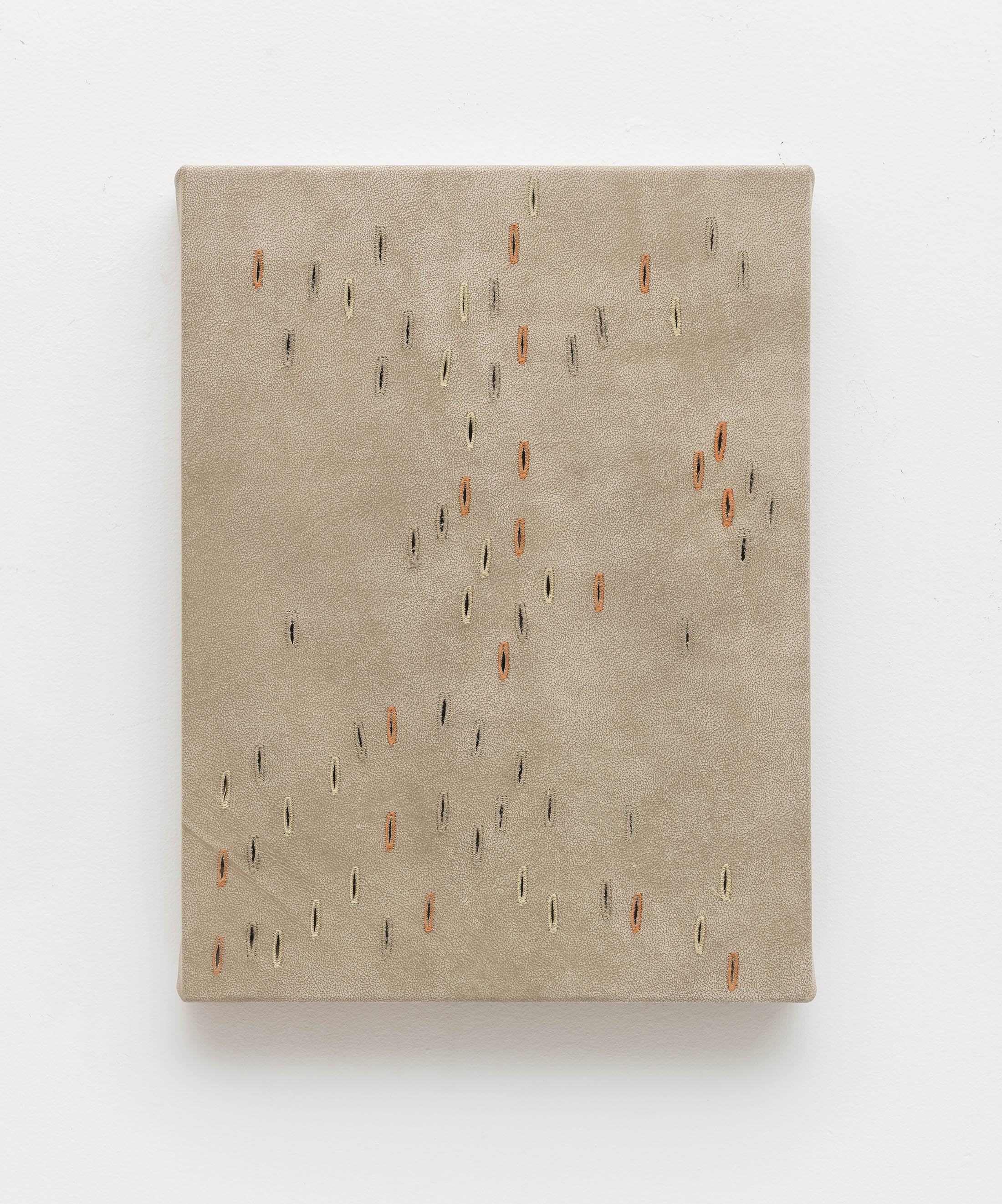
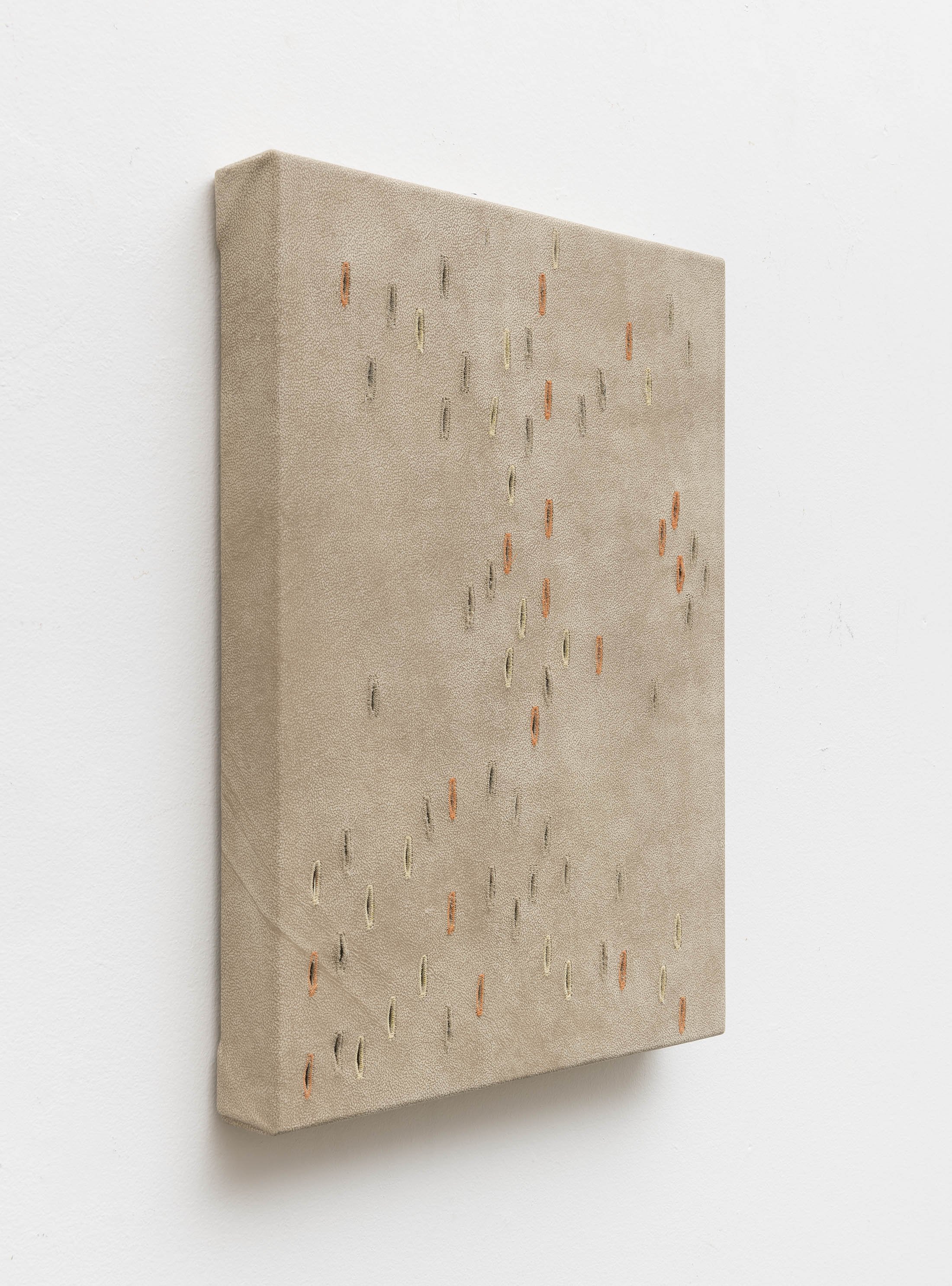
Líquen teso is also the fusion of the titles of two works in the exhibition. Study on Lichens (2023), by Mariana Rodrigues, is part of her research into what the artist identifies as “natural abstract paintings”—patterns, stains, and colors that overlap in nature and are observed and cataloged during periods of immersion in the forest. Teso (2023) is the title of a work from Fabiana Preti’s Casear series, in which the artist opens buttonholes in leather, allowing colored slits to spread across the surface like notes on a score.
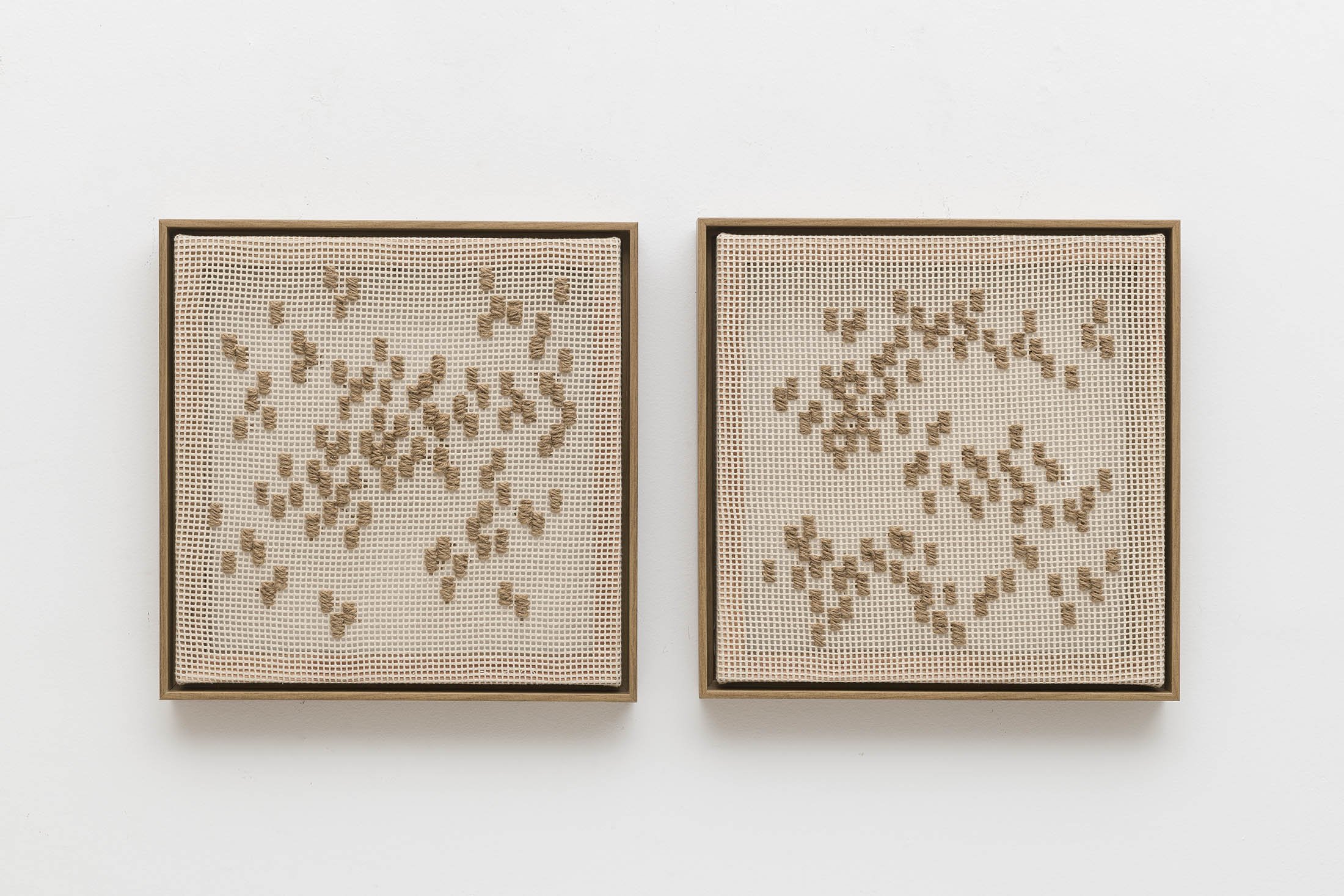
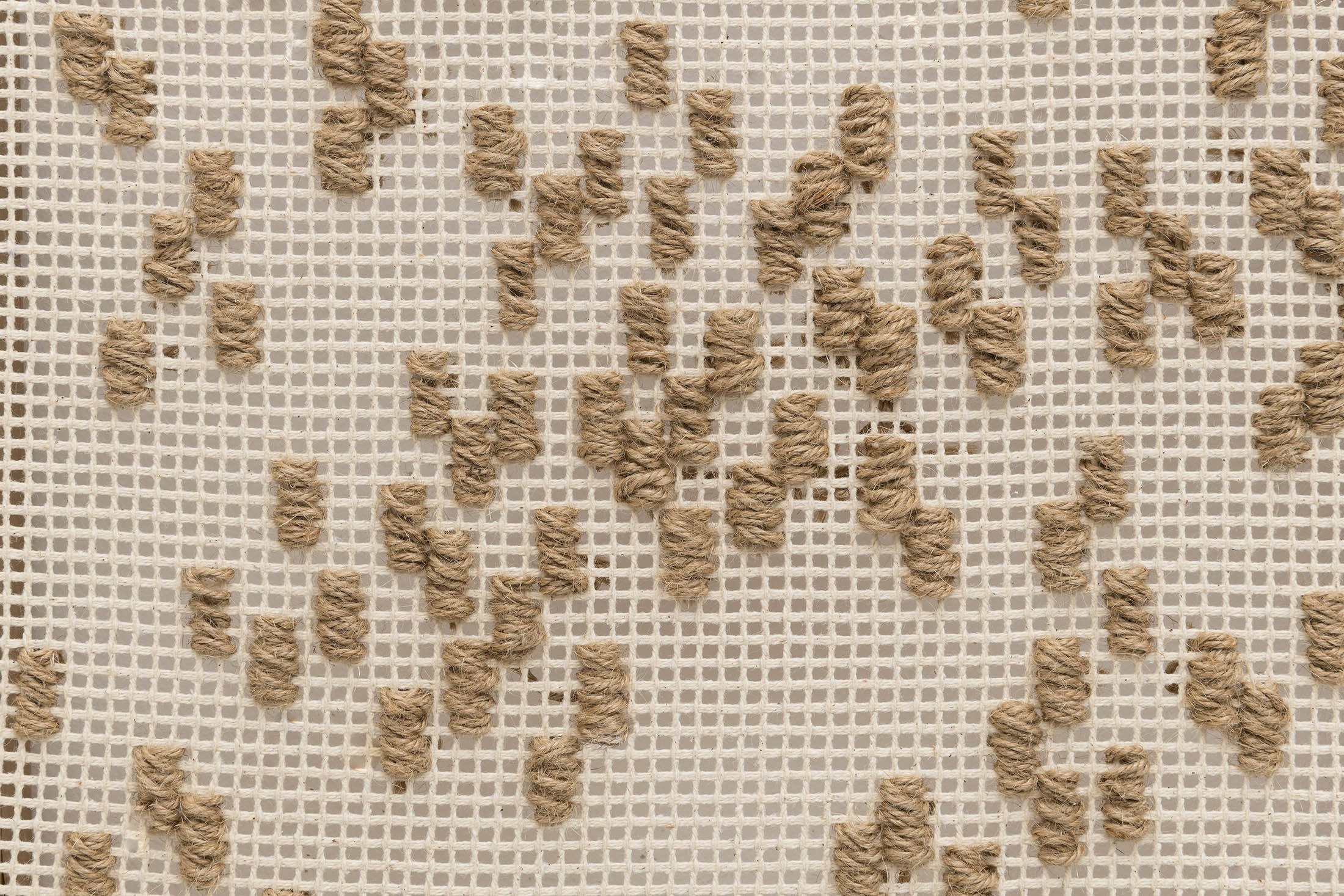
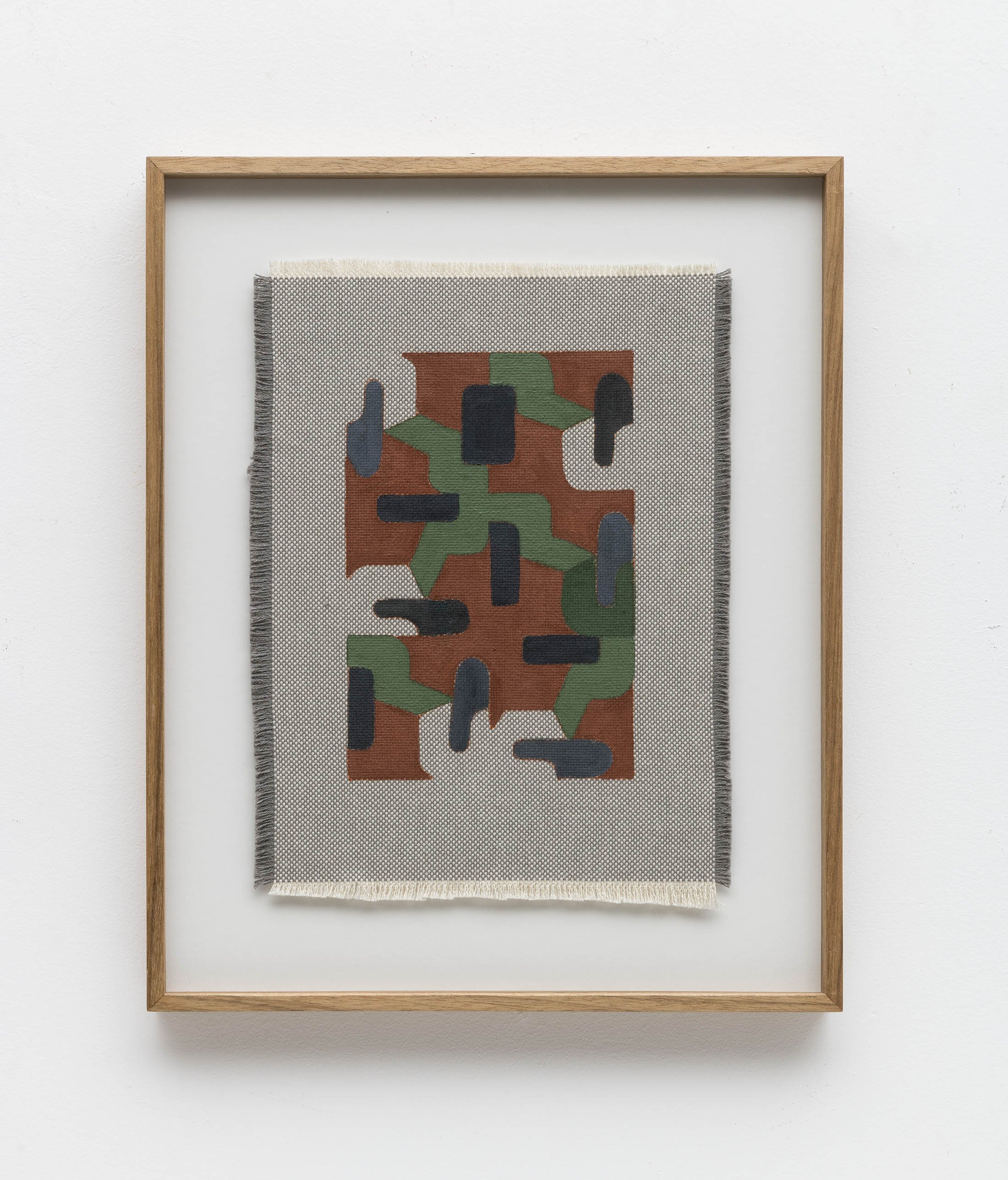
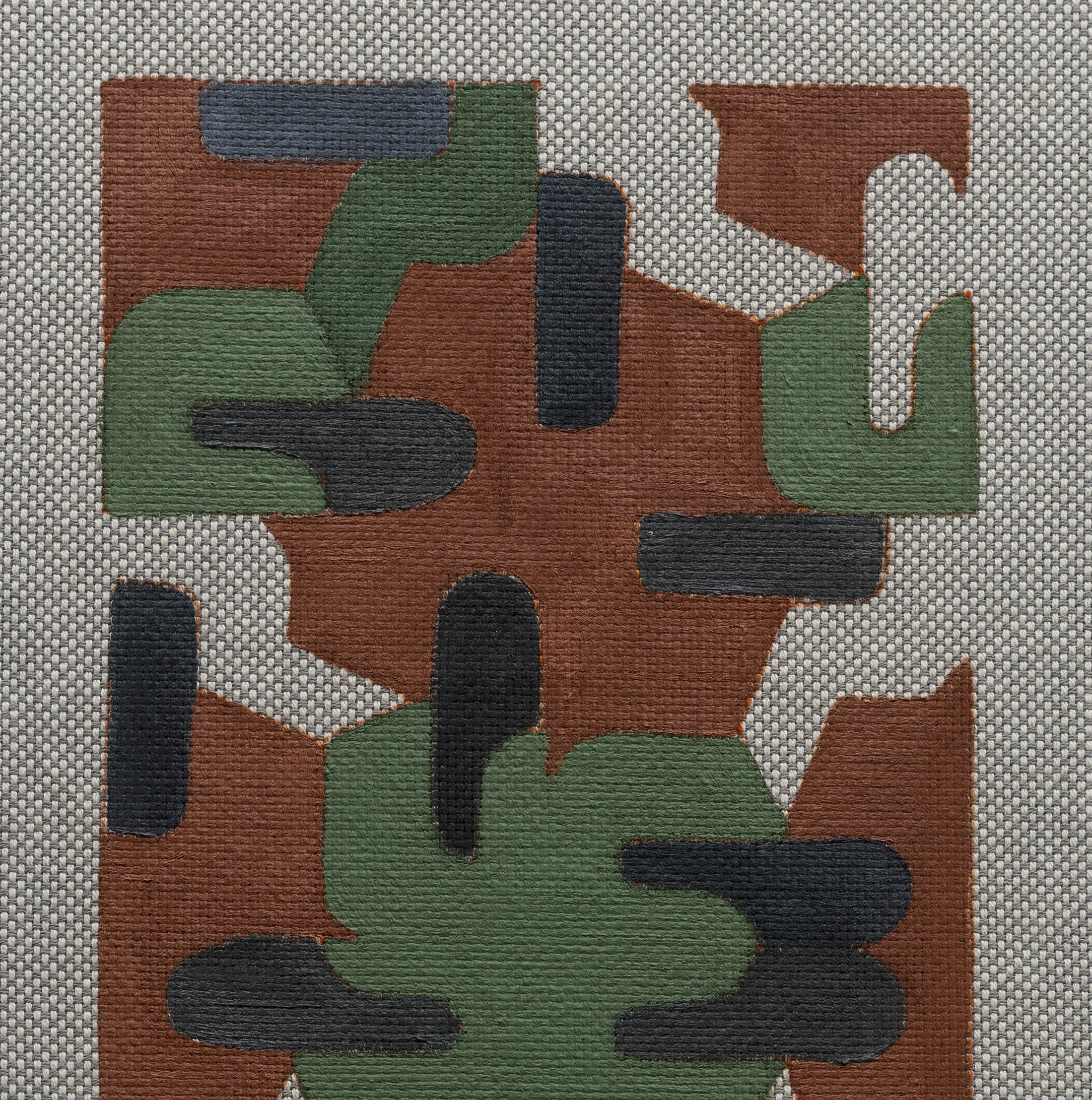
Weffort also investigates slits. She draws with fabric in a process of reverse weaving, in which a given form is achieved by undoing the weave. Like a reverse trompe-l’œil, the artist explores, within bidimensionality, a material endowed with volume, placing in the conventional space of drawing and painting a work that verges on the sculptural. Camila Leite, in turn, intervenes in fabric through embroidery, a practice in which different temporalities overlap, whether through the application of scraps from her grandmothers’ linens or through the time demanded by the act of sewing itself. As if made from fragments and reminiscences of landscape, this experience of scrambling temporal structure is also evoked by the dreamlike atmosphere of Melzer’s paintings.
Giving contour to dreams, embroidering time, undoing the weave. Letting color overflow, inventing form, summoning touch. Loosening the hand, choosing with care. These are some of the principles guiding the conception of the works in Líquen teso, the group exhibition that opens Galatea’s 2024 exhibition calendar in São Paulo.
Text by Fernanda Morse (free translation)
Photos: Ding Musa