FRESTA
Collective show
Gruta
Curated by Thierry Freitas
October 4th, 2025 - November 1st, 2025
“What does meaning matter, if everything vibrates?” (Alice Ruiz)
At first glance, bringing together the productions of Fabiana Preti, Guilherme Callegari, and Pedro Campanha seemed to point more toward their dichotomies than their points of contact. This was, in fact, one of the themes that ran through our conversations over the past months: would this be an exhibition that embraced difference as a vector of strength, or was there a shared territory in which each artist could, in their own way, partake of a common interest?
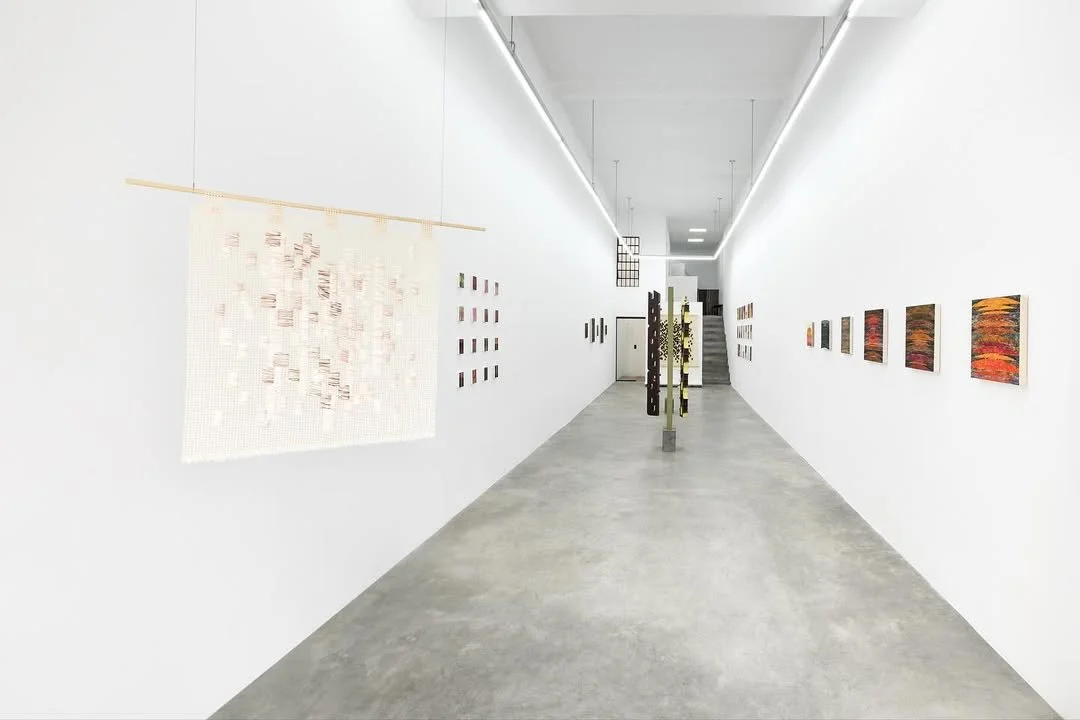
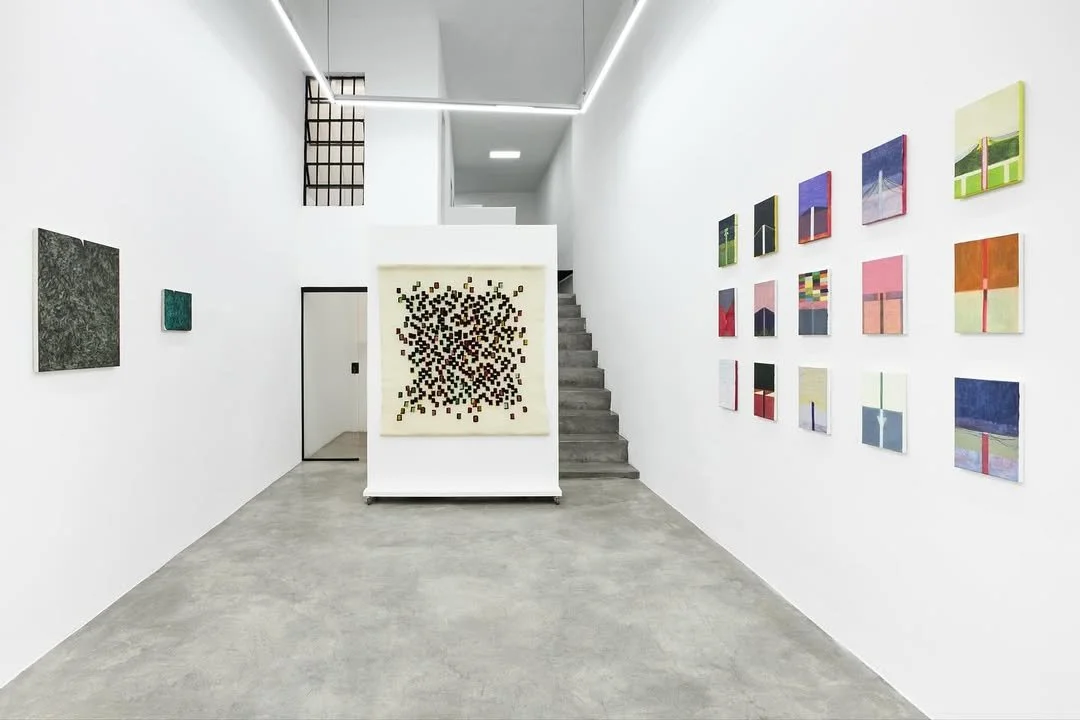
My initial proposal to the artists was to recreate, even if on a smaller scale, the atmosphere of accumulation characteristic of studio spaces. Instead of arranging the works side by side, we created constellations. In doing so, we relied on the subtlety of proximities so that the works would not interact through collision, but through the delicacy of intervals: crossing one another, contaminating each other through the gaps.
Although an exhibition is born from a conjunction of ideas and concepts, only the experience of space and everything it entails—presence, the body in movement, perspective—can reveal nuances that escape planning.
On site, the answer to whether this would be an exhibition of affinities or tensions seemed obvious to me: it is both.
They are indeed very distinct works, beginning with technique—painting, sculpture, and embroidery—yet they share certain compositional logics, such as the presence of the grid, the valorization of manual labor, and the gestural use of color as an element that establishes difference within a potentially serial appearance.
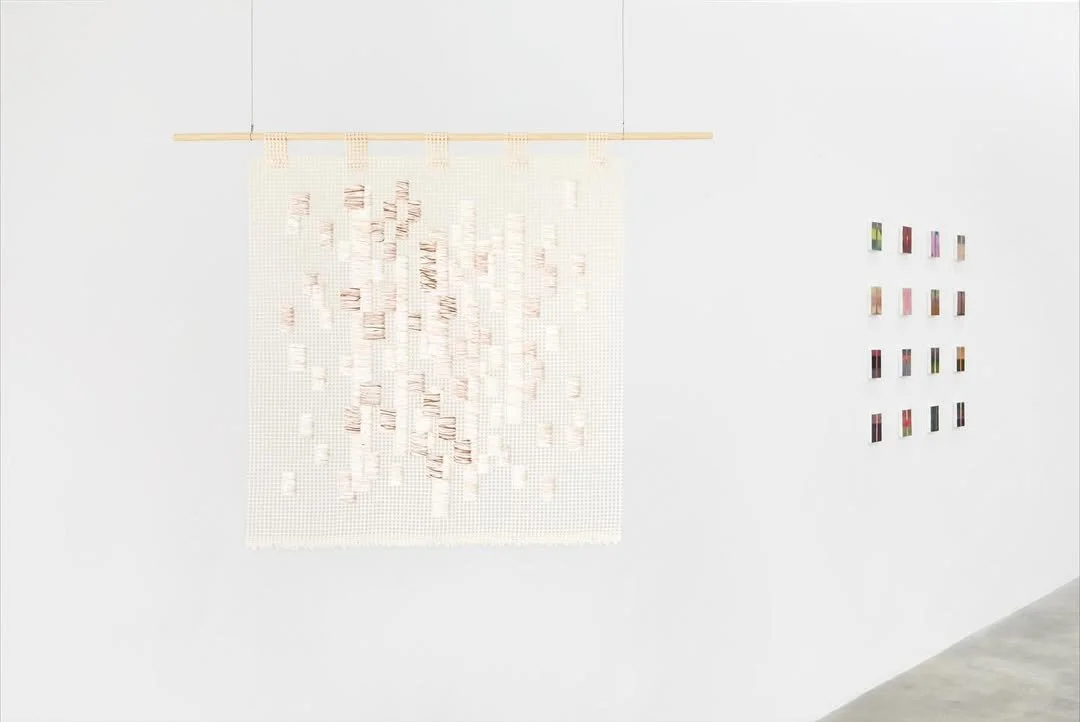
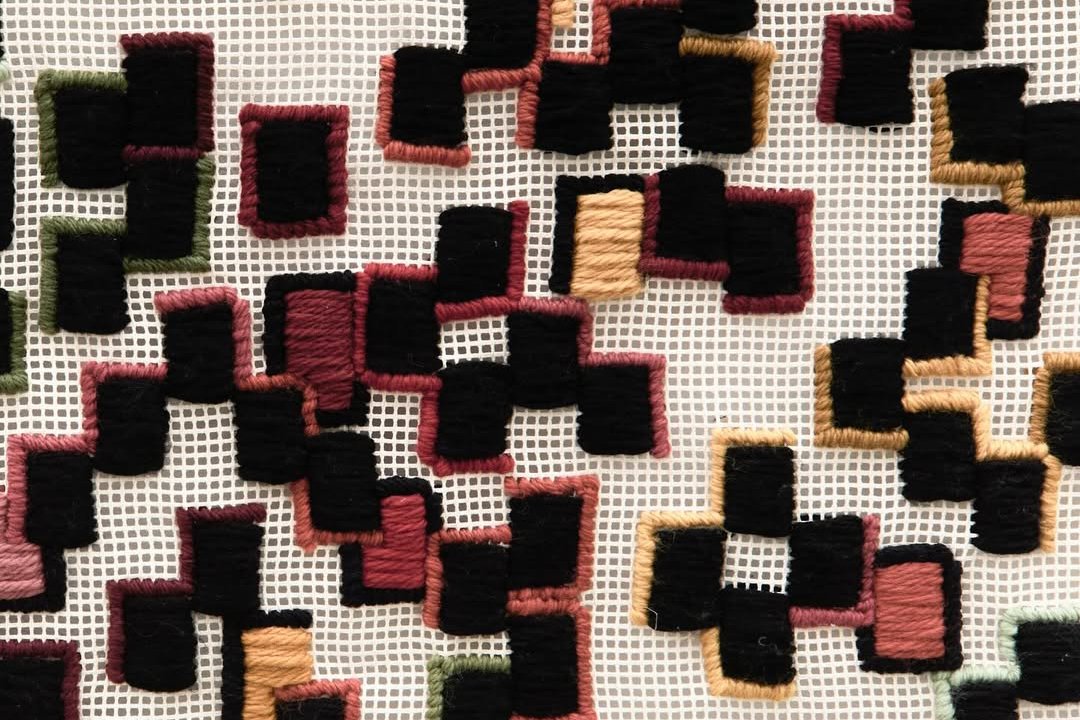
By Fabiana Preti, both embroideries and sculptures are presented. Two embroideries, of different sizes, occupy the beginning and the end of the show. I like to think of their placement as a metaphor for prologue and epilogue: an affirmation of gesture as an expressive and independent means, an idea that runs throughout the exhibition.
Her works do not treat the weave as mere support, but as a compositional element in which transparency holds the same relevance as the densely worked areas of thread. From the insertions the artist makes, vertical forms emerge that, through their density, resemble cocoon-like structures clinging to the fibers of the fabric.
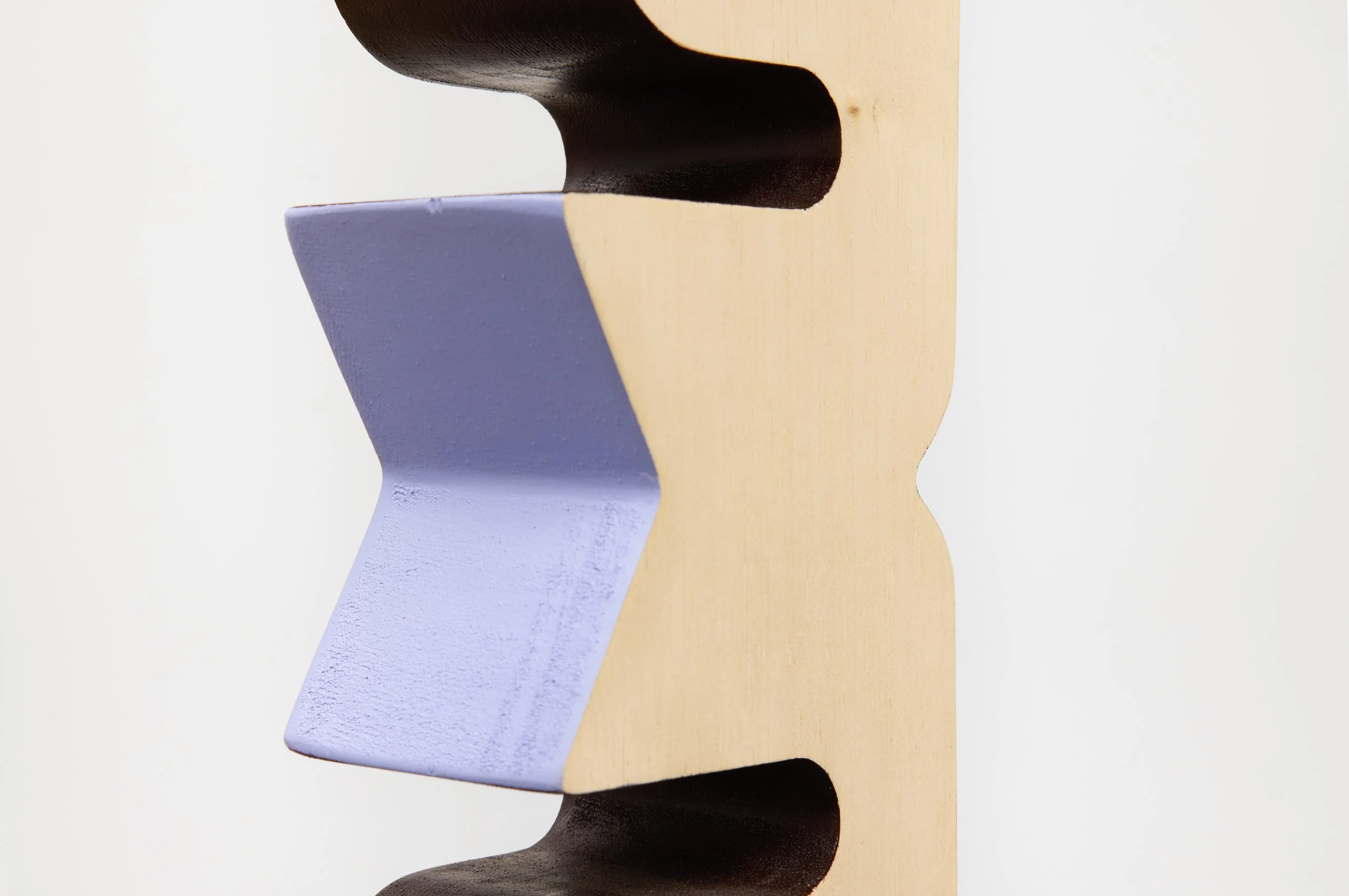
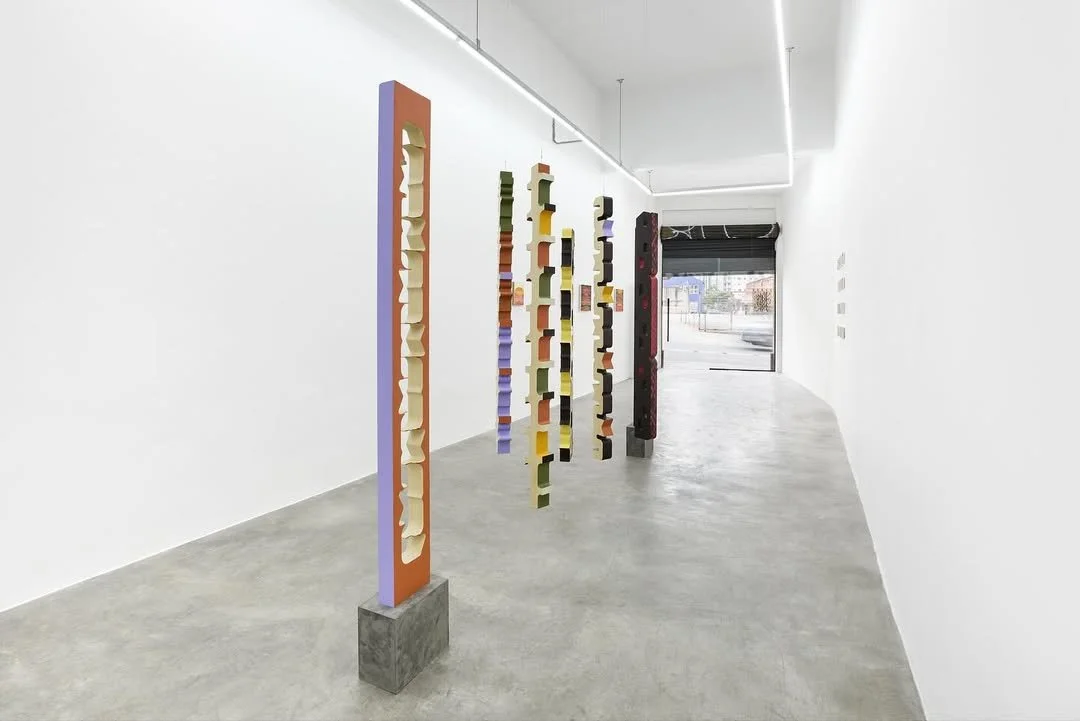
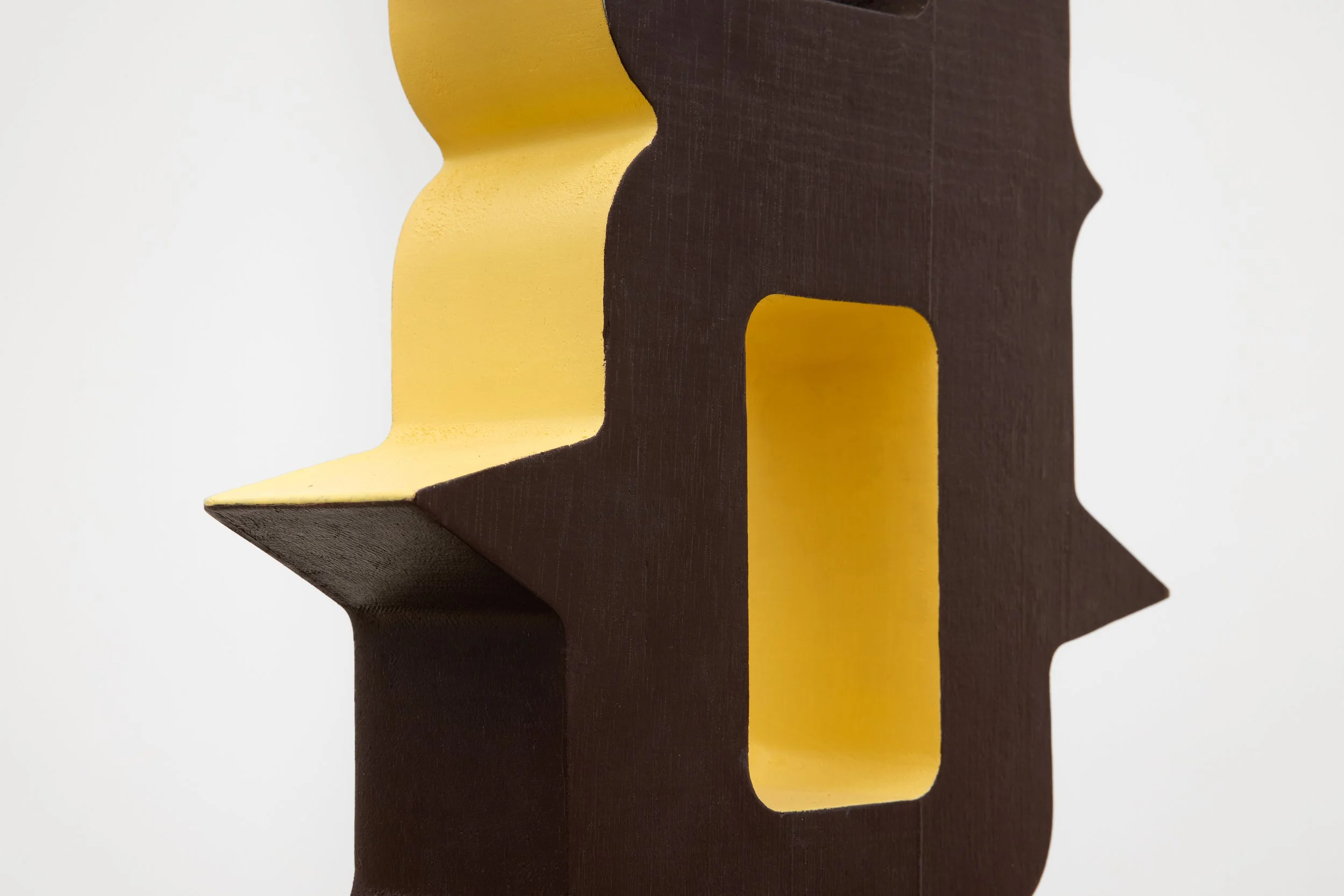
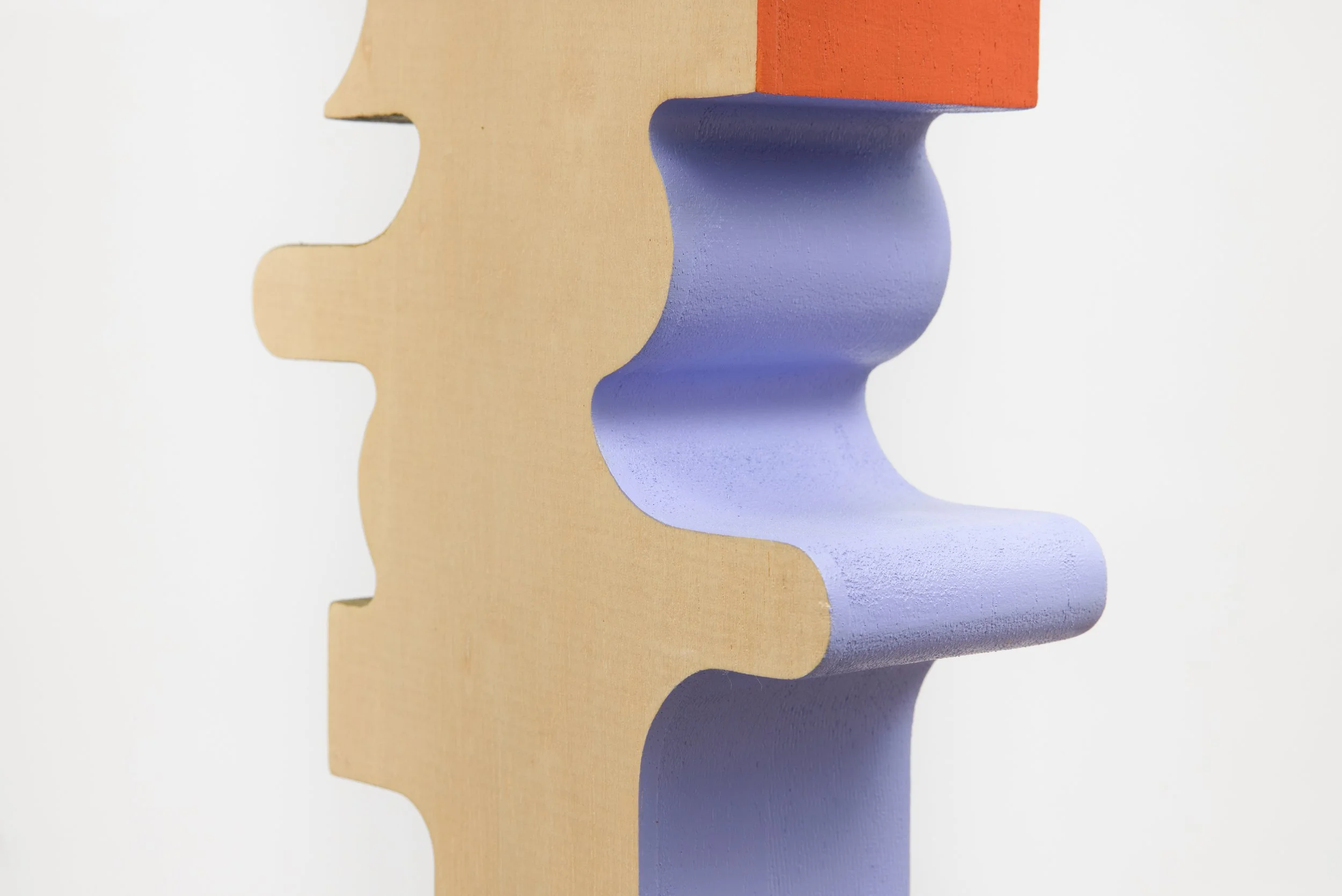
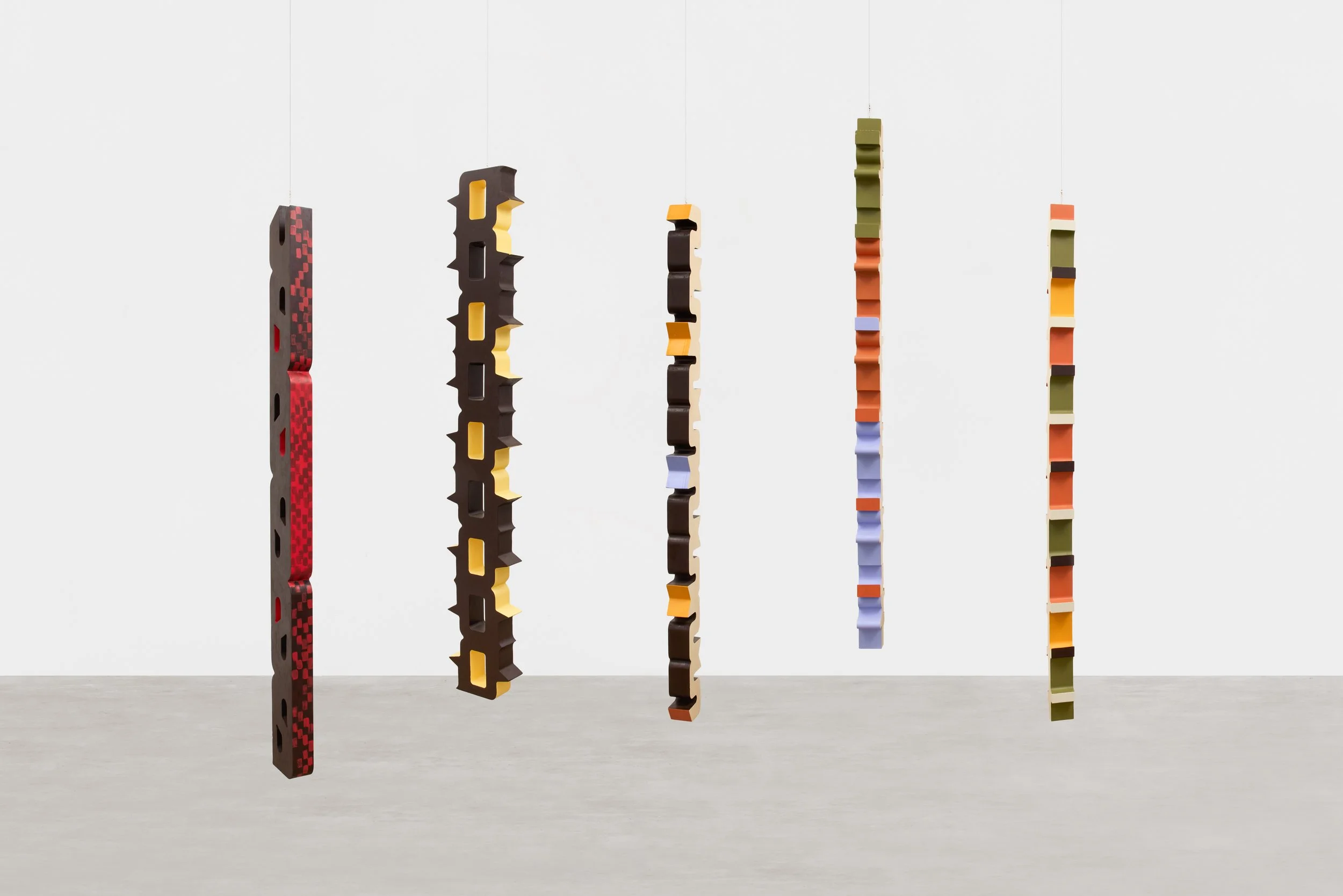
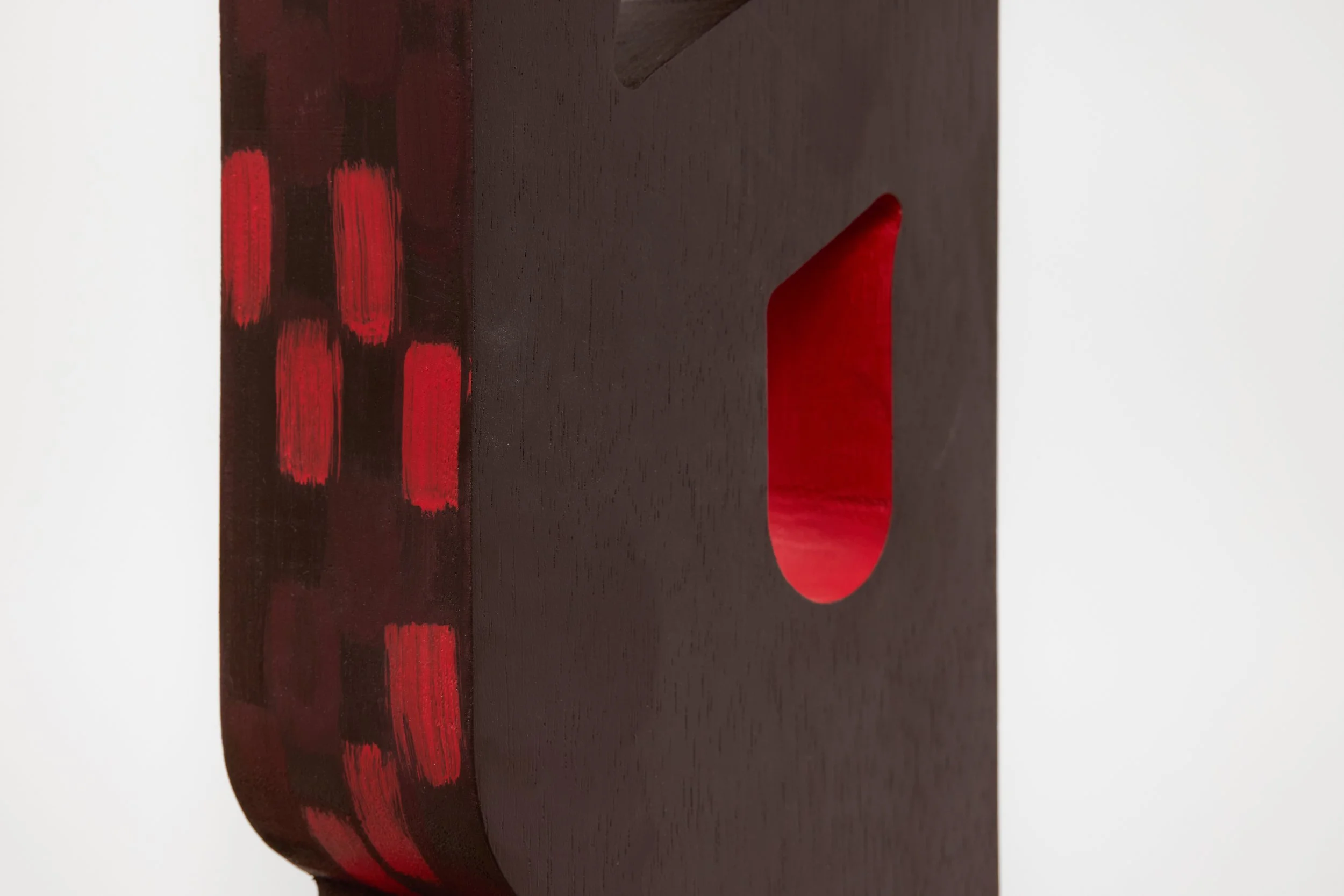
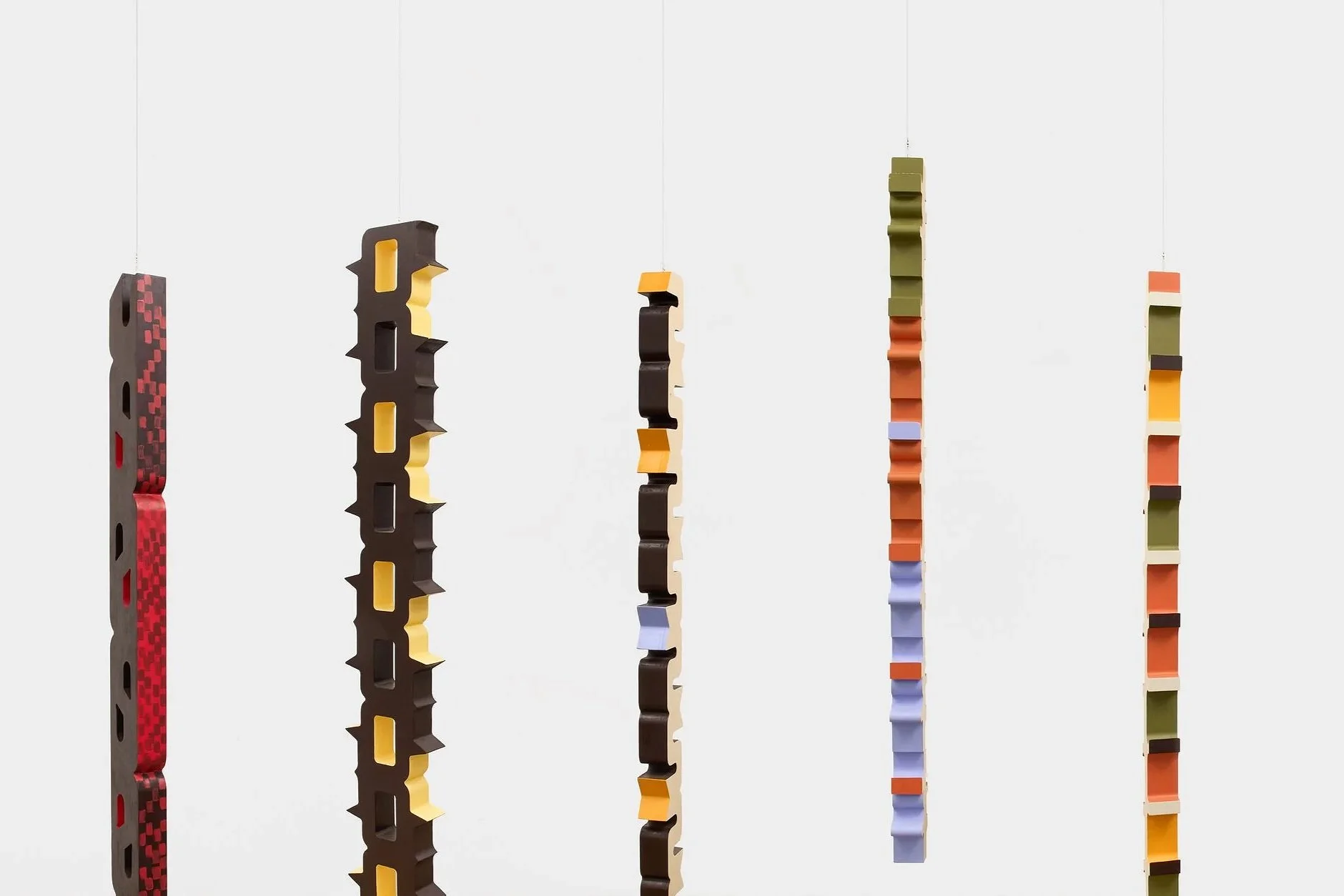
This verticality also echoes in the sculptural group presented in the central void. Entitled Borboletário, it floats exuberantly through the space, dissolving the boundaries between front and back. Industrially produced, the pieces stand out for the precision of their cuts, which generate sinuous forms, receiving color only along the edges, as if in an apparition.
Similar curves run through the paintings of Guilherme Callegari, whose recent production has shifted from saturated colors and references associated with the industrial world toward a minimalist experimentation, in which the pictorial surface is explored as a fertile field of chromatic variations. With an organic and diluted palette, his always-visible brushstrokes function as compositional elements. The works do not make forms explicit, but suggest atmospheres, especially in the group installed at the beginning of the room. There, the luminous progression and the juxtaposition of straight lines and rounded curves evoke scenes of a sunrise, suggesting the emergence of a light-bathed horizon.
Pedro Campanha, in turn, approaches painting through the schematization of forms and dimensions. One of his main interests lies in the reactions that different raw materials can generate when subjected to the same model. Working primarily with tempera and oil, the artist creates compositions in which lines and angles unfold into rhythmic variations. The result is a series of scenes that share structural similarities but, when seen together, reveal contrasts among transparencies, gloss, and opacity. This insistence on the model, however, does not indicate repetition, but rather a consistent investigation into the plastic possibilities of form.
Fresta is constructed as an exhibition that traverses the tension between differences and affinities, establishing a relational field in which each gesture refracts within the collective, generating subtle resonances that run through the works and, we hope, through the experience of those who observe them.
Text by Thierry Freitas (free translation)
Photos: Estúdio em Obra