RUMOR’ROSA
Solo Show
Pilar
Curated by Ana Avelar
August 08th, 2026 - September 12th, 2026
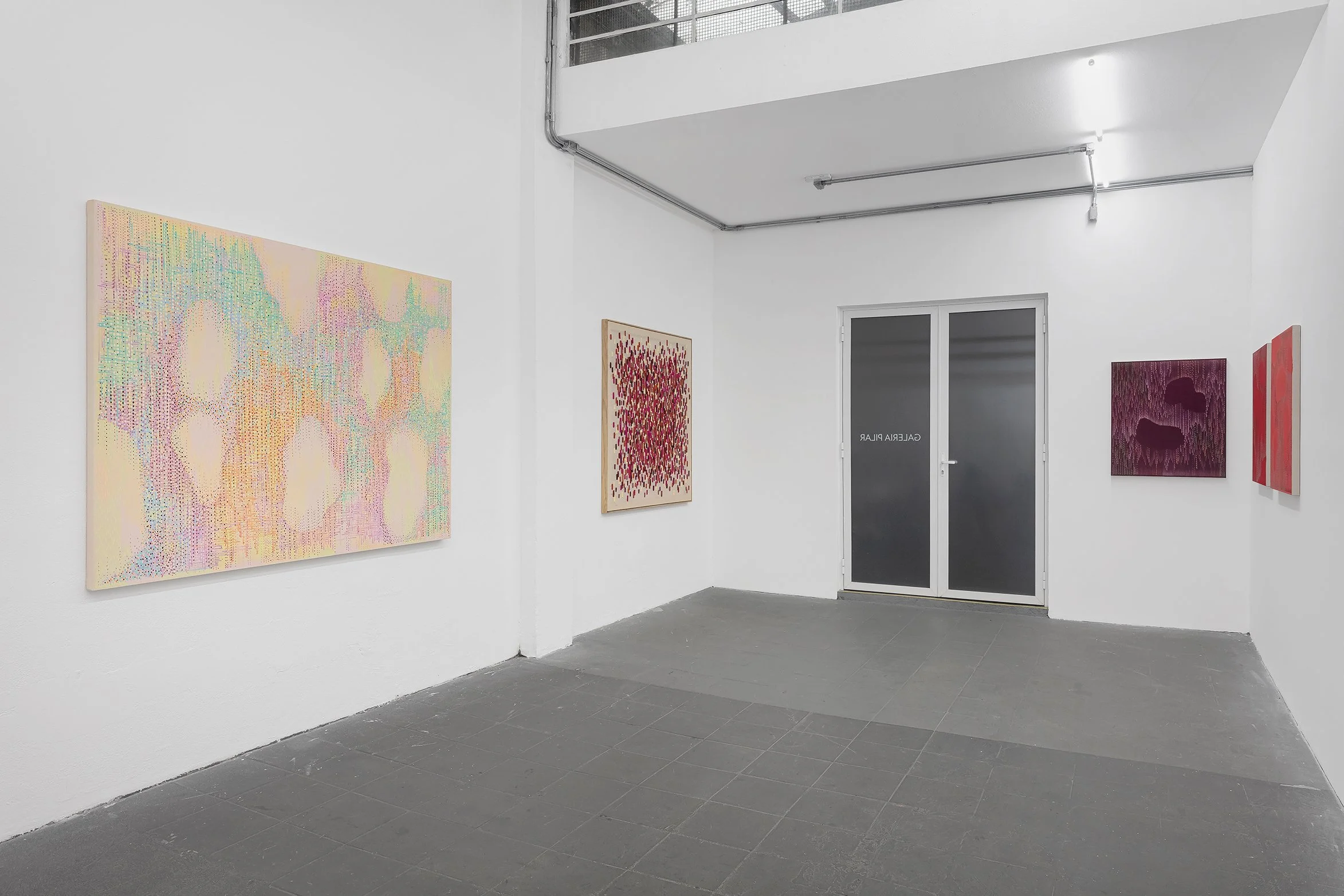
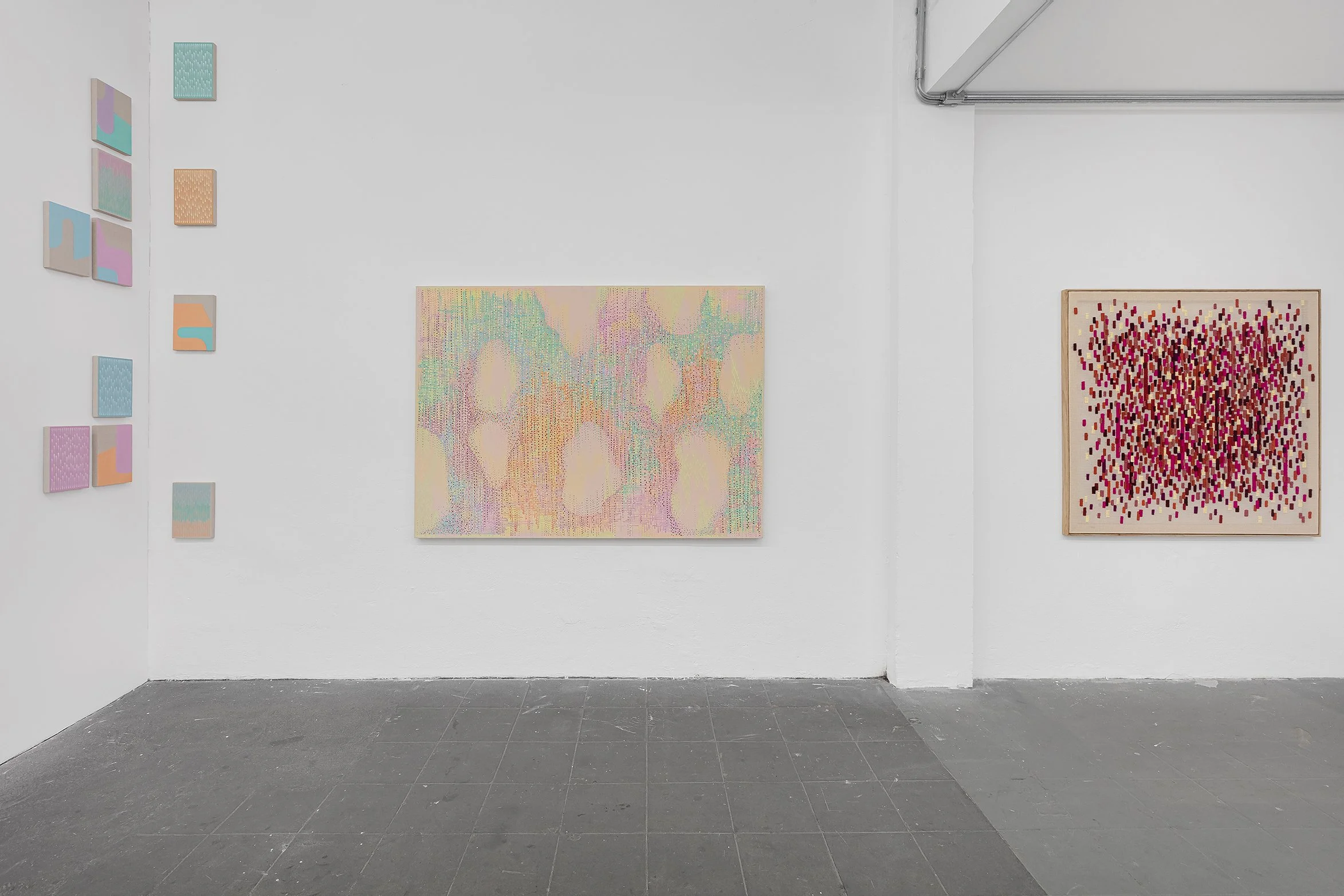
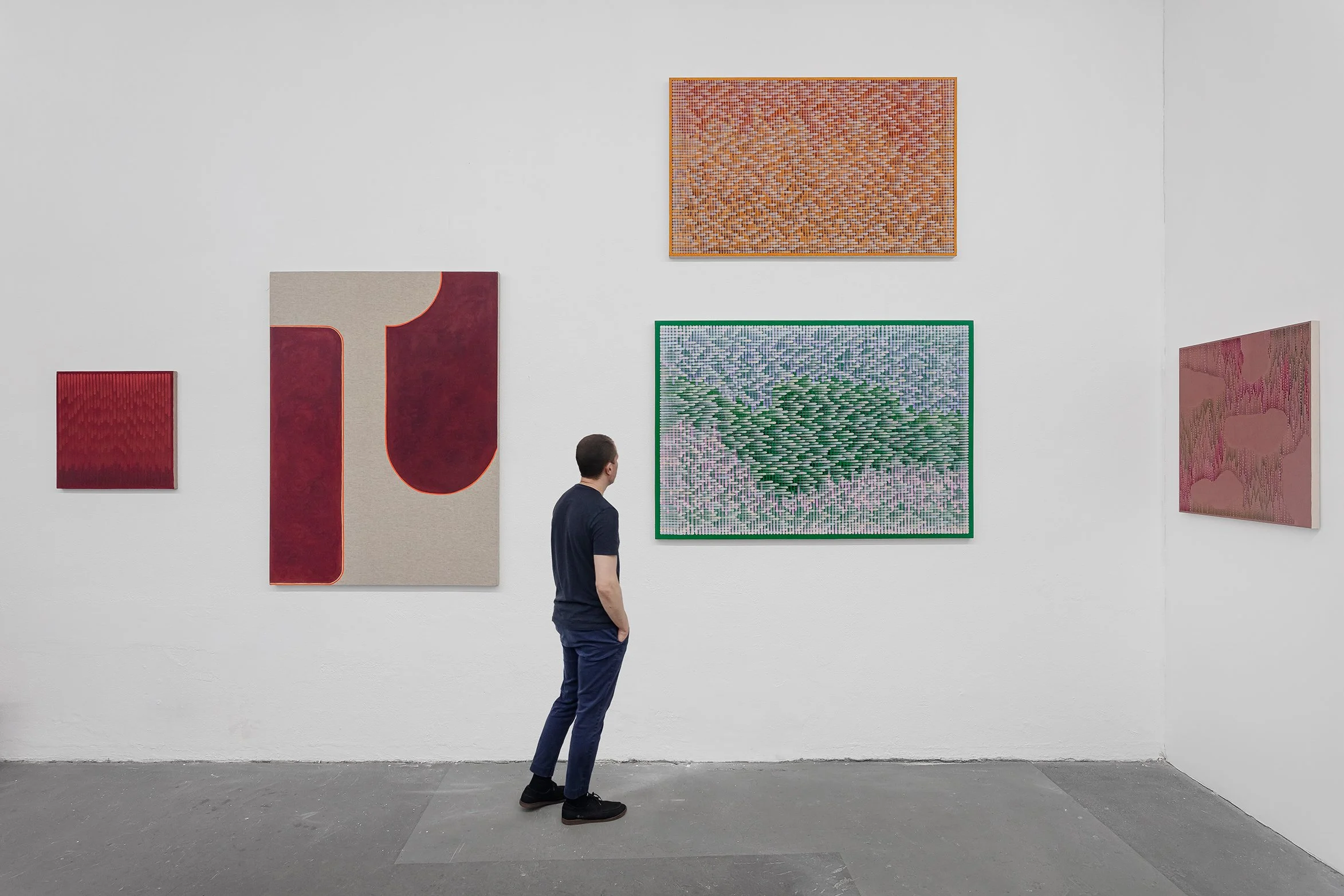
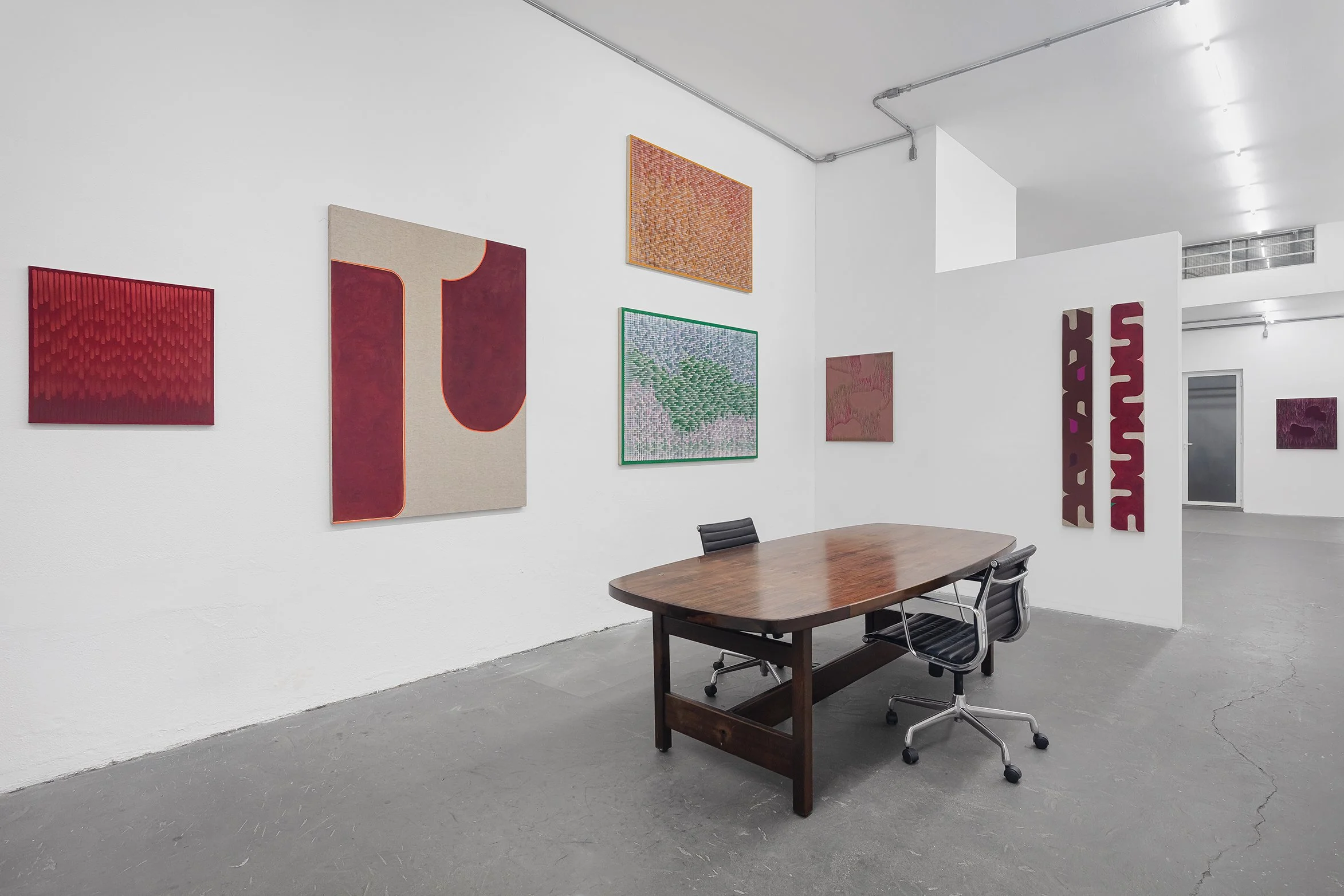
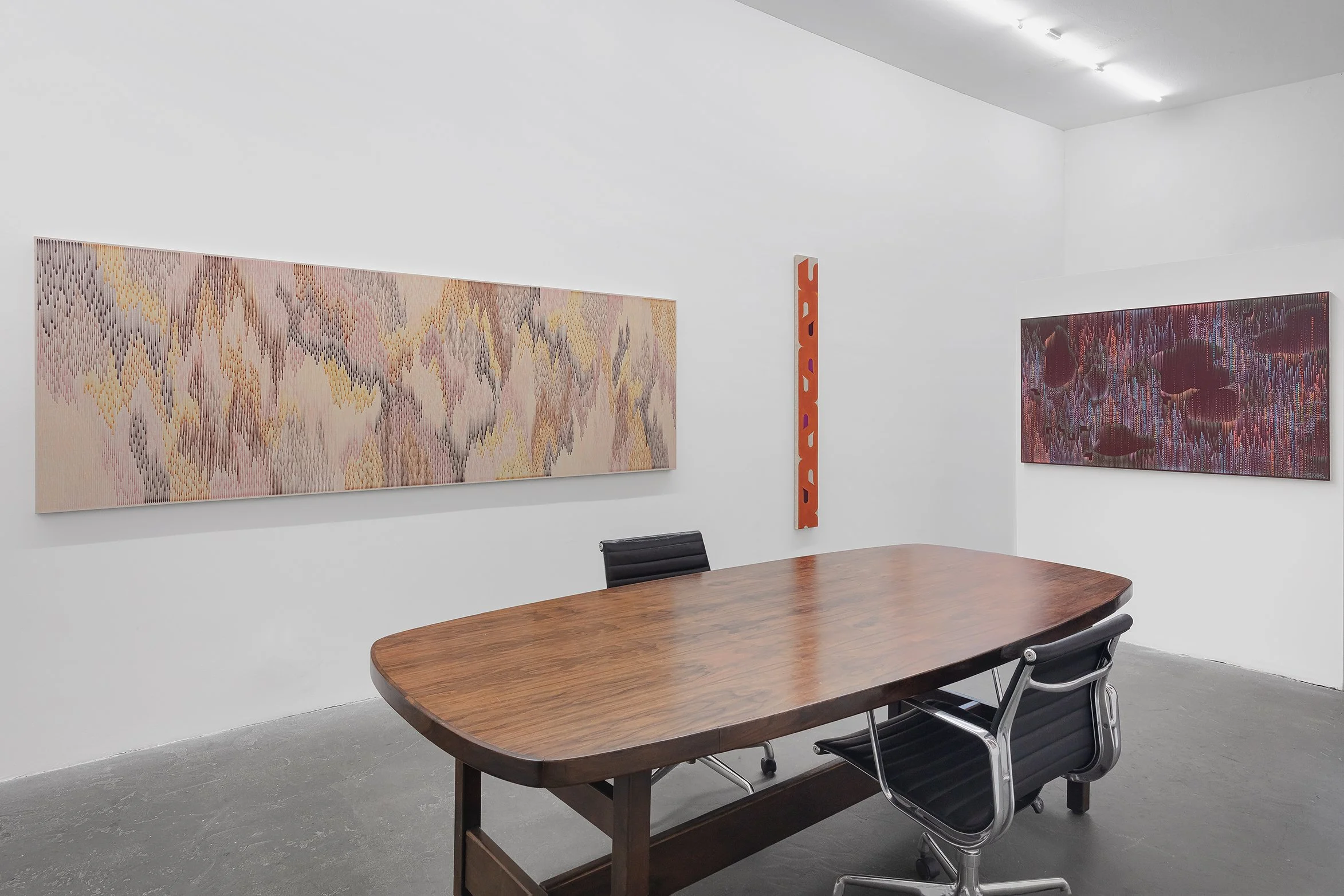
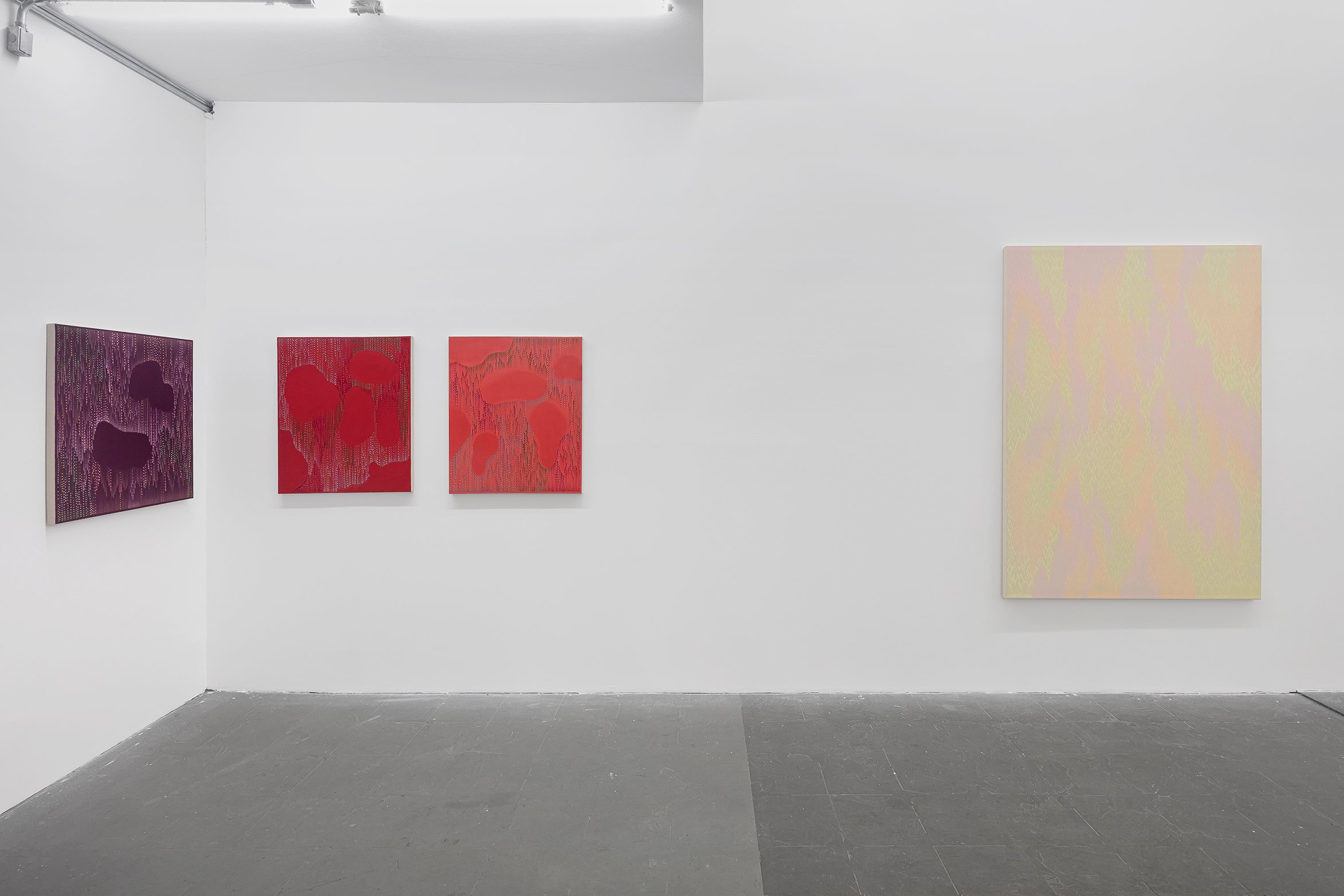
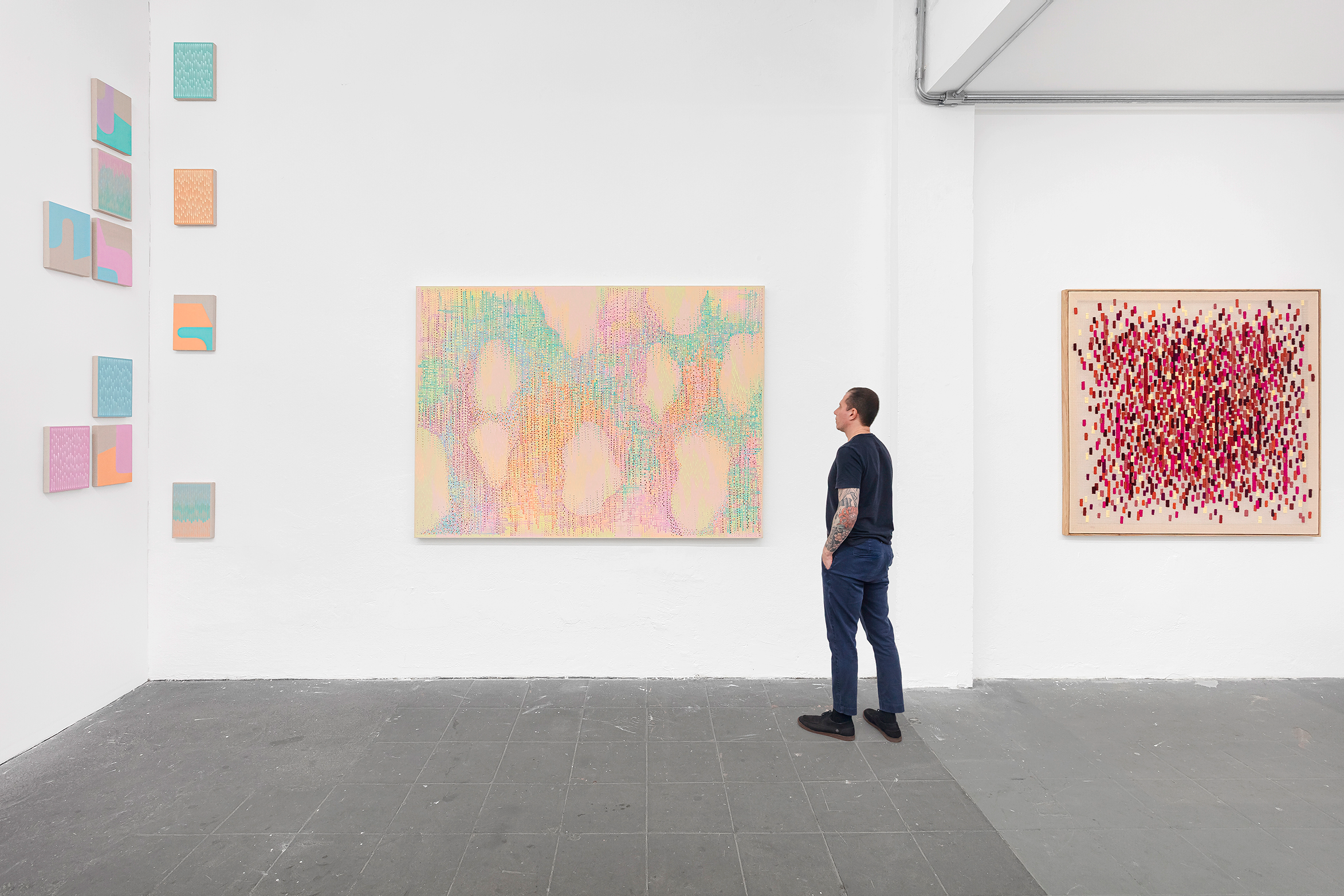
A rumor never imposes itself; it approaches slowly, infiltrating perception. In Rumor'rosa, the color pink assumes precisely this condition. Rather than functioning merely as a decorative element associated with stereotypical notions of femininity, it becomes a sensitive material that permeates the works, modulating varying intensities of its presence. In some paintings, pink appears to settle gradually across the surface, within a shower of pastel tones that seems to obey the slow pull of gravity. In others, embroidered or painted lines radiate from the center toward the edges of the canvas in continuous vibrations.
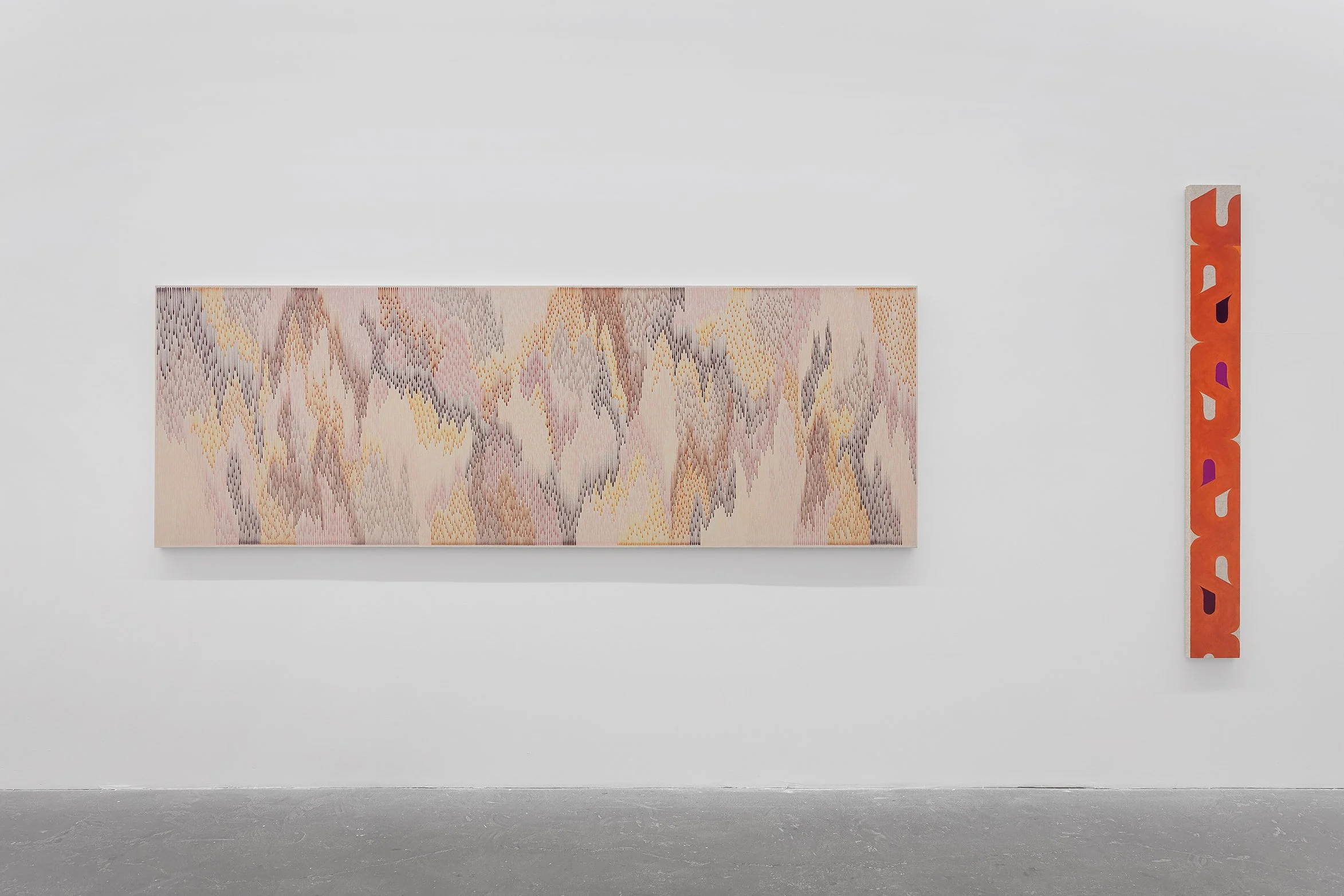
All of these movements share something in common: they reject the spectacular gesture. They are slow, persistent, and cumulative—echoing the temporalities of textile practices and other forms of making historically associated with women's labor. The image does not erupt before the viewer; rather, it is constructed through the repetition of small events. In many of the paintings and embroideries, their formal subtlety recalls the technique of pointillism, making patient accumulation the very compositional method of the work. Each individual mark appears discreet in isolation; together, they reveal a remarkable transformative capacity.
This persistence resonates with the reflections of the French philosopher Anne Dufourmantelle. For Dufourmantelle, gentleness does not correspond to passivity or the renunciation of conflict. Rather, it is a force with its own intensity—a symbolic power capable of transforming people and situations without resorting to violence. Its singularity lies precisely in constituting an active passivity: a form of resistance that operates without reproducing the logic of confrontation, shifting structures from within.
It is this ethics of gentleness that runs throughout Fabiana Preti's practice. More than a chromatic or formal choice, it constitutes a way of inhabiting the world. The artist embraces slowness in an age of acceleration, delicacy within a visual culture saturated by aggressive imagery, and the endurance of small gestures over the immediacy of visual impact. Her works suggest that care can itself become an aesthetic practice and that art can offer alternative pedagogies of perception—ways of seeing, feeling, and inhabiting the world guided less by spectacle than by attentive listening.
Through soft colors and delicate brushstrokes, Preti's work whispers the contours of a presence that stands against the accelerated and often violent logic of today's image-saturated culture. In her paintings, gentleness refuses fragility, acting instead as a quiet force capable of displacing entrenched regimes of perception.
At various moments, her research comes close to questions raised by the Pattern and Decoration (P&D) movement that emerged in the United States during the 1970s and 1980s. In opposition to modernist hierarchies that privileged formal austerity while relegating embroidery, tapestry, textile design, and ceramics to the realm of the merely decorative, artists such as Miriam Schapiro and Joyce Kozloff reclaimed these practices as legitimate sites of aesthetic invention and feminist critique. By incorporating patterns, ornamentation, vivid color, and handcrafted processes, the movement challenged the division between fine and applied arts, restoring to the center of artistic production forms of knowledge historically associated with women's work. Although situated within a different historical context, Preti's practice shares this operation by transforming patient repetition, craftsmanship, and delicacy into forms of resistance against the hierarchies that continue to distinguish the monumental from the intimate.
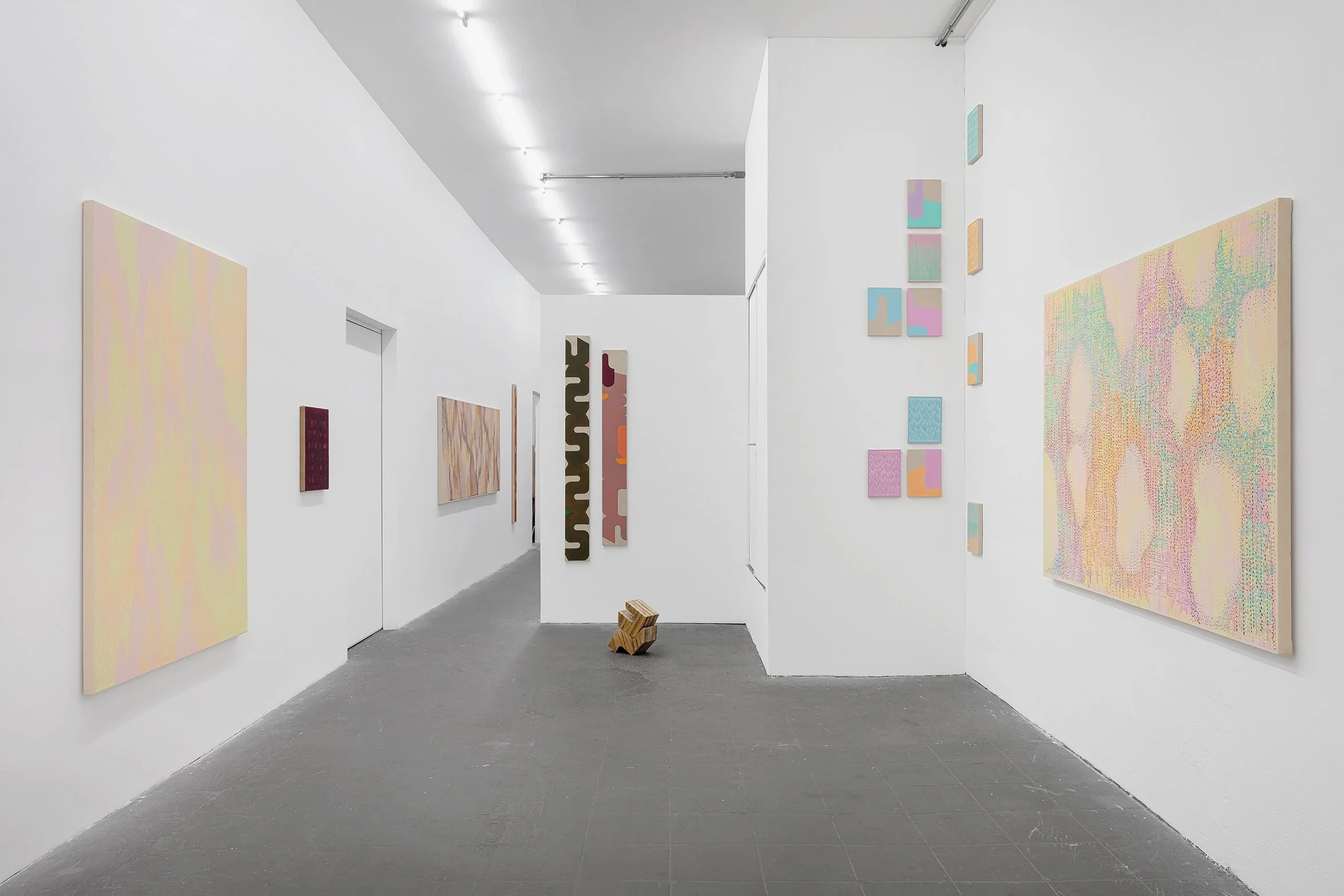
Preti's compositions, marked by a sensitive abstraction, unfold as delicate murmurs between fullness and emptiness. Forms are articulated through subtle interlocking relationships, at times evoking the tactile intelligence of childhood wooden construction toys, in which learning also meant touching, fitting together, and experimenting with spatial and emotional relationships.
The same logic reappears in the sculptures and in some of the denser paintings. Here, geometry recalls interlocking building toys, where similar volumes come together to reveal, simultaneously, presence and interval, mass and void. The palette incorporates more saturated tones alongside pinks and pastels, without relinquishing the atmosphere of delicacy that permeates the exhibition. Gentleness remains, now sustained by denser forms, demonstrating that delicacy and solidity are not opposing terms but complementary dimensions of the same experience.
Preti thus proposes a pedagogy of forms in which chromatic and formal sweetness operates as a force of subjective transformation. As Dufourmantelle suggests, gentleness is not opposed to strength; it is a strength of another order, capable of transforming without violence. In Preti's work, the delicacy of a rumor of forms and colors becomes precisely a mode of resistance against the hardness of sharp edges and the imposing geometries that so often structure our visual world.
In Rumor'rosa, gentleness becomes an ethics of looking. The paintings, embroideries, and sculptures invite viewers to experience another regime of attention, one in which transformation takes place through endurance—through the delicate persistence of modest gestures that demonstrate, almost in silence, where true strength resides.
Text by Ana Avelar (free translation)
Photos: Felipe Berndt