Tudo aquilo que move
Collective show
Frente Gallery
Curated by Ana Carolina Ralston
September 29, 2026 - October, 29, 2026
Everything That Moves
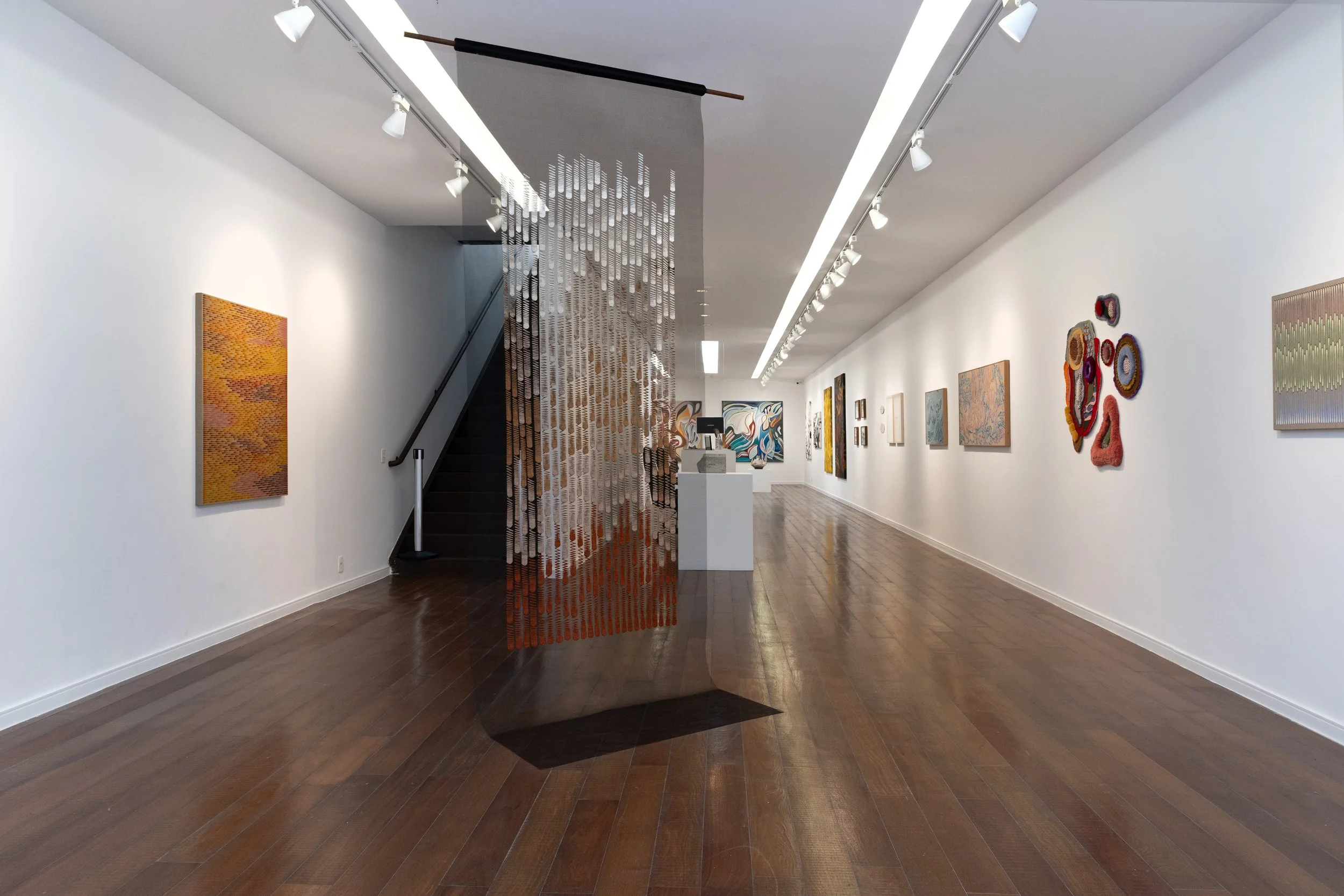
There is something that precedes form: a silent impulse that makes things grow, breathe, expand, and transform. Before any permanence, there is movement. Life manifests itself less as a state than as a continuous process of change, in which every organism, every material, and every gesture carries within itself the potential for transformation. As the philosopher Henri Bergson wrote, life is kinesis — and cannot be understood as a succession of fixed states, but rather as a creative flow that never repeats itself in exactly the same way. It is within this dimension of becoming, in which birth, growth, decomposition, and renewal belong to the same cycle, that the exhibition Everything That Moves, currently on view at Galeria Frente, takes shape.
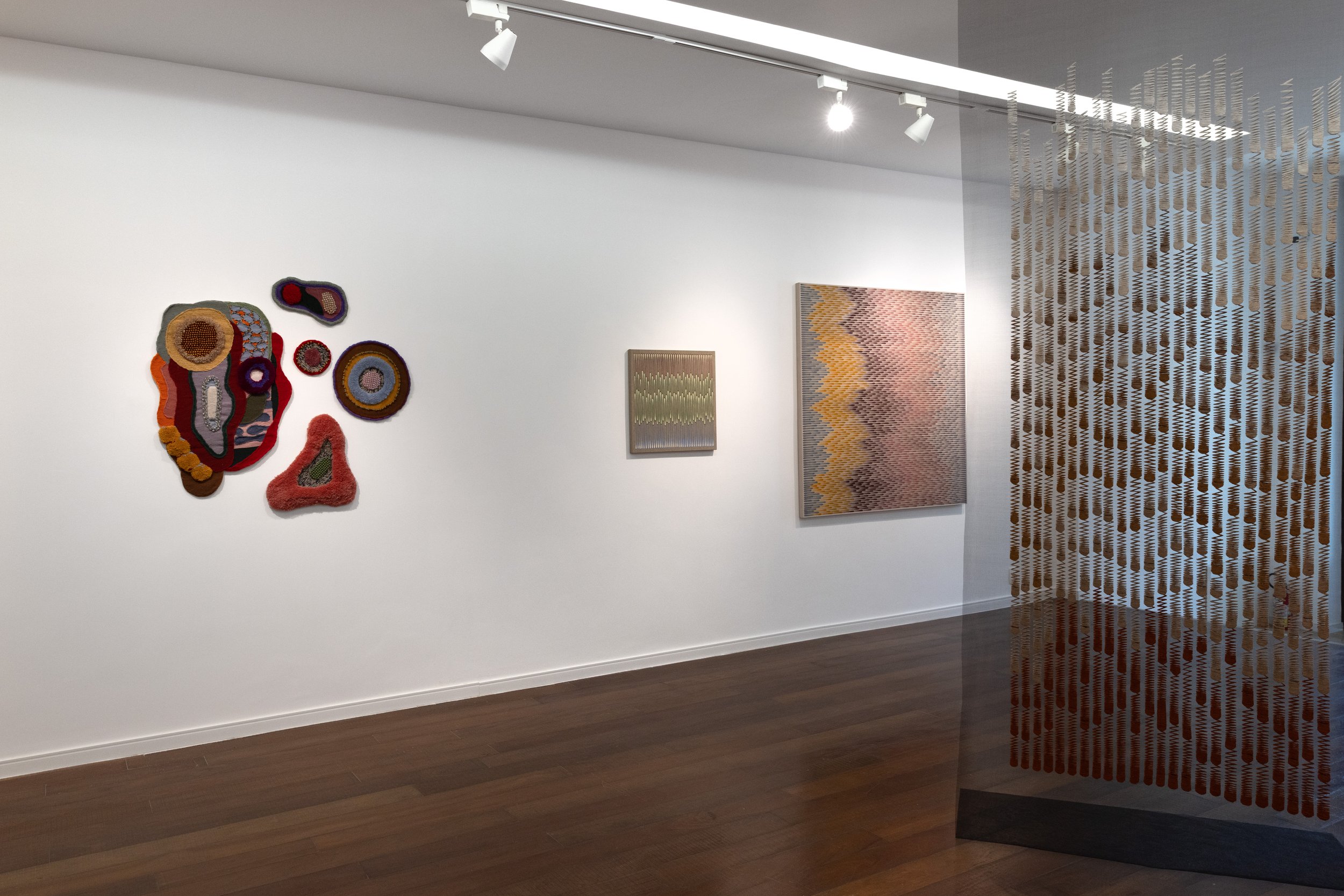
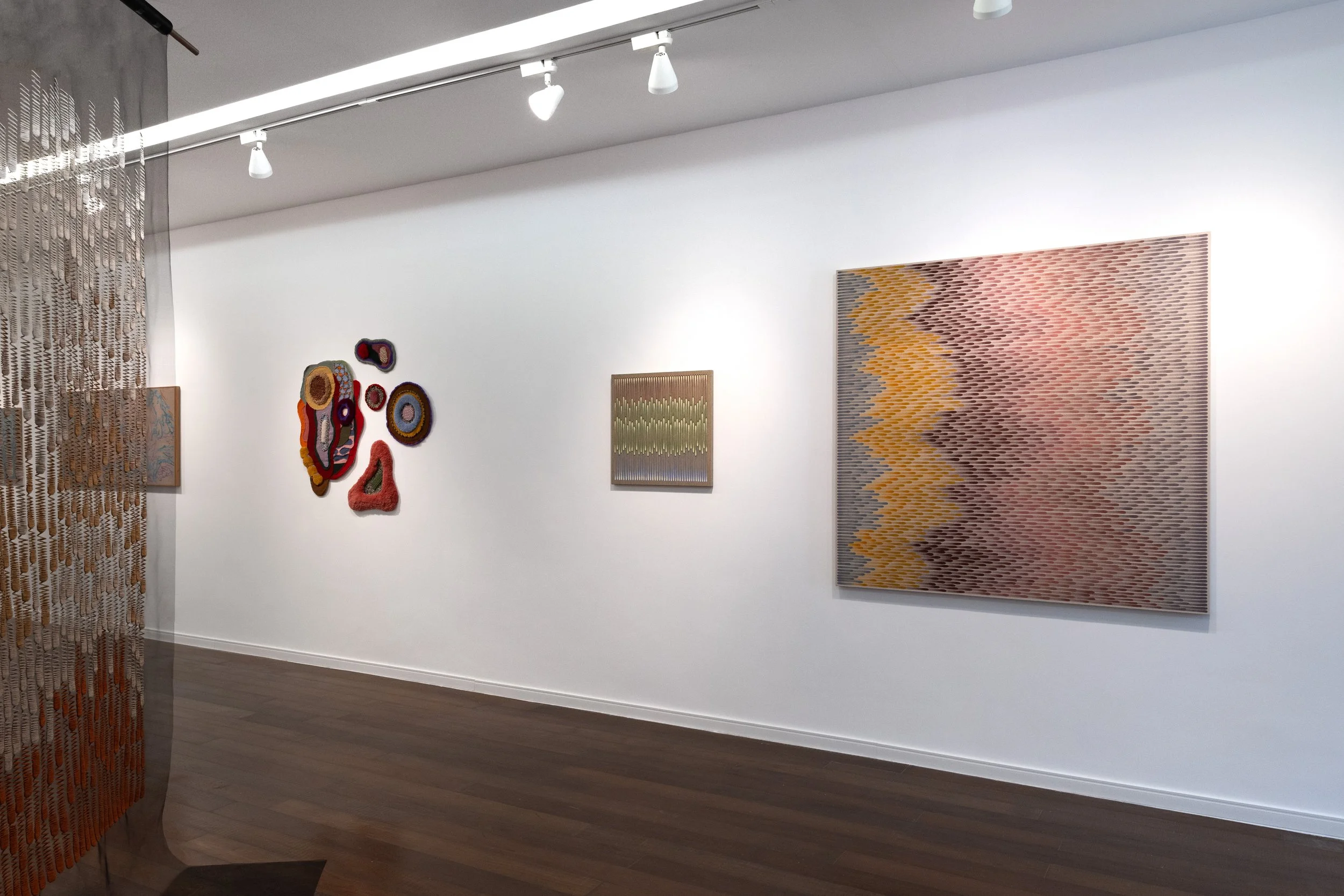
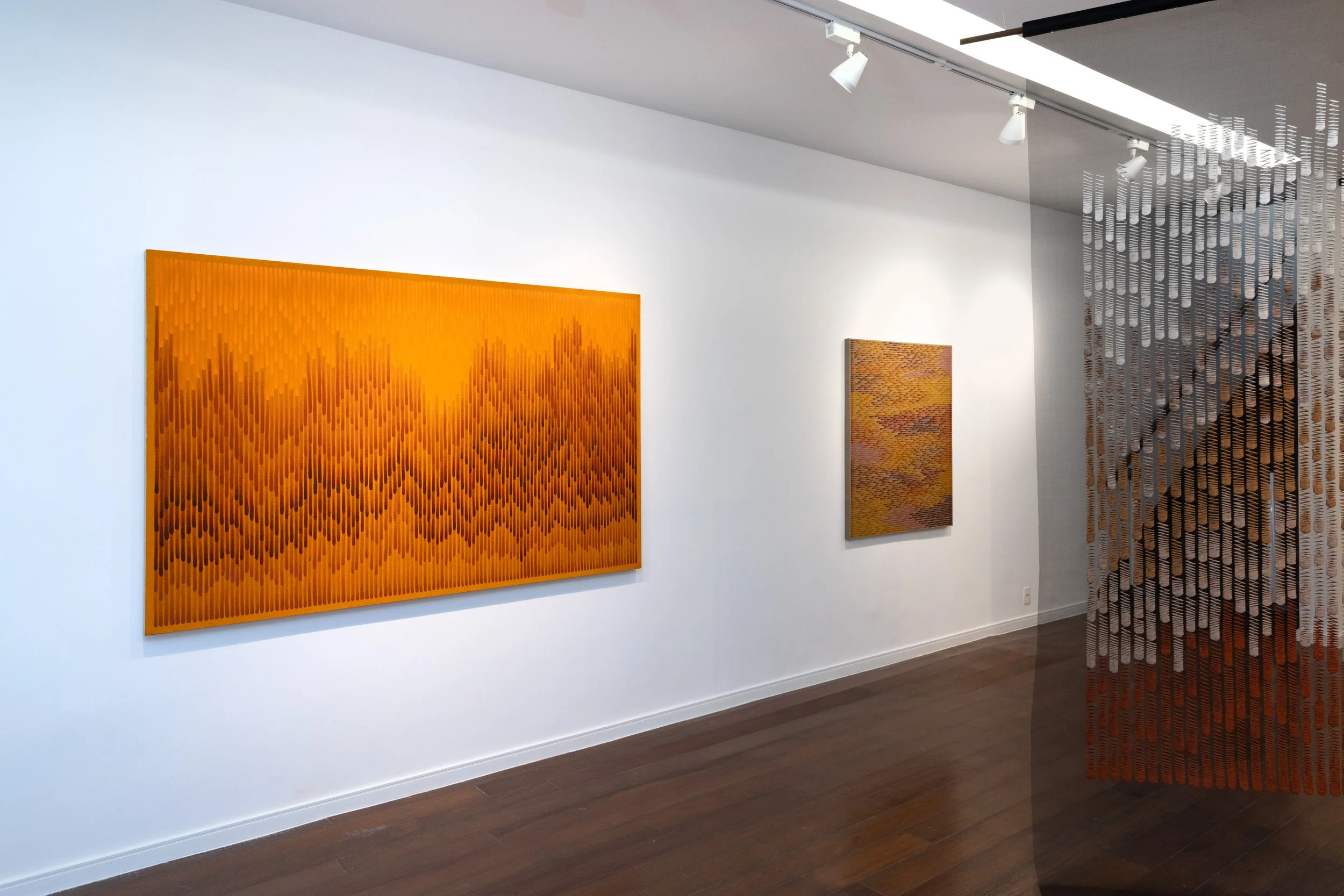
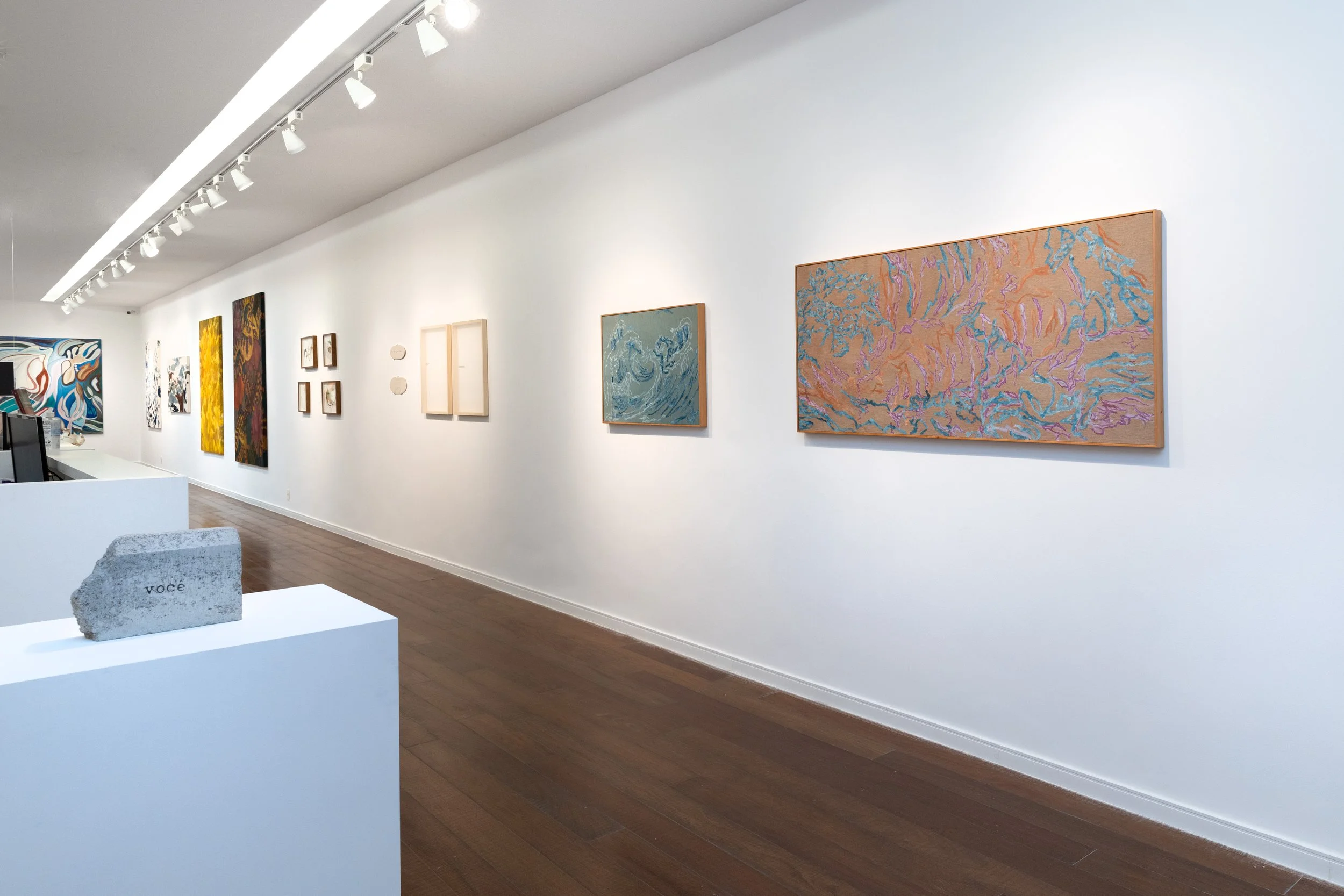
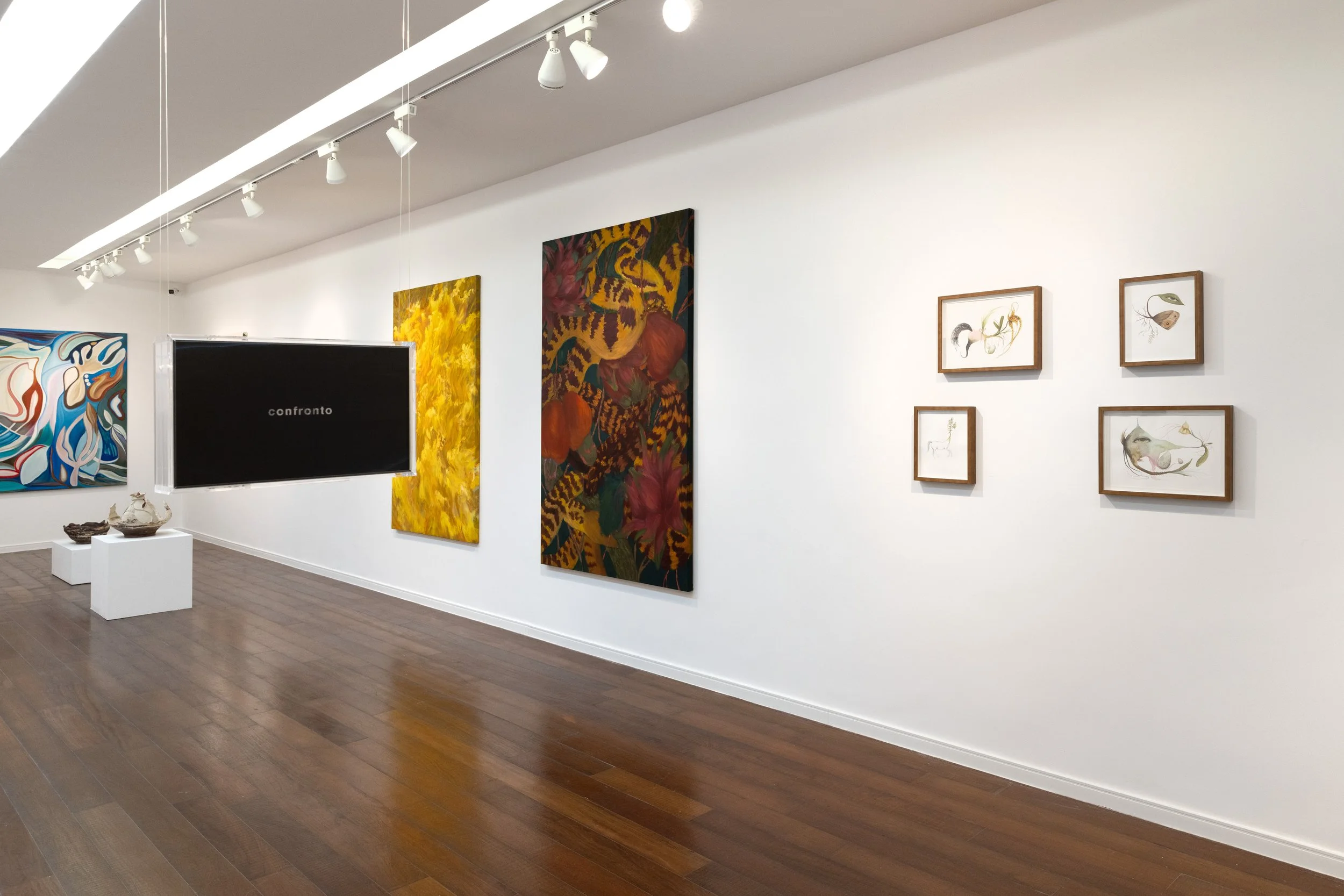
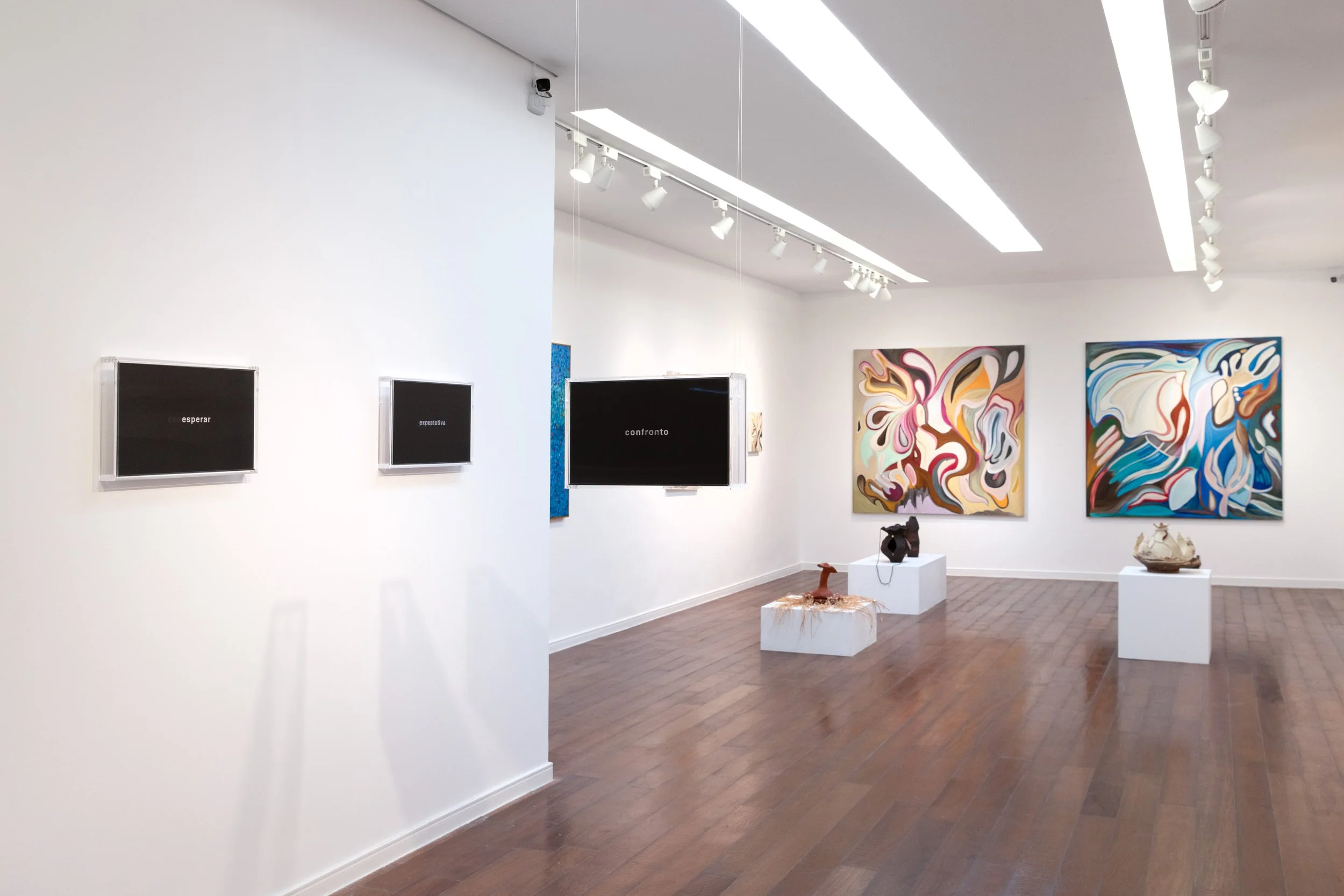
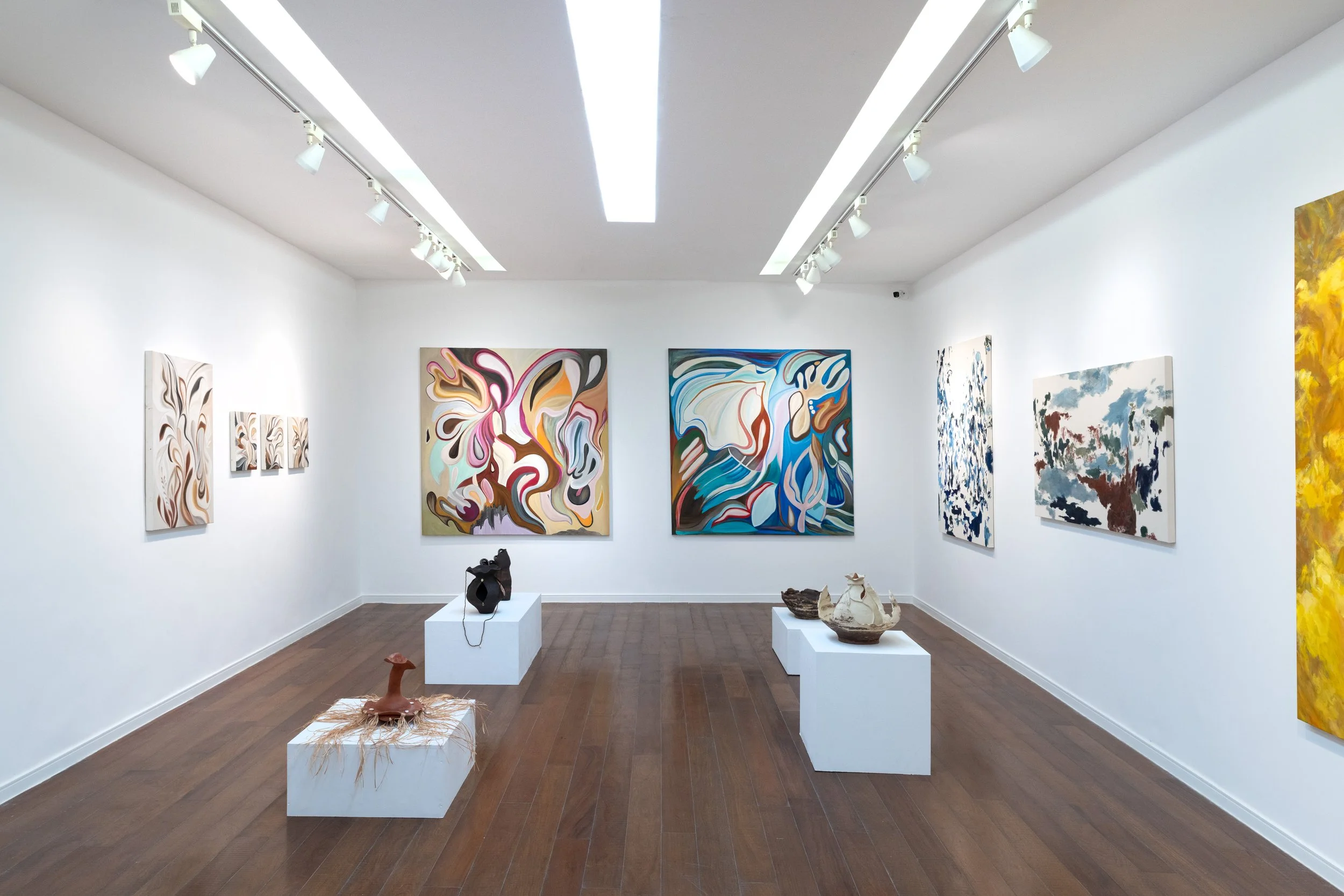
The exhibition brings together eight artists whose practices reveal that every form emerges from invisible forces that move through matter. In their works, organicity manifests itself through expanding forms, structures that evoke cellular bodies, rhythms that compose nature, and the forces that connect matter and space. Each work makes evident that to live is to remain in perpetual movement, transfiguring through countless layers that make variability the very condition of existence.
In Diana Motta’s works, forces that normally escape the eye become visible. Her paintings suggest currents of energy, organic formations, and landscapes that dissolve the boundaries between body and nature, matter and atmosphere. Each canvas emerges from an unrepeatable process, in which paint follows its own rhythms of expansion, sedimentation, and encounter. Compositions, colors, and gestures seem to share a single breath, forming a web of relationships in which nothing exists in isolation. The surface becomes a living, rhizomatic field, translating her rich spiritual universe into physical form.
In Efe Godoy’s watercolors, plants, animals, and human figures cease to exist as distinct categories and instead flow into one another. In her images, no form remains intact for long; everything seems to move through a continuous state of transfiguration, in which species, bodies, and landscapes share the same sensitive matter. The artist constructs a universe in which hybridity is not an exception, but a natural condition of existence. By dissolving the boundaries between bodies, her practice proposes an understanding of identity as something perpetually unfinished and in constant transformation. More than depicting metamorphoses, her work reveals that remaining alive may perhaps mean precisely never fully coinciding with oneself.
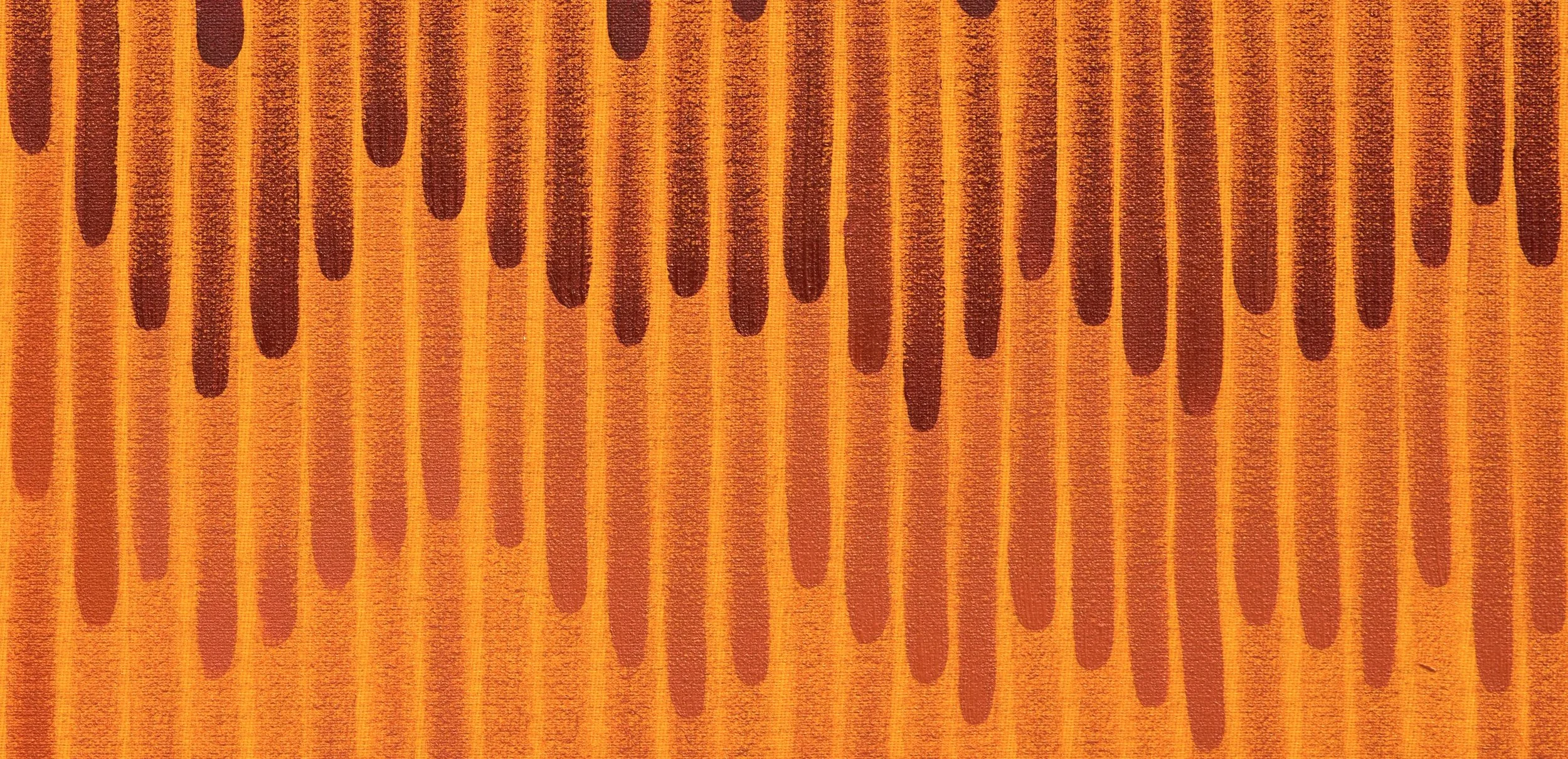
In the work Fabiana Preti has created for this exhibition, movement emerges as an event. In her series Chorinho — whose title evokes the tradition of Brazilian popular music — she brings different forms of cadence into proximity. Just as rhythm is constituted, above all, by a way of playing, her paintings reveal a way of painting in which gesture becomes language. Brushstrokes, repeated through variations in color, density, and transparency, are arranged like a visual score, establishing rhythms, pauses, and tensions that make the surface vibrate. Painting becomes flow: it pours into a field where the gaze traverses the time inscribed in each gesture, making movement itself the material of the work.
Giulia Bianchi’s practice shifts the gaze toward the relationships that constitute the living world. Among structures that evoke leaves, fruits, animals, and organisms, her paintings reject the separation between nature and culture, proposing a field in which different forms of existence share the same condition of presence. By employing synesthesia as a method, the artist expands the experience of painting beyond vision, invoking memory, touch, scent, and imagination. Each work invites the viewer to perceive that living also means continuously responding to what surrounds us.
In Thamiris Mandú’s sculptures, the earth preserves what time leaves behind. Clay ceases to be merely a material and becomes an archive of gestures, ancestralities, and histories that pass through the body, as suggested by philosopher Gaston Bachelard. By mixing different types of clay, the artist investigates belonging, displacement, and memory, turning ceramics into a territory where identities remain in a constant state of formation. Fire, far from bringing the process to an end, becomes a passage, revealing that every material retains within itself the traces of the forces that shaped it.
For Marysia Portinari, movement arises from the relationship between color, light, and geometry. Engaging with the tradition of geometric abstraction and drawing closer to the optical investigations of Op Art, the artist creates compositions in which the surface seems to pulsate before the viewer. Lines, planes, and chromatic fields produce perceptual shifts that allow the painting to oscillate. Rather than simply organizing forms, the artist investigates how light structures our experience of space, transforming the canvas into a field of energy in which perception remains constantly activated.
In Naia Ceschin’s practice, the impulse emerges from the encounter between distinct materials themselves. Colored threads and paint intertwine across surfaces that grow before the viewer’s eyes, as though each gesture extended the one before it in a continuous process. Moving between tapestry and painting, the artist constructs landscapes that oscillate between the microscopic and the geographical, bringing together cellular structures, vegetal forms, and memories of nature in compositions that never fully settle. Her works suggest that landscape is not a fixed place, but an organism in perpetual transformation, where color, fiber, and gesture share the same vital impulse toward expansion.
In the series presented by Verena Smit, mutation takes place within language itself. Using lenticular panels, the artist causes pairs of words — such as Fugir/Agir (*Flee/Act*) and Desesperar/Esperar (*Despair/Hope*) — to alternate according to the movement of the viewer’s gaze. There is no definitive reading: each slight change in position brings forth a new meaning, revealing that between one word and another lies a fertile interval where decision, time, and perception converge. The work thus becomes a shared experience. It is within this unstable space that the artist reveals how meaning is never fixed, but emerges from the continuous transformation of the relationships between what we see, think, and experience.
In Everything That Moves, different artistic genres and mediums reveal life as a field of relationships. Rhythm, memory, perception, connectivity, light, and matter run through these practices, composing different manifestations of the same vital force. As anthropologist Tim Ingold observes, life unfolds in a world of materials in formation, where nothing remains still because everything is continually in process. The works gathered in the exhibition invite the viewer to follow this incessant flow, recognizing that every configuration contains within itself the forces that brought it into being, as well as those that continue, silently, to transform it.
Text by Ana Carolina Ralston
Photo: Galeria Frente