
Áurea
In Áurea, the construction of the pictorial surface takes place through a weave of varying thicknesses generated by the accumulation of layers that present themselves as an almost-fabric. Fabiana Preti incorporates organic forms through cutouts in the uppermost layer that appear solid at first glance but, upon closer inspection, dissolve into indeterminacy, in a poetics that may allude to the fragility or flexibility of structures.
Here, geometry does not assert itself as a closed system, but rather as an unstable structure, crossed by deviations, pulsations, and small flaws that introduce the sensible into formal rigor. Color is built over time, through the optical vibration derived from overlap and repetition, from the gesture that carries the weight of the arm and the precision of the hand. Repetition, after all, is never identical—it produces difference, as noted by Rosalind Krauss. In this sense, Áurea refuses the neutrality of form and color by creating new relationships between order and dissolution, pigment and luminosity, delivering flow in place of order.
Gabriel Babolim
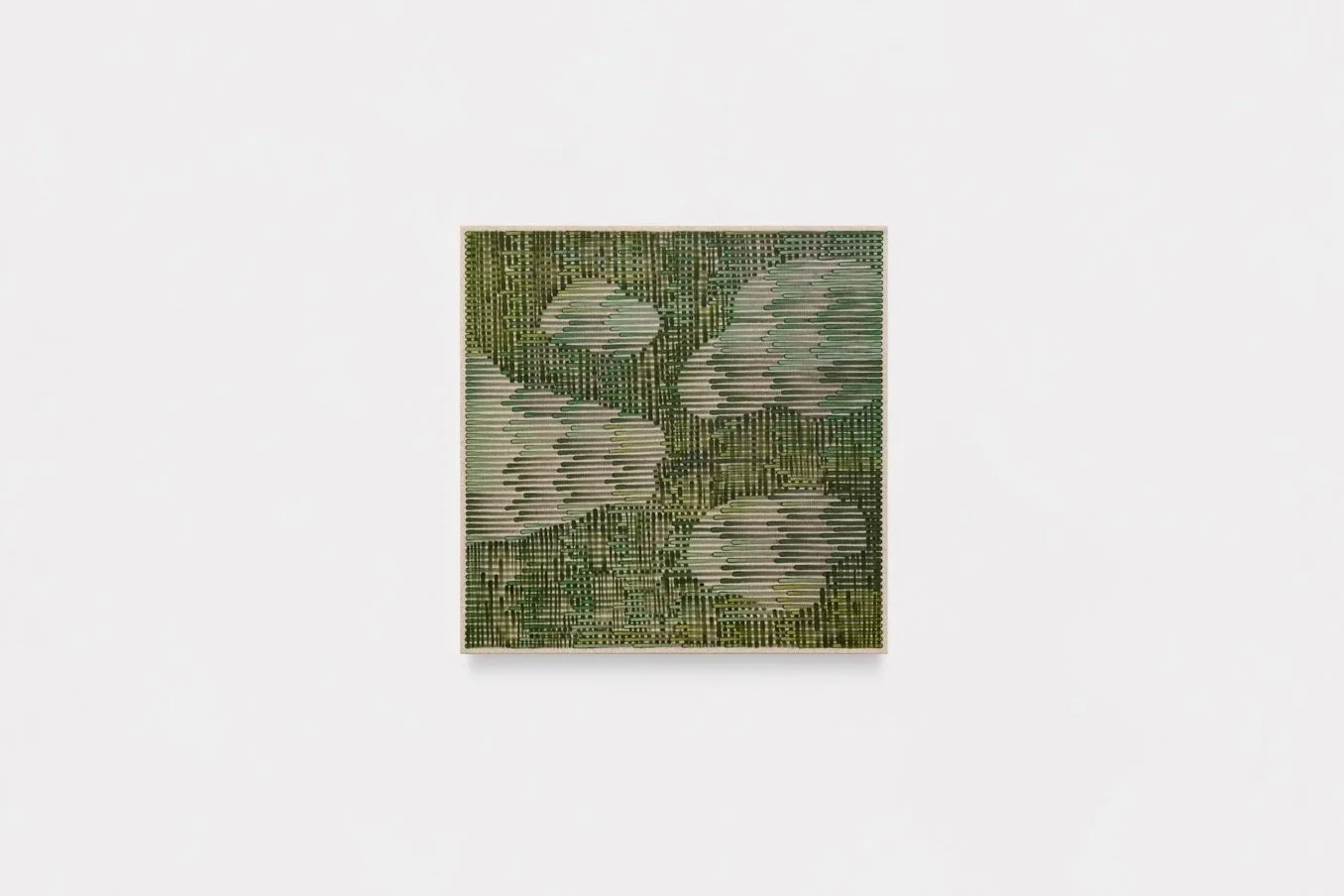
untitled, 2026 | Acrylic on linen | 39,3 x 39,3 in
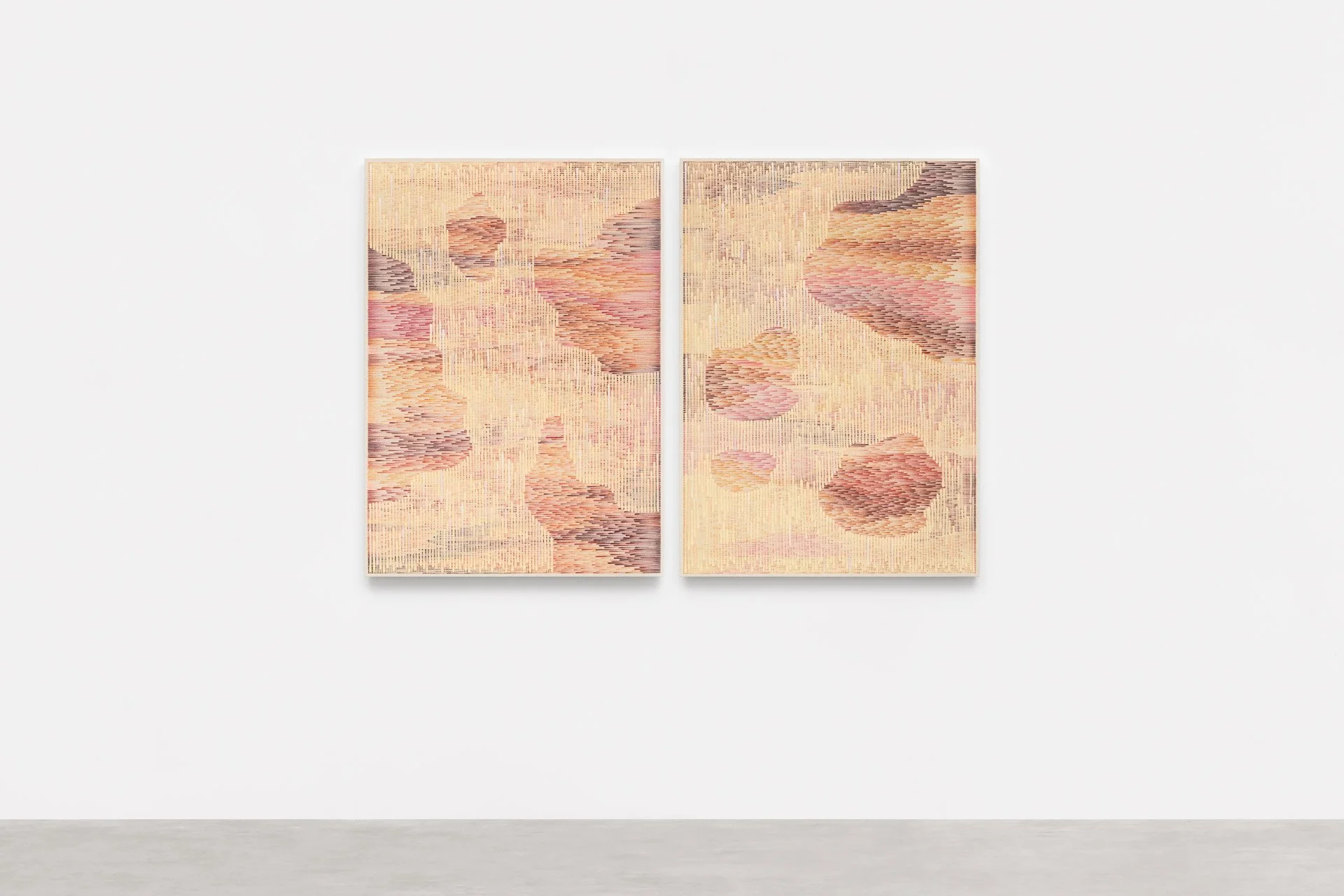
untitled, 2025 | Oil on linen | 55,1 x 80,7 in
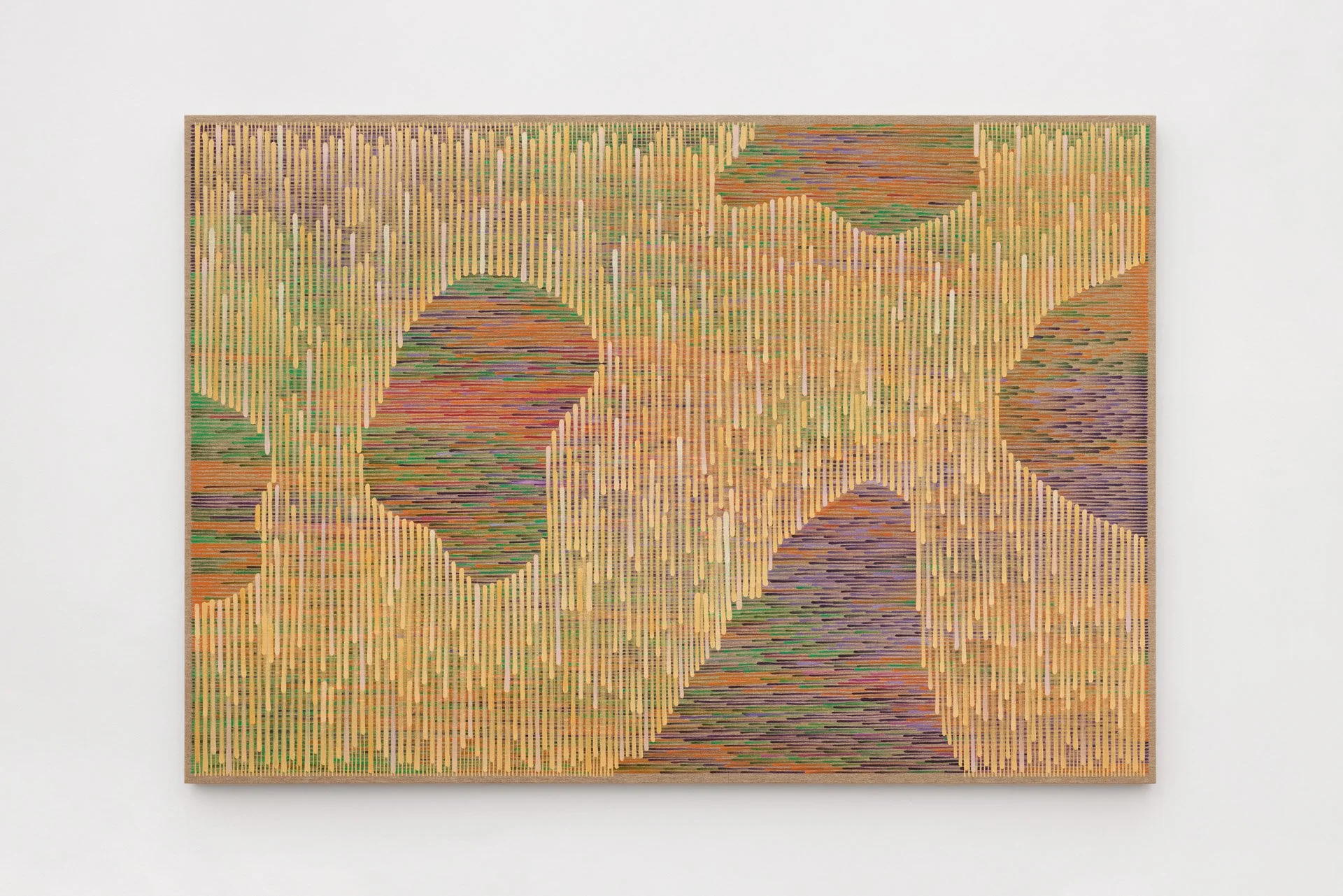
untitled, 2025 | Oil on linen | 43,3 x 62,9 in
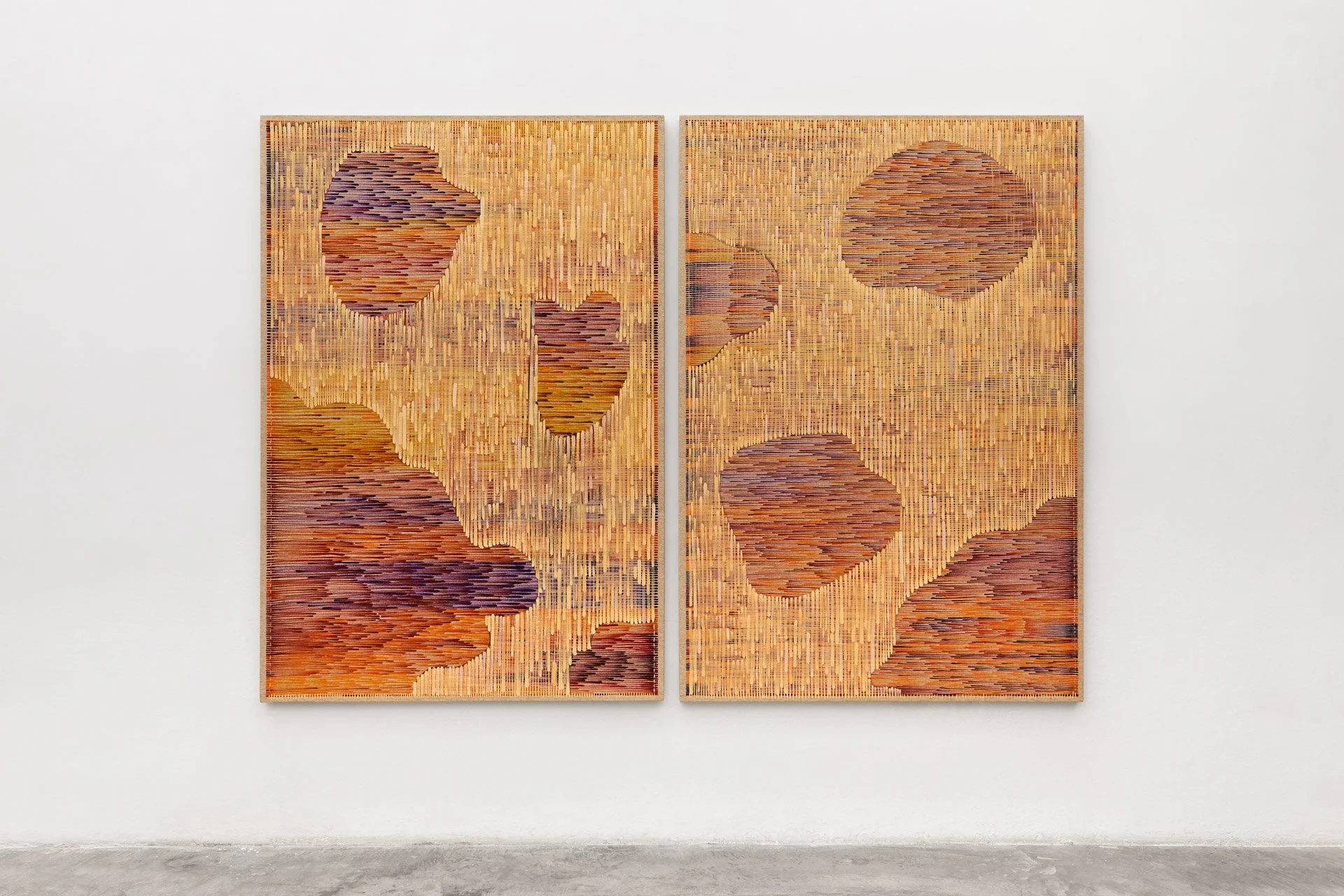
untitled, 2025 | Oil on linen | 62,2 x 90,5 in