
Palíndromo
A palindrome implies reversibility and temporal and spatial symmetry: something that can be read backward without losing its meaning, forming variations of the same statement. Rosalind Krauss, in discussing the “grid,” points out that modular repetition breaks with narrative and establishes an autonomous, almost linguistic field in which the image begins to operate as text. In the works of the series, the vertical lines function as a kind of abstract writing—not legible, but structured—that can be traversed in multiple directions, like a palindrome. Their resemblance to coded structures, such as barcodes, textile patterns, tree trunks, rainfall, or digital data, suggests a tension between nature and system, bringing her printmaking practice closer to that of artists such as Agnes Martin and Mira Schendel.
There is also a metalinguistic dimension: printmaking, by nature, is reproducible, just as the palindrome is based on structured repetition. Technique and concept therefore converge: the matrix generates multiples in the same way that the palindrome produces meaning through mirroring. Fabiana Preti thus establishes a relationship between minimalism and lyricism—compositions that are formally economical, yet dense in rhythm, texture, and visual vibration.
Gabriel Babolim
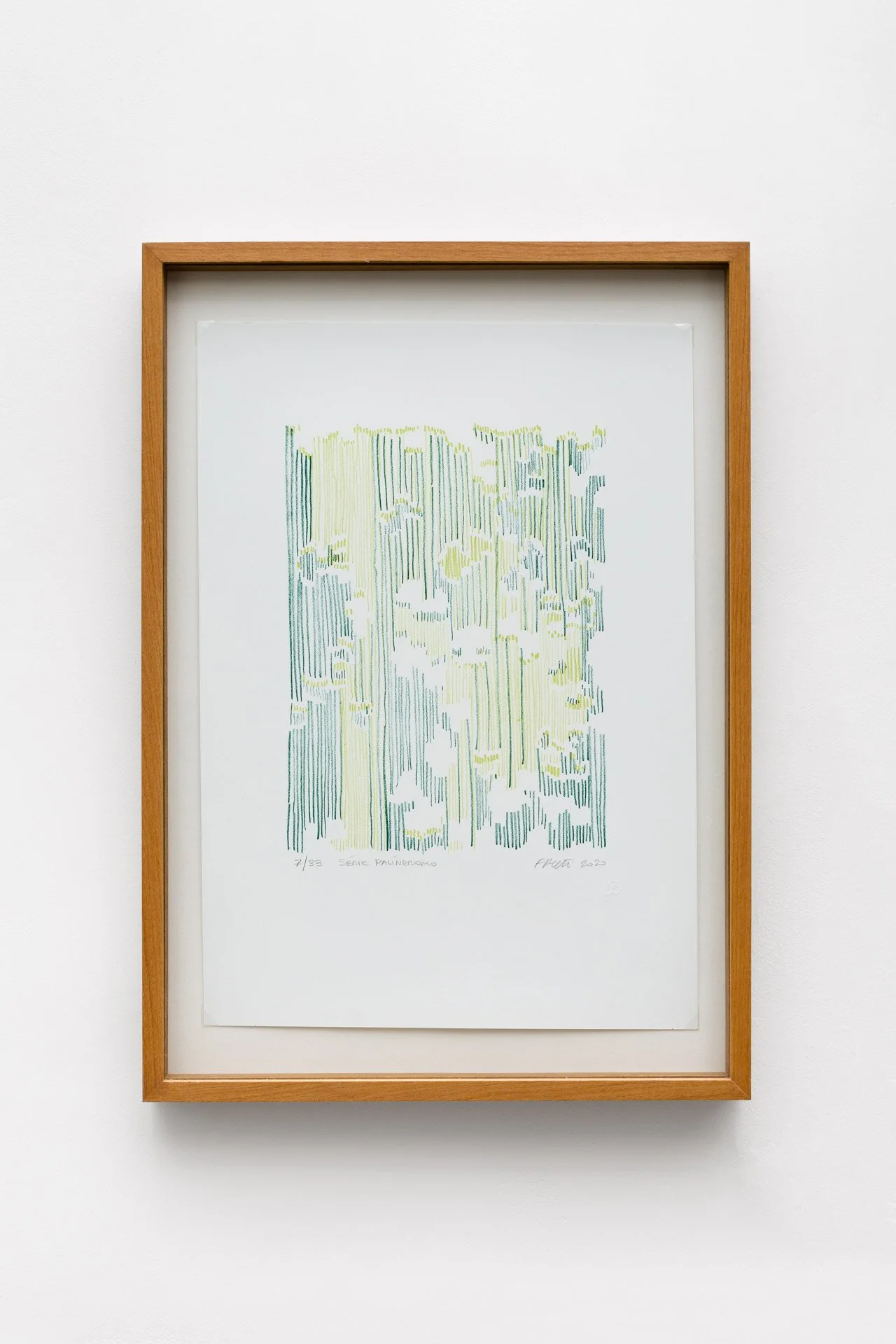
À sua pausa 2, 2020 | Litograph (7/33) | 23,6 x 16,7 cm
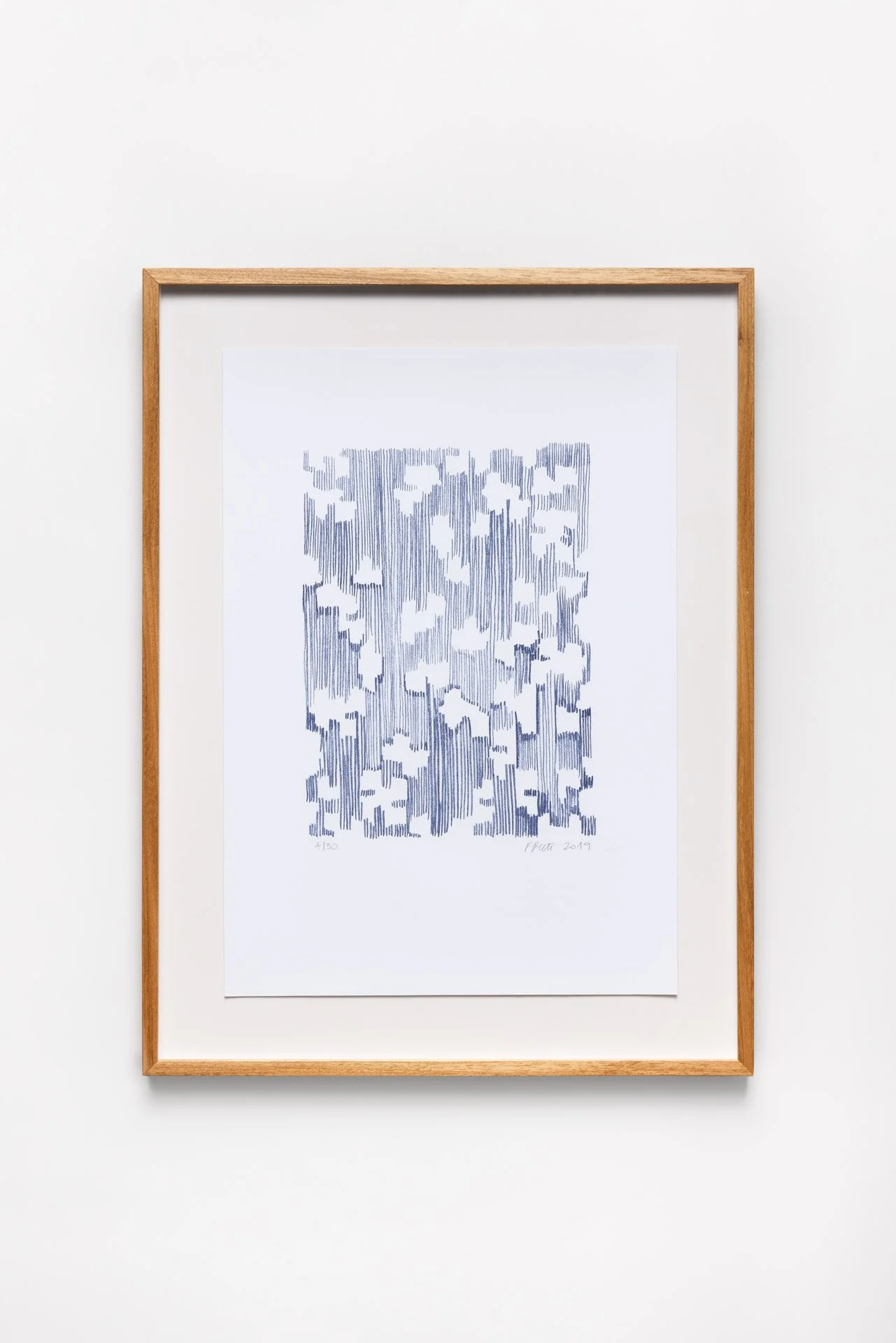
untitled, 2020 | Litograph (4/50) | 23,6 x 16,7 cm
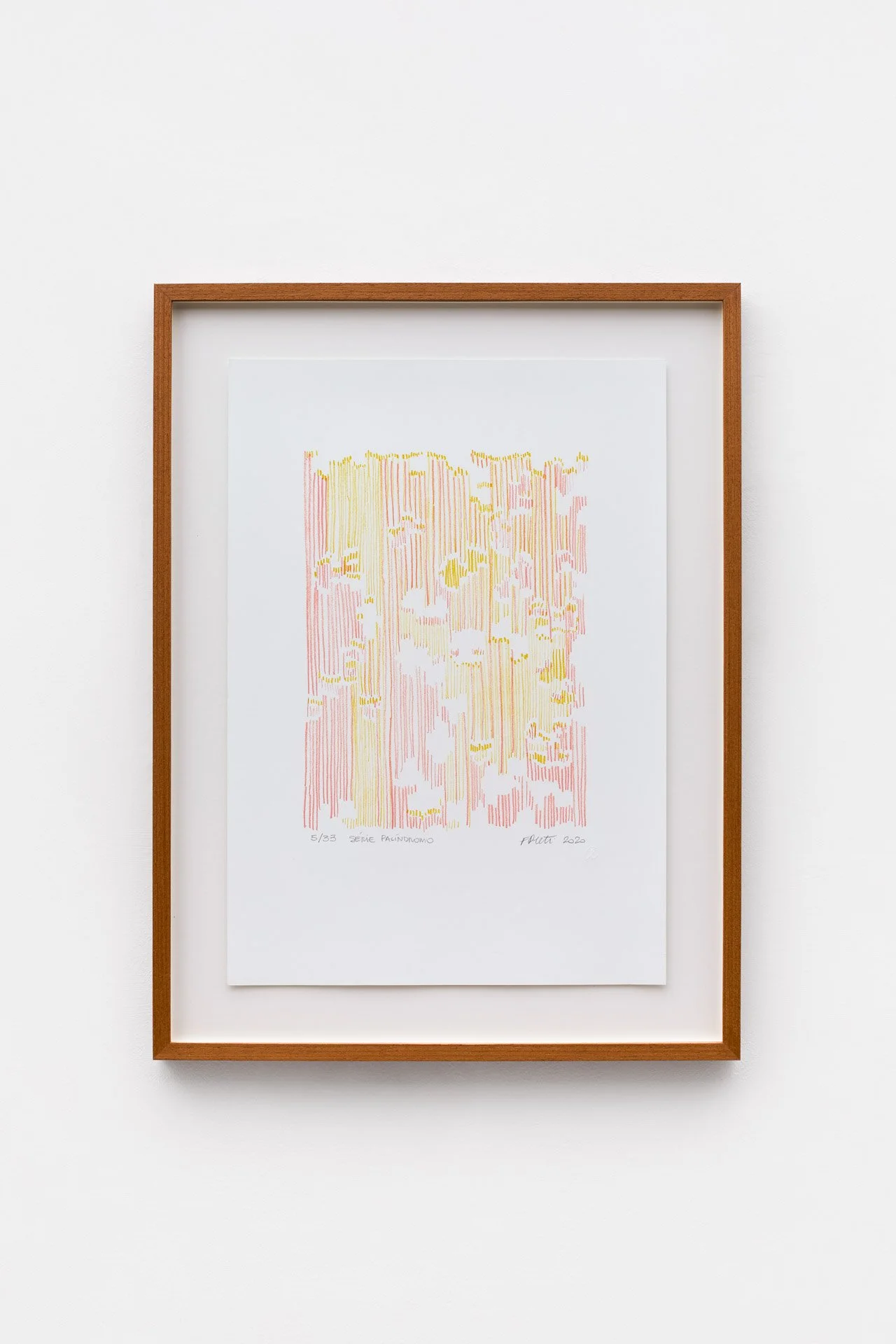
À sua pausa 1, 2020 | Litograph (5/33) | 23,6 x 16,7 cm
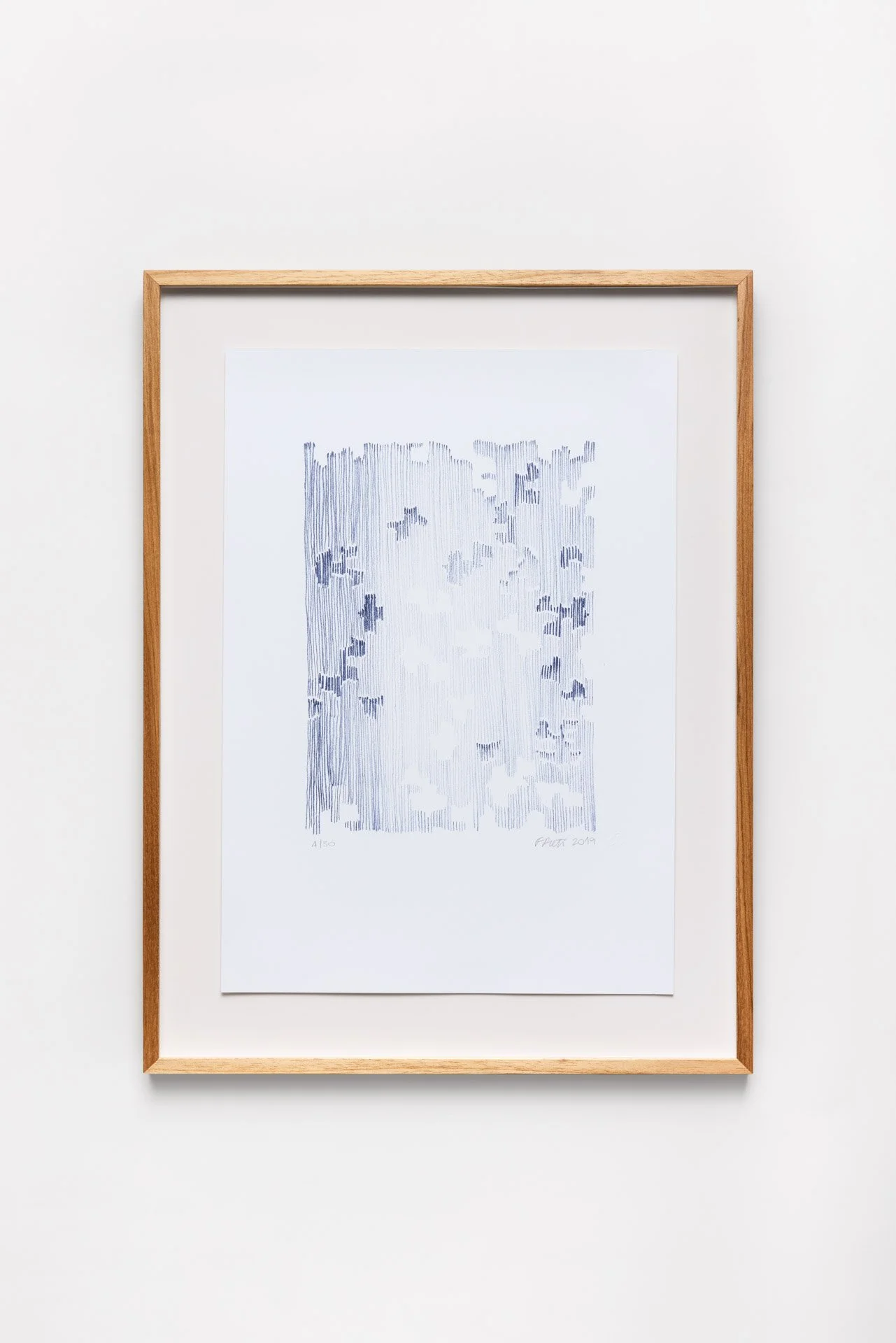
untitled, 2020 | Litograph (4/50) | 23,6 x 16,7 cm
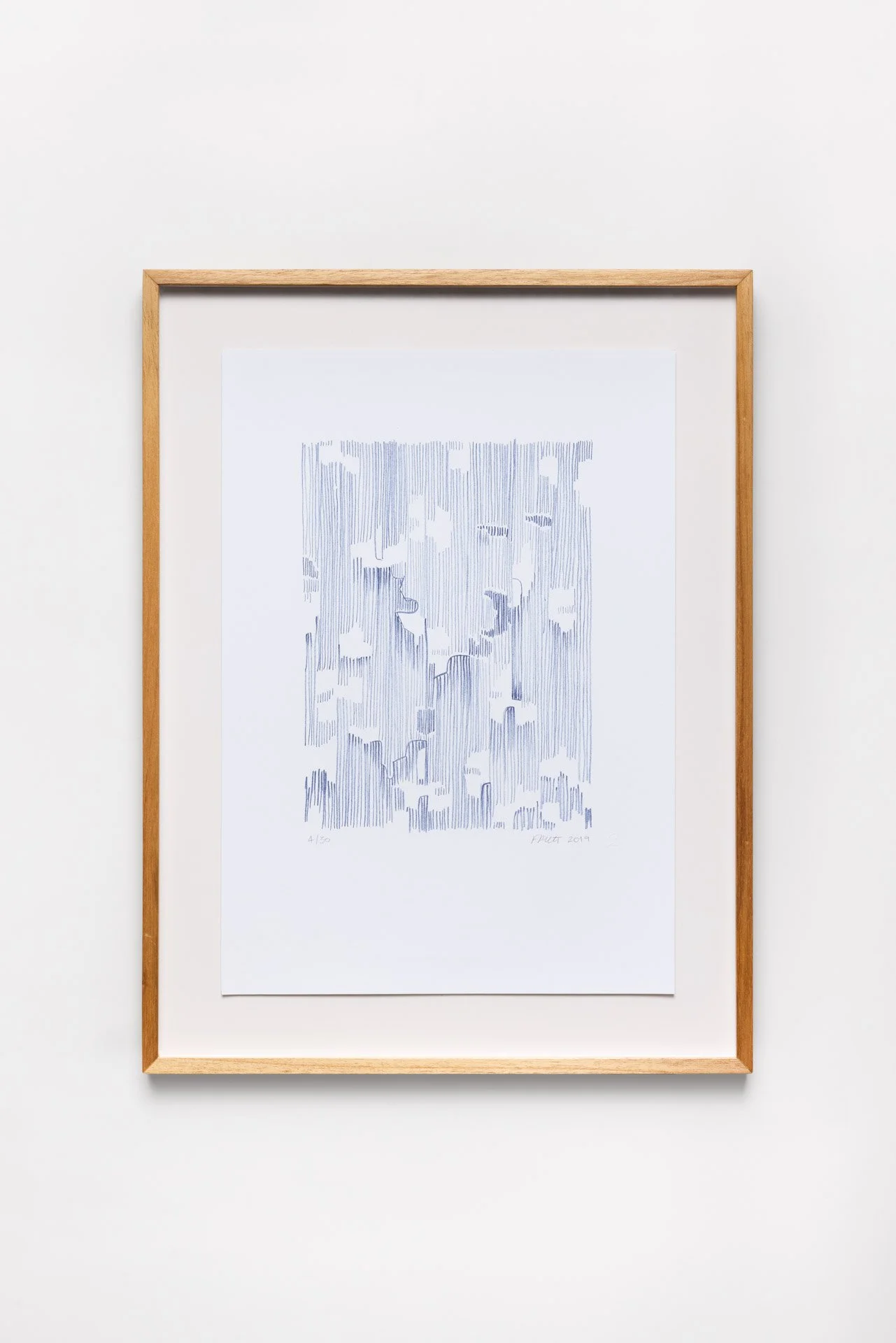
untitled, 2020 | Litograph (4/50) | 23,6 x 16,7 cm