ARAPUCA
Solo show
Blombô
Curated by Theo Monteiro
September 3rd, 2022 - September 10th, 2022
Walking Through the Interlaced
For centuries, urban planning conceptions established predatory relationships with nature: by ignoring the environmental conditions of a given site, human beings sought to “frame” nature at any cost, reaping as a consequence a great number of disasters and tragedies that still haunt our cities today. Nowadays, in a gradual way, more progressive sectors of urbanism have sought “cohabitation” with nature rather than forced imposition.
The metaphor in the paragraph above, though at first very specific, speaks about a way of being in the world, of inhabiting it, of thinking about it. In this sense, it provides an important tool for understanding the work of Fabiana Preti. Her starting point was tilework: by creating or simulating tiles through paintings, the artist built dynamic visual games and geometric patterns. Over time, interest in the support itself began to stand out more than the motifs Preti executed.
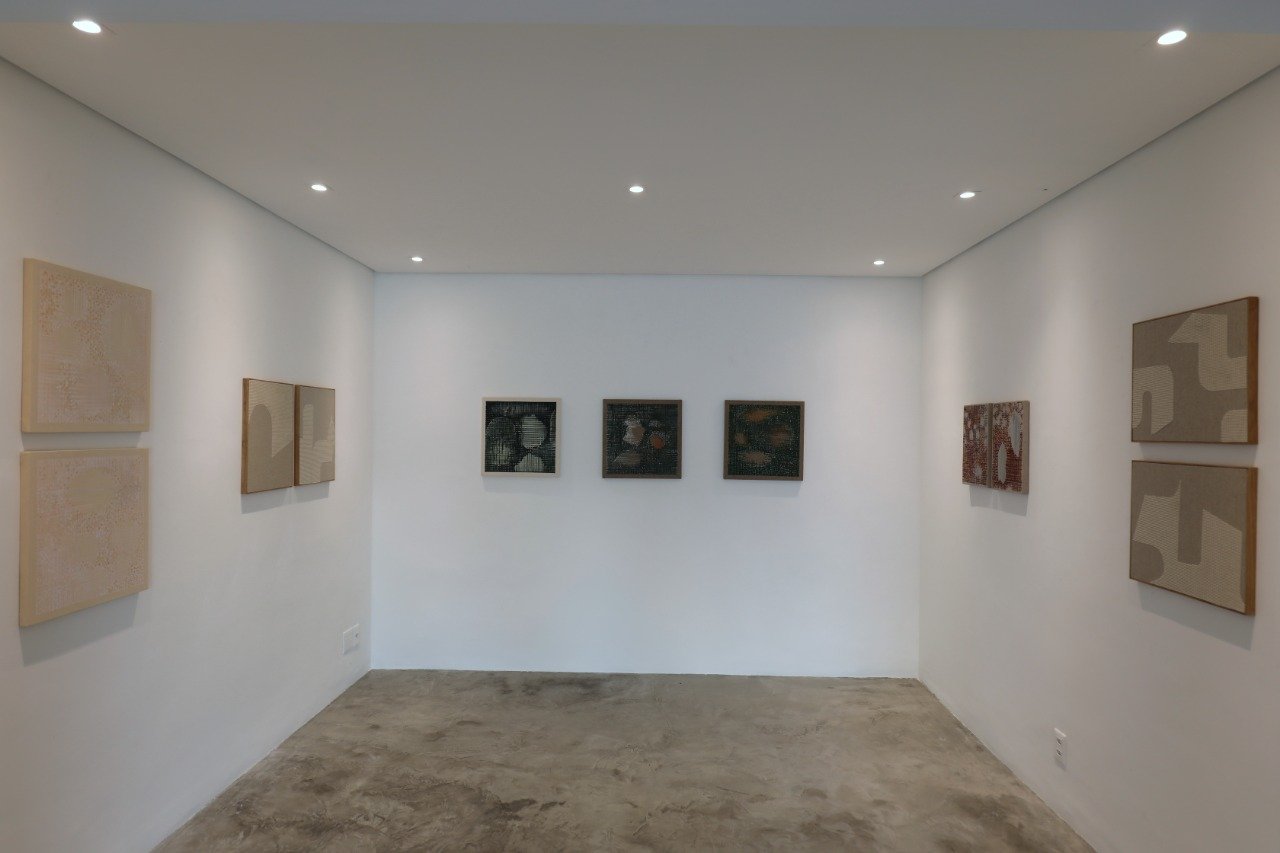
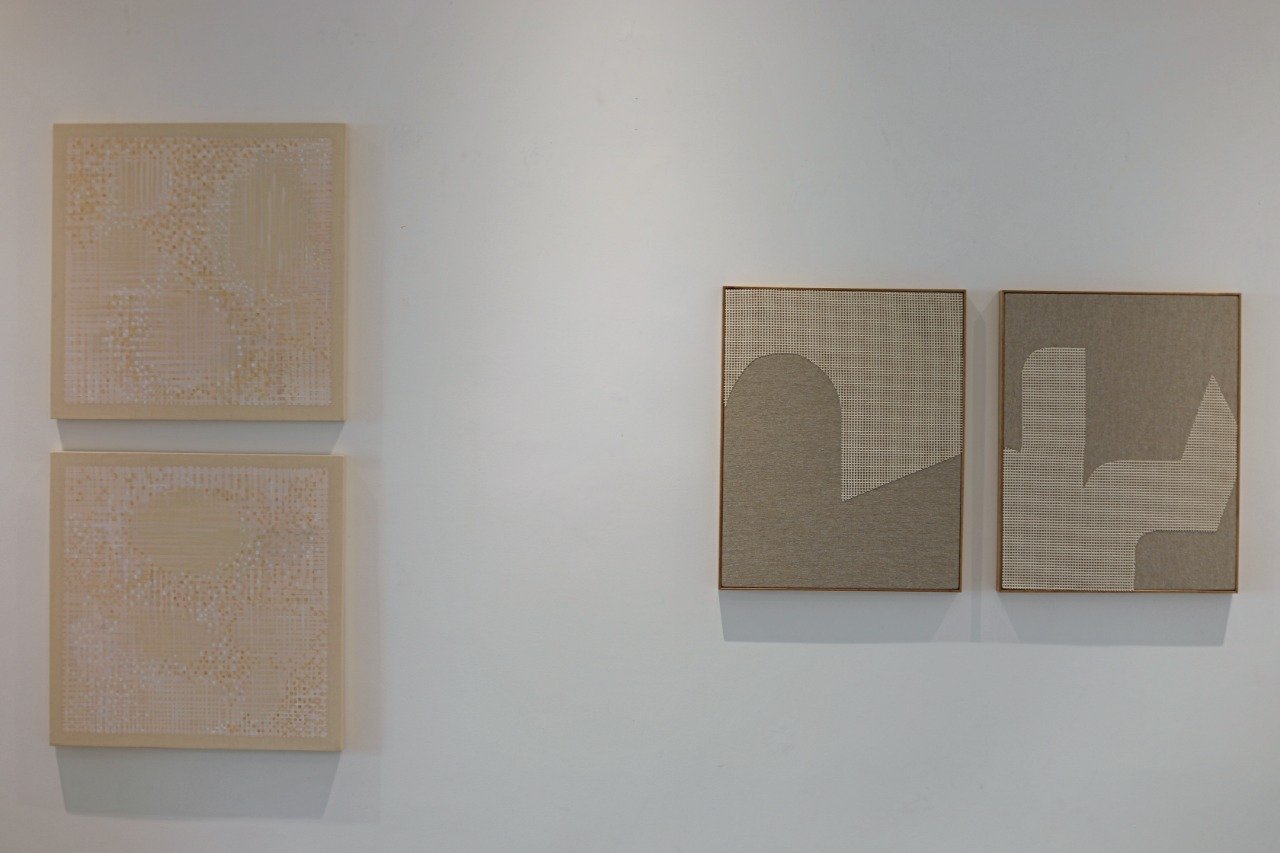
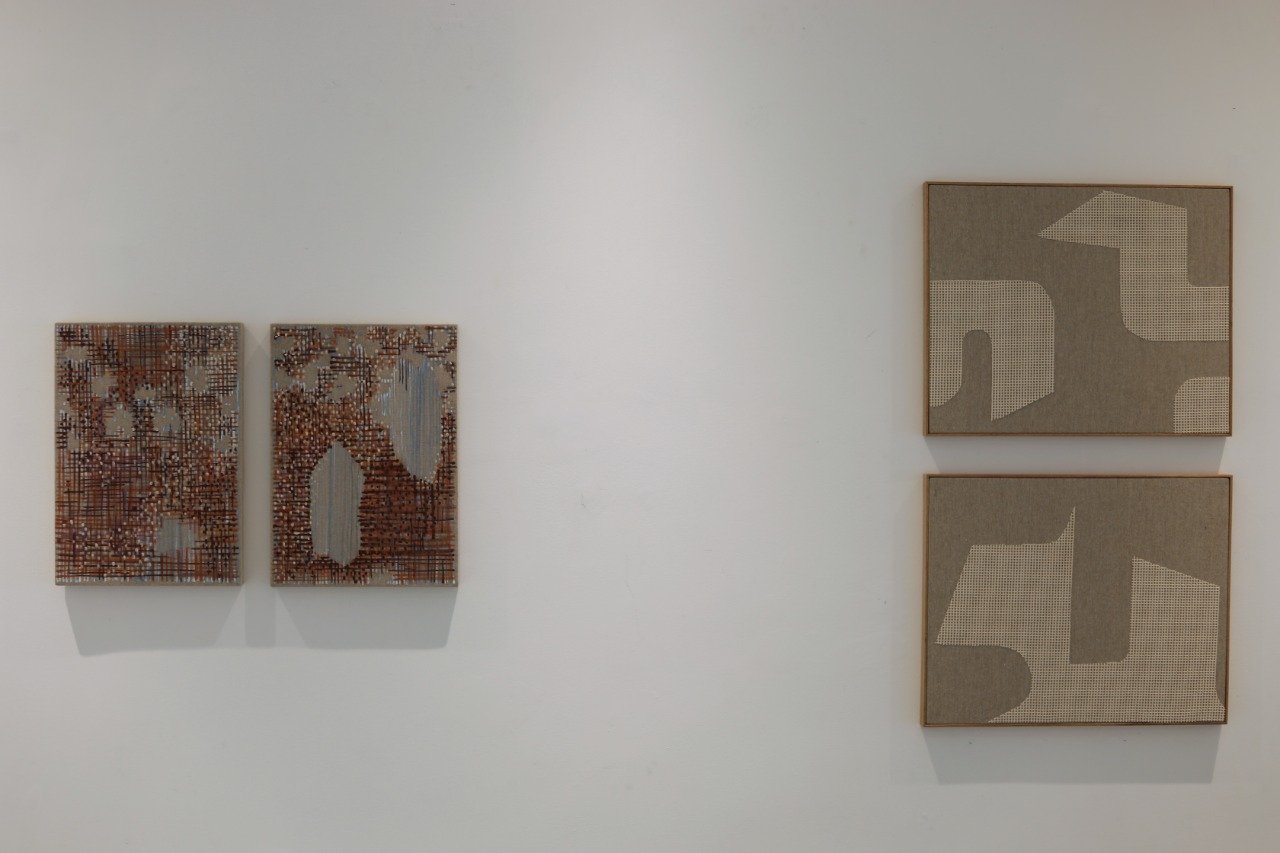
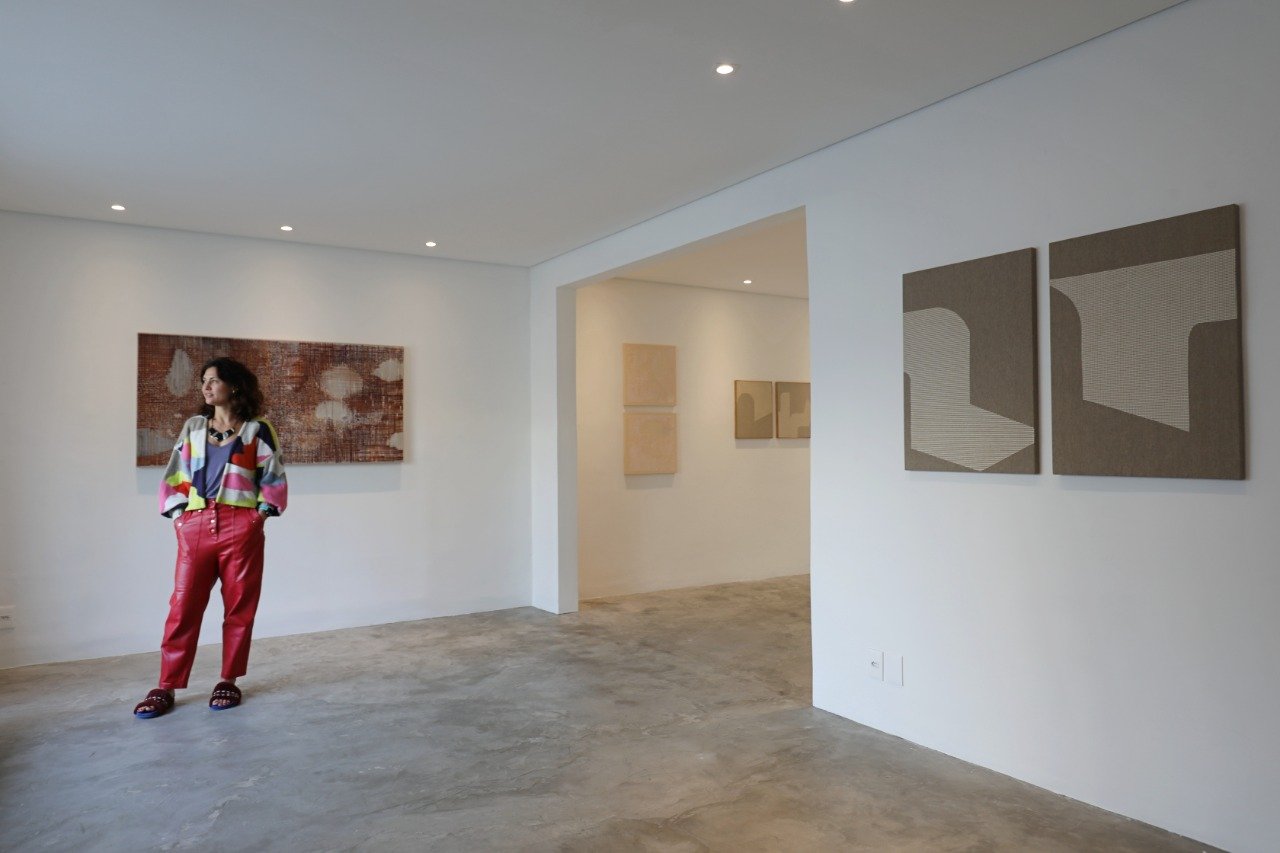
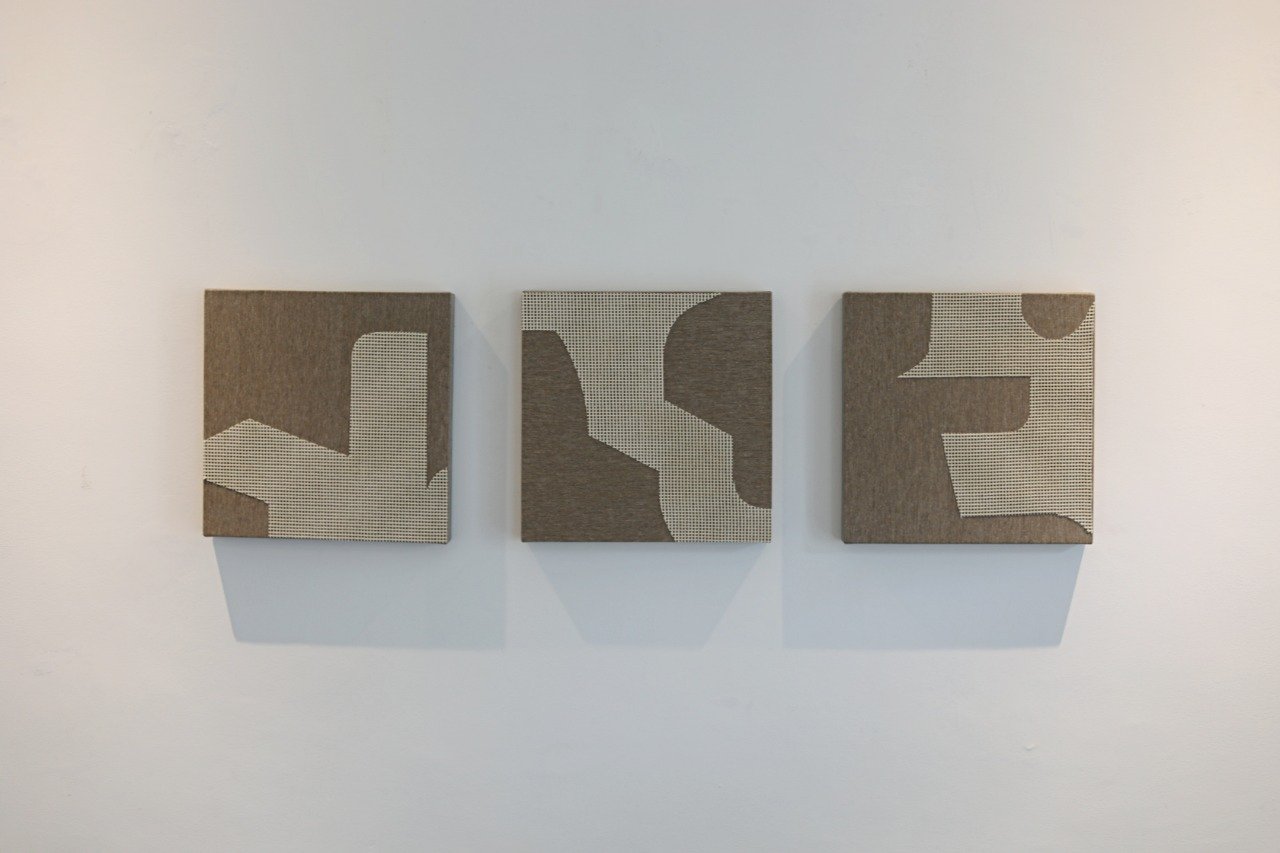
In a series of works titled Untitled (2022), the artist constructs rectangular compositions with motifs that in the past appeared in her tilework. The background of these compositions is neutral and grayish. Devoid of details, it isolates these motifs, placing them in sharp relief so that they can be carefully observed and examined. Seen from a distance, they depart from the planar nature that characterized them in earlier works. They emanate texture, as if they were mosaics. Seen up close, one notices that they are built from woven cane, the same material used in chairs. If before these forms functioned as solitary and absolute, now Preti’s interest lies in the weave that composes them and with which, apart from the cuts and framing she performs, she barely intervenes, allowing its nature to stand out within the composition.
In another recent series, the artist seeks to “trace” on the support the lines that constitute the fabric of the canvas, printing over them beams of color that follow their paths. At certain moments, this pigment thickens, forming tiny squares; at others, it narrows until it almost disappears within the intricate weave. In this way, a visual interplay of varying thicknesses, colors, densities, and pauses is created, bringing an engaging dynamism to the composition. In this case, rather than aggressively imposing herself on the support she works with, Preti studies it, surveys it, understands its possibilities, and only then imprints pictorial possibilities onto it—of the most diverse kinds.
An artist can be a creator, accumulator, editor, and many other things. Judging by her most recent works, it may be reasonable to think of Fabiana Preti as a “walker.” Not in the literal sense of the word, but as someone who strolls through weaves and structures, investigating and experimenting with their possibilities.
Text by Theo Monteiro (free translation)
Photos: Blombô team