ACHEGO
Solo Show
Massapê Projetos
Curated by Felipe Barros de Brito
July 22nd, 2023 - July 29th, 2023
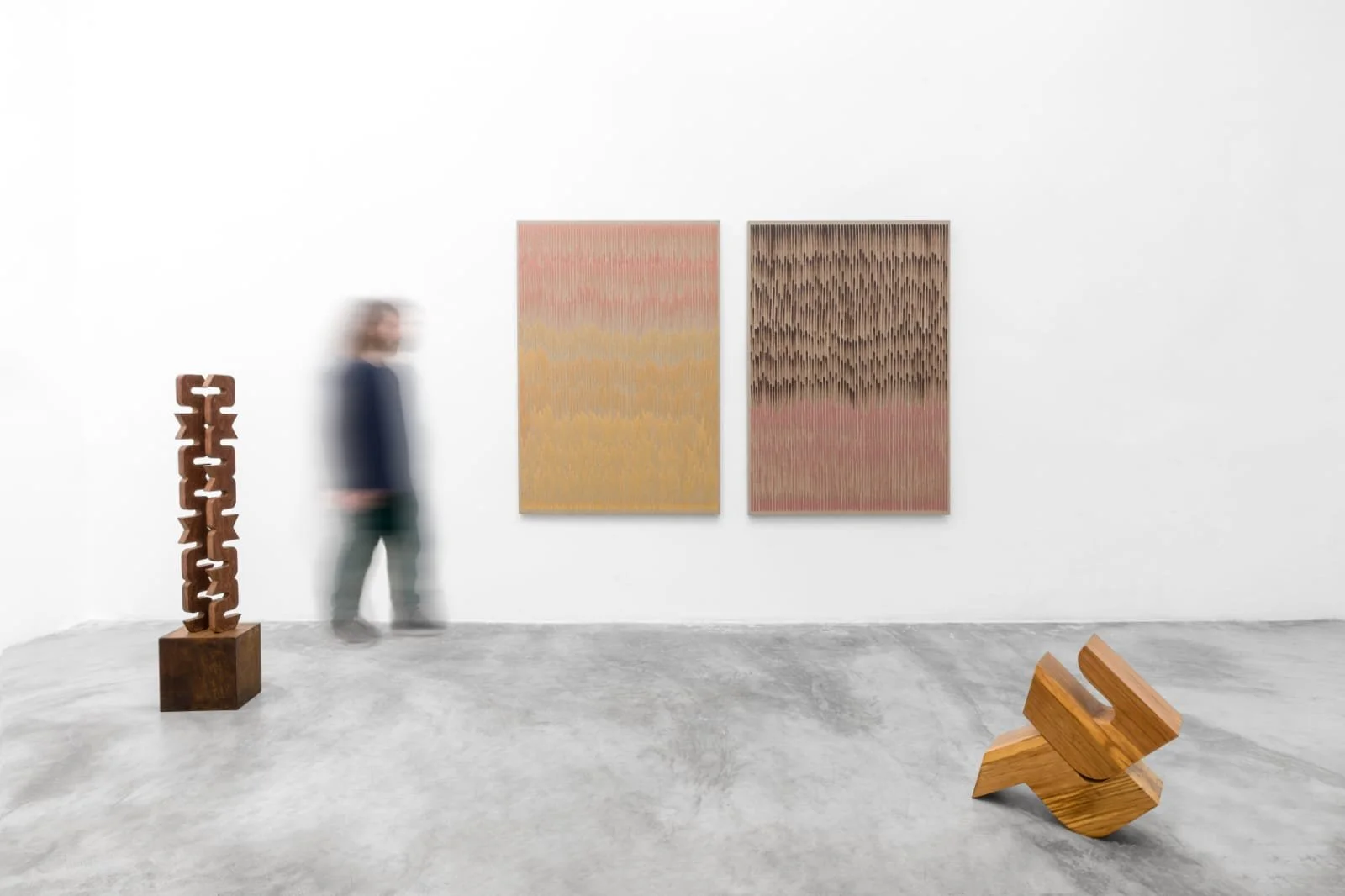
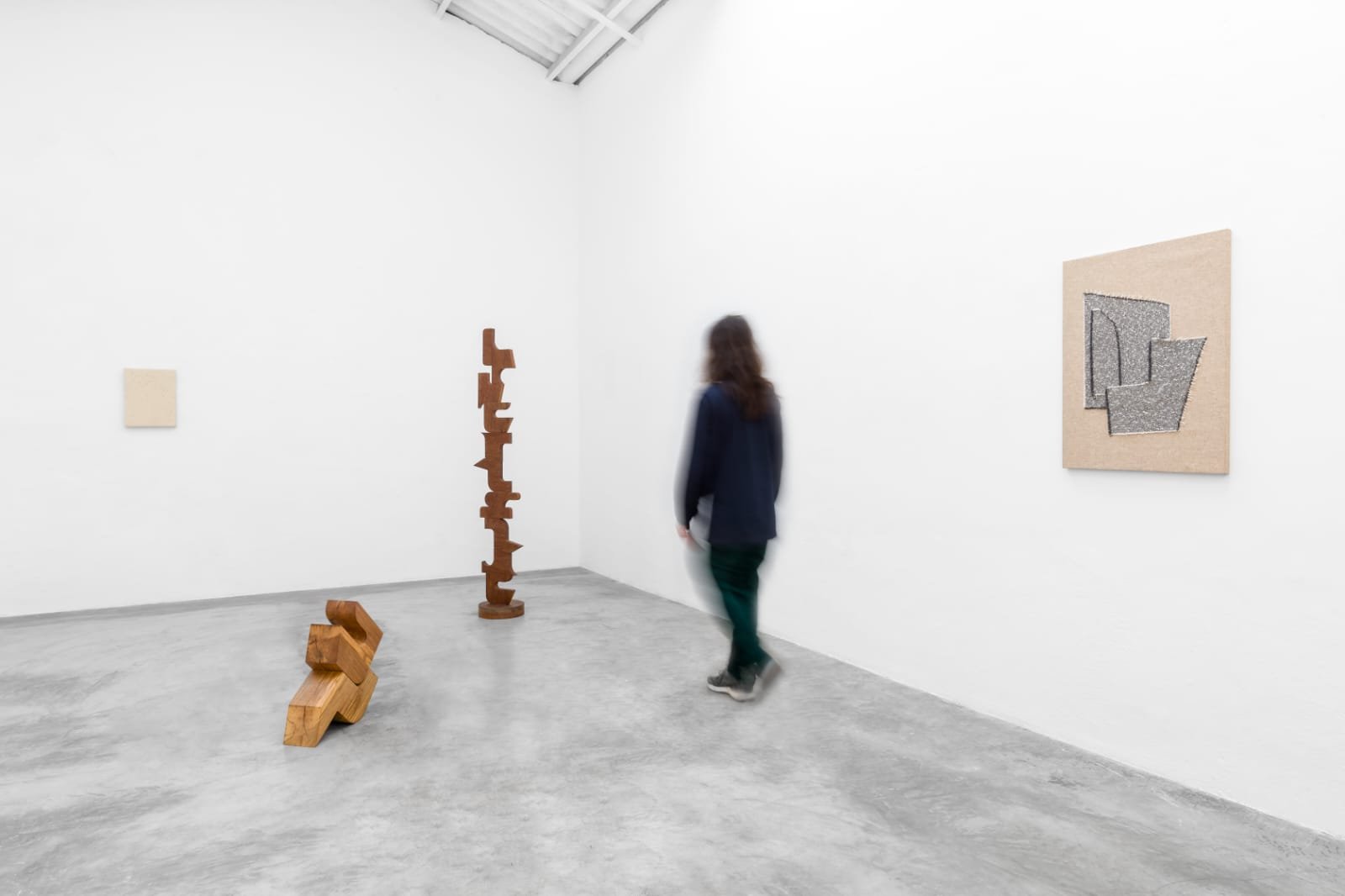
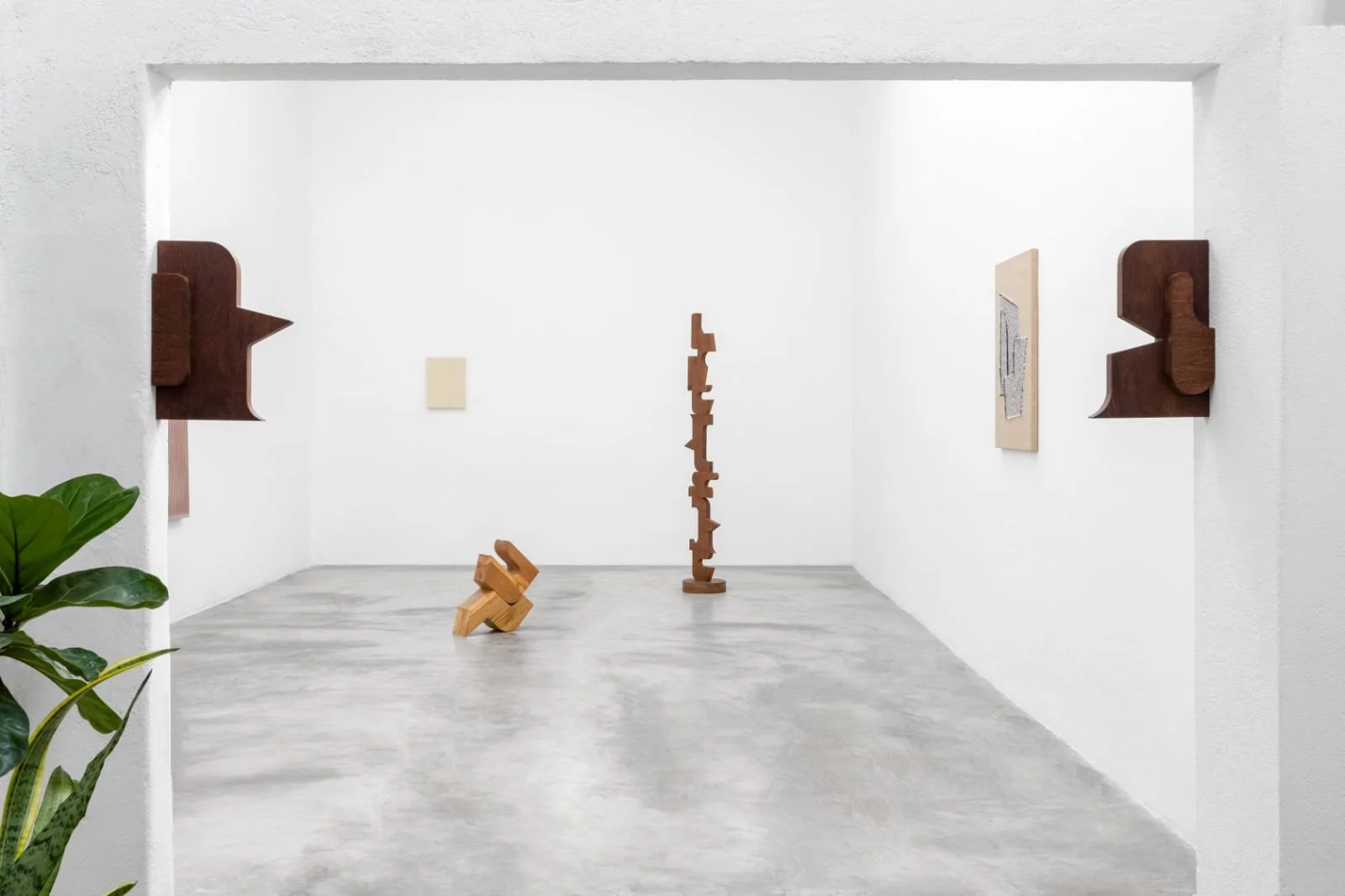
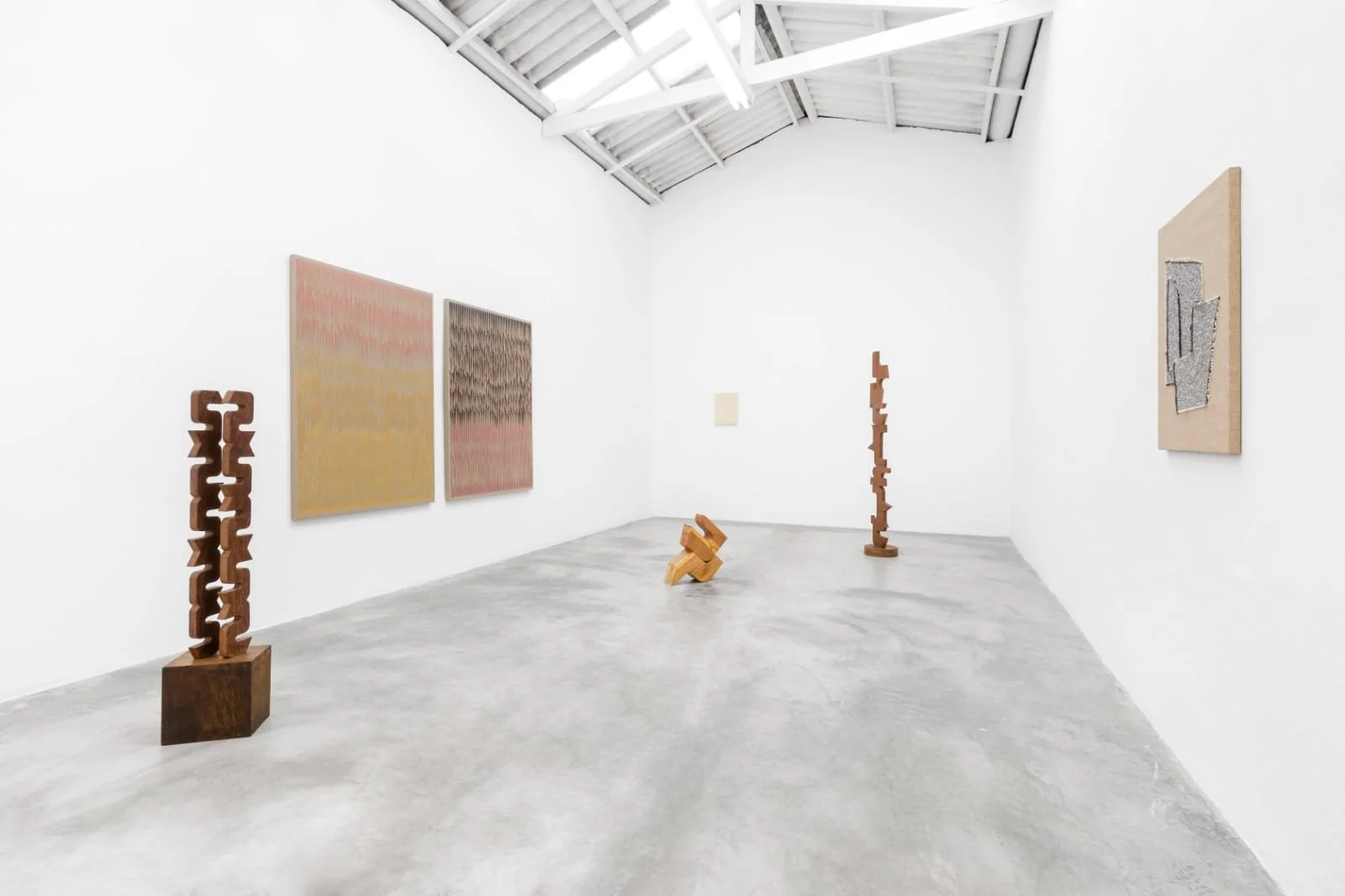
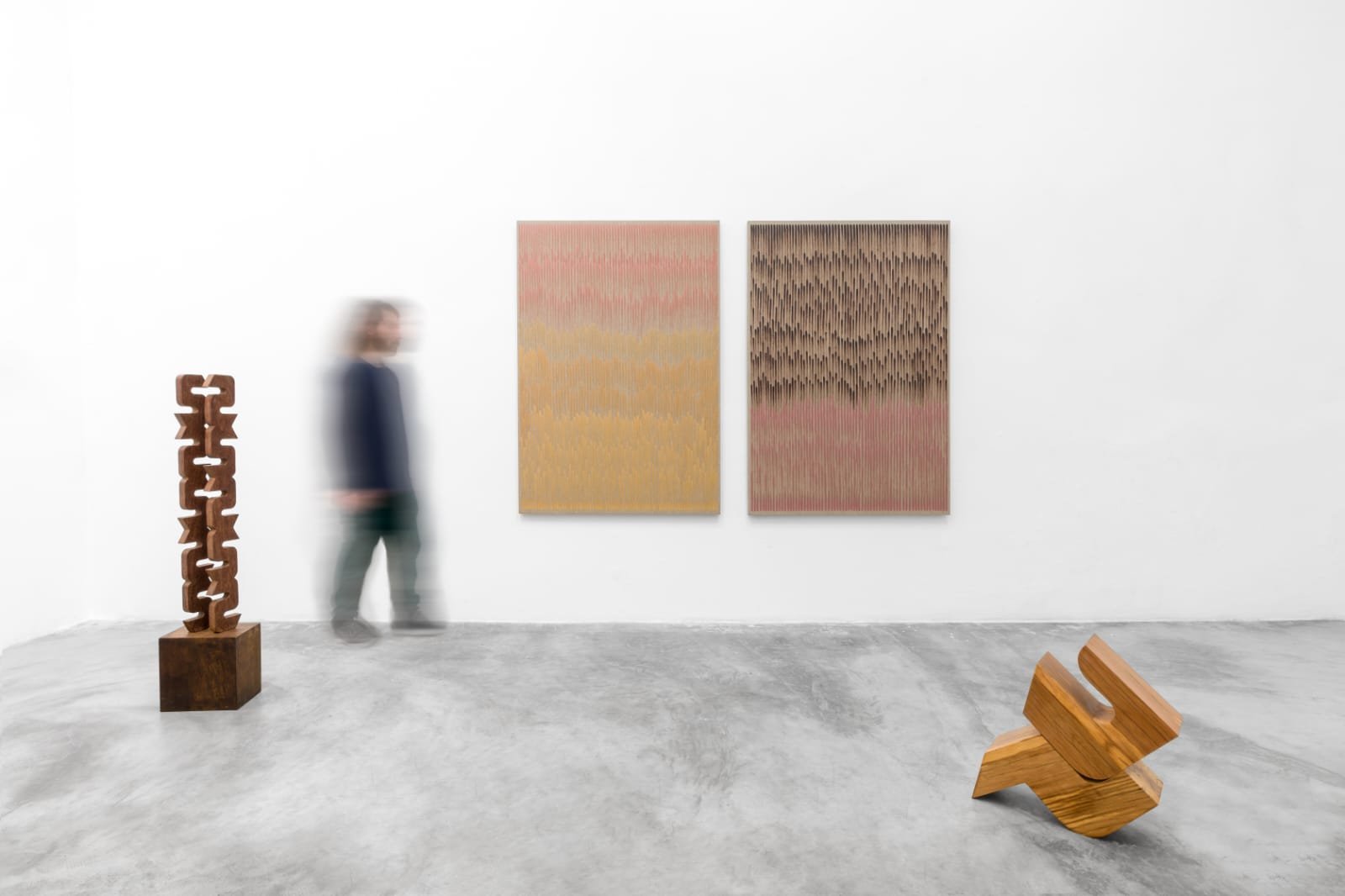
Nothing is what it seems. At times, a quick glance is not enough to perceive and assimilate the world of complexities that an object, a word, an action, or a line can contain. Such are the works of Fabiana Preti. Within a universe of techniques and materials, the artist shifts, experiments, and offers us multiple ways of experiencing and sensing what surrounds us. By adding forms, she sustains a balanced choreography between the organic and the inorganic through non-obvious conjunctions, inviting us to dive into her cuts and edges.
Adendo, the title of her new body of work, goes beyond the etymological meaning of addition or complement—it emerges as yet another branch of the poetic trunk through which the artist grows and develops. Industrial design, the foundation of her academic training, asserts itself as the main beam guiding her production. Beyond paints, canvases, papers, and wood, set squares, rulers, and protractors are her essential tools. Yet the rigidity of geometry gives way to the affection that precedes creation.
Attentive to the encounters and misencounters of accelerated contemporary life, the artist invites us to access and experience her thoughts in a moment of intimacy—she opens the door of her home so we may sit, converse, and understand that her work is made up of traces on canvases, tiles, and sculptures that mark her trajectory up to the present moment. Her wooden pieces are totems created with the purpose of bringing people, experiences, and feelings closer together and, in doing so, opening spaces to share and add.
Beyond the repetition of patterns and forms—a central source of research in her practice—Fabiana Preti shows us that remaining in constant movement and experimentation can be a strategy for escaping the commonplace. Like affective relationships, each line, cut, and edge is built with time, patience, and dedication. Achegar means to come close, to be together, and, for an instant, to become one. It is to surrender to a labyrinth of emotions without losing oneself in the other. To be immersed in her works is to understand that things do not simply happen—they are constructed; they are pieces we add daily in the formation of who we are and of those with whom we relate.
Text by Felipe Barros de Brito
Photos: Estúdio em Obra