DITONGO
Solo show
Massapê Projetos
Curated by Danilo Oliveira
October, 2019
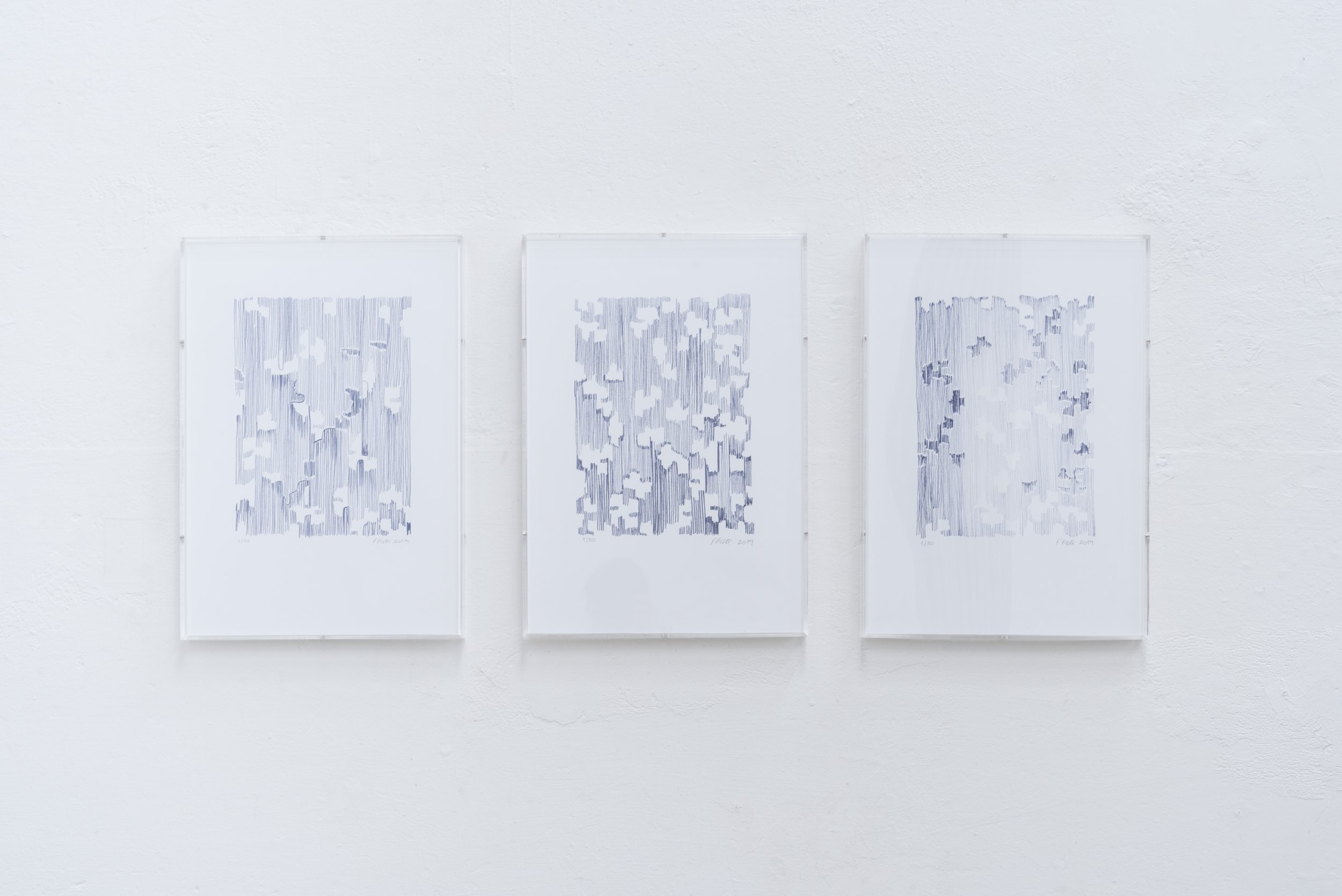
Fabiana Preti’s earlier production is marked by paintings of restrained gestures and a geometric flow based on the grid, functioning like textures or patterns. In her first solo exhibition, the artist turns to three-dimensional production, while maintaining a strong connection to vertical lines—a sense of the continuous elevation of the gaze through dynamic or fixed rhythms, ordered in arithmetic progression, always tending toward verticalization and now entering into dialogue with architectural space.
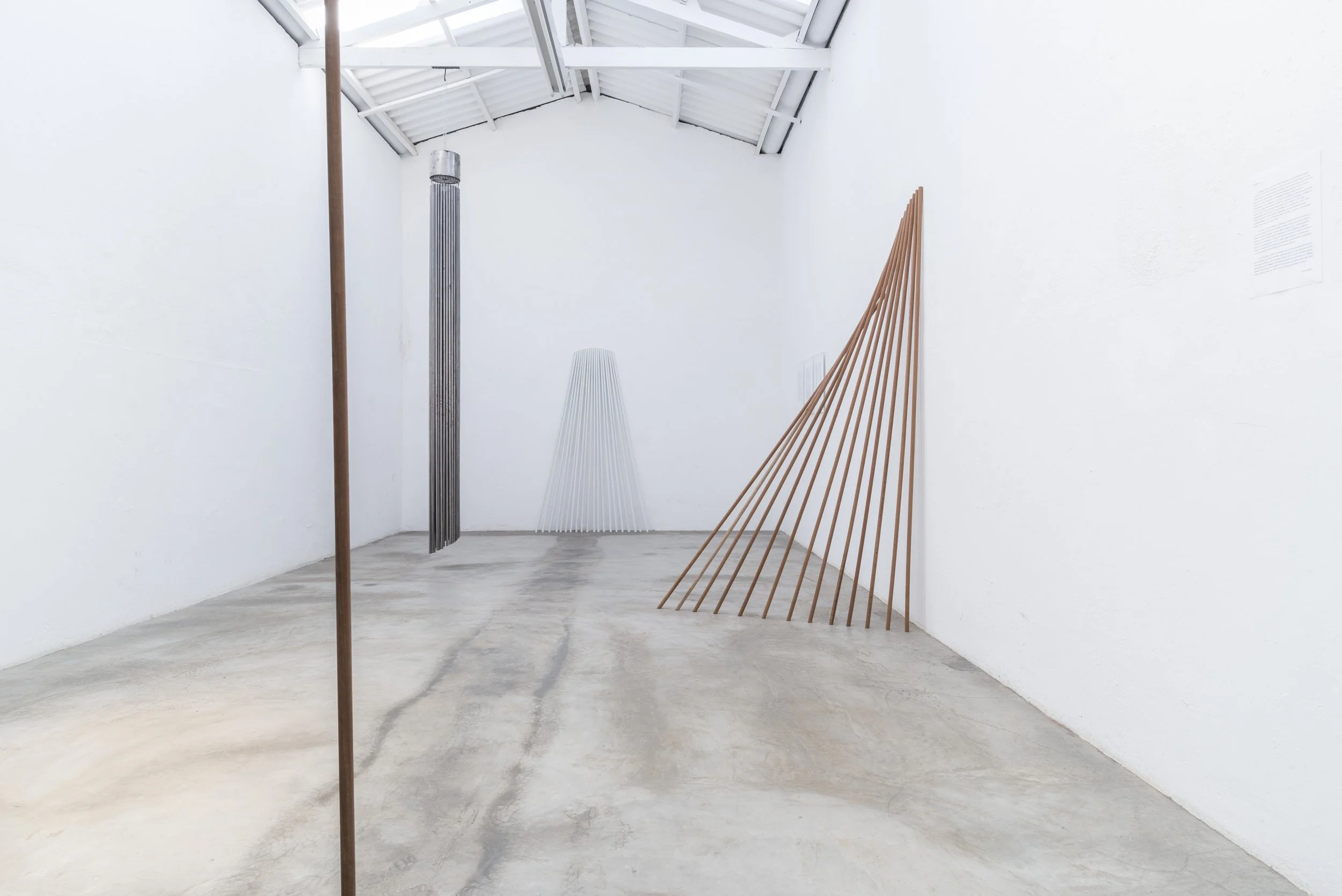
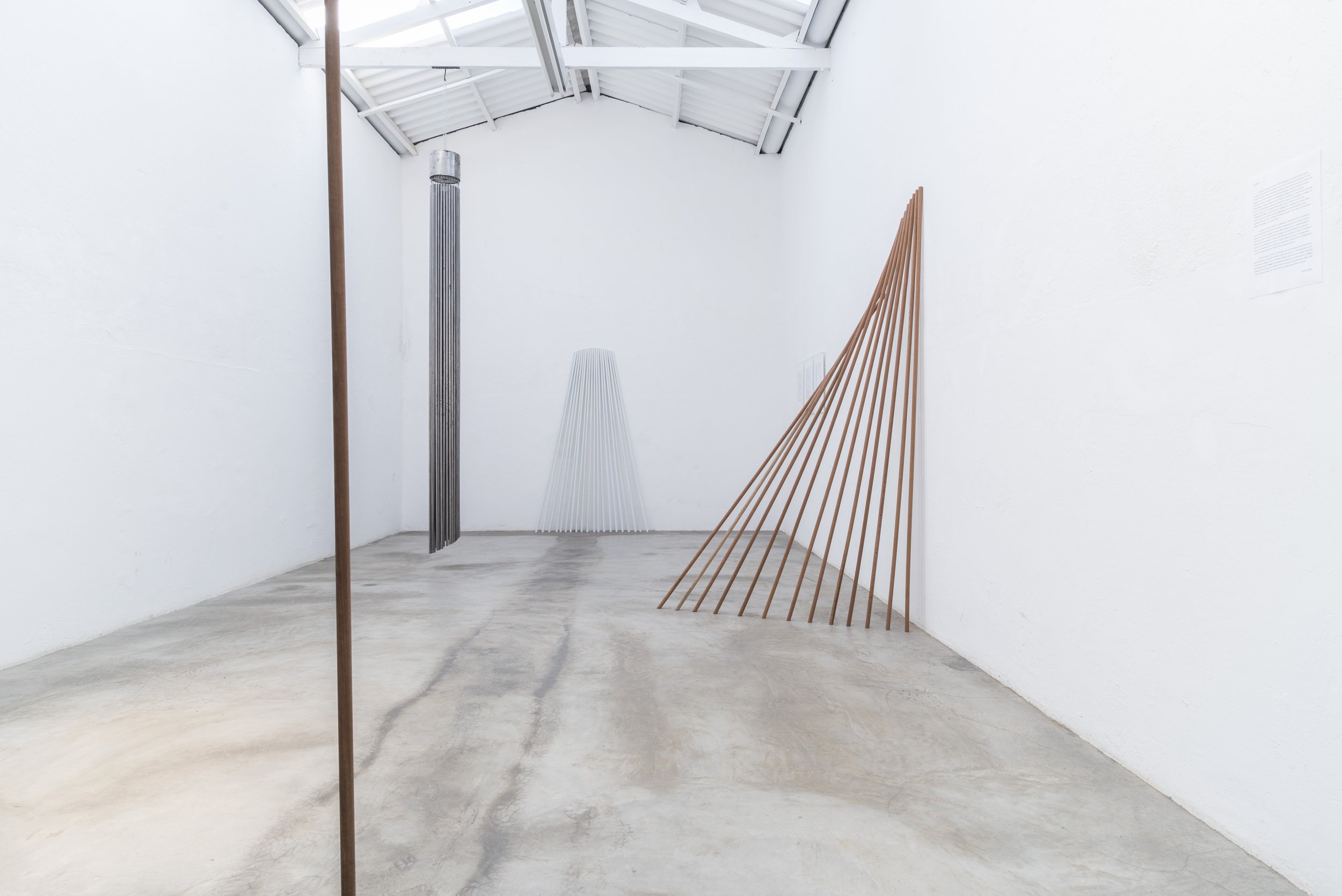
These new constructions display a dynamic, gravitational, spatial organization, marked by expansion and contraction, minimal lines, and the use of traditional materials such as wood and iron. Their stability is relative, exchanging forces and tensions with the space that surrounds them. Thus, even within an organizing pattern of action, the works present a certain apparent fragility, like a poetic exercise in order—an order to be undone and remade with every space the work inhabits.
The white spaces help organize the different flows and movements. Through procedures inherited from Minimalism, present since her earliest paintings, influence here becomes space and, in turn, transforms it. Wood and iron, materials tied to the history of Western sculpture, take on the aspect of architectural lines, three-dimensional drawings that articulate emptiness as a structural element. The object consists of both the material and the void that moves around it. The rhythmic notion of space and the internal organization of elements reveal a desire for order, sequencing, and stabilization, in the act of relating physical situations to certain psychic states.
Suspended from the ceiling hangs a giant messenger of the winds, but unlike those found in domestic settings, this one produces no sound. Its scale leaves little room for the subtlety of the breeze and carries with it the act of silencing—an essential condition for any kind of listening. Ditongo is a silent exhibition, one that whispers with the space, drawing within it a constellational harmony of subtle, almost empty movements—not emptiness as a synonym for nothingness, but emptiness as the very condition for the existence of everything.
Text by Danilo Oliveira (free translation)
Photos: Ana Pigoso